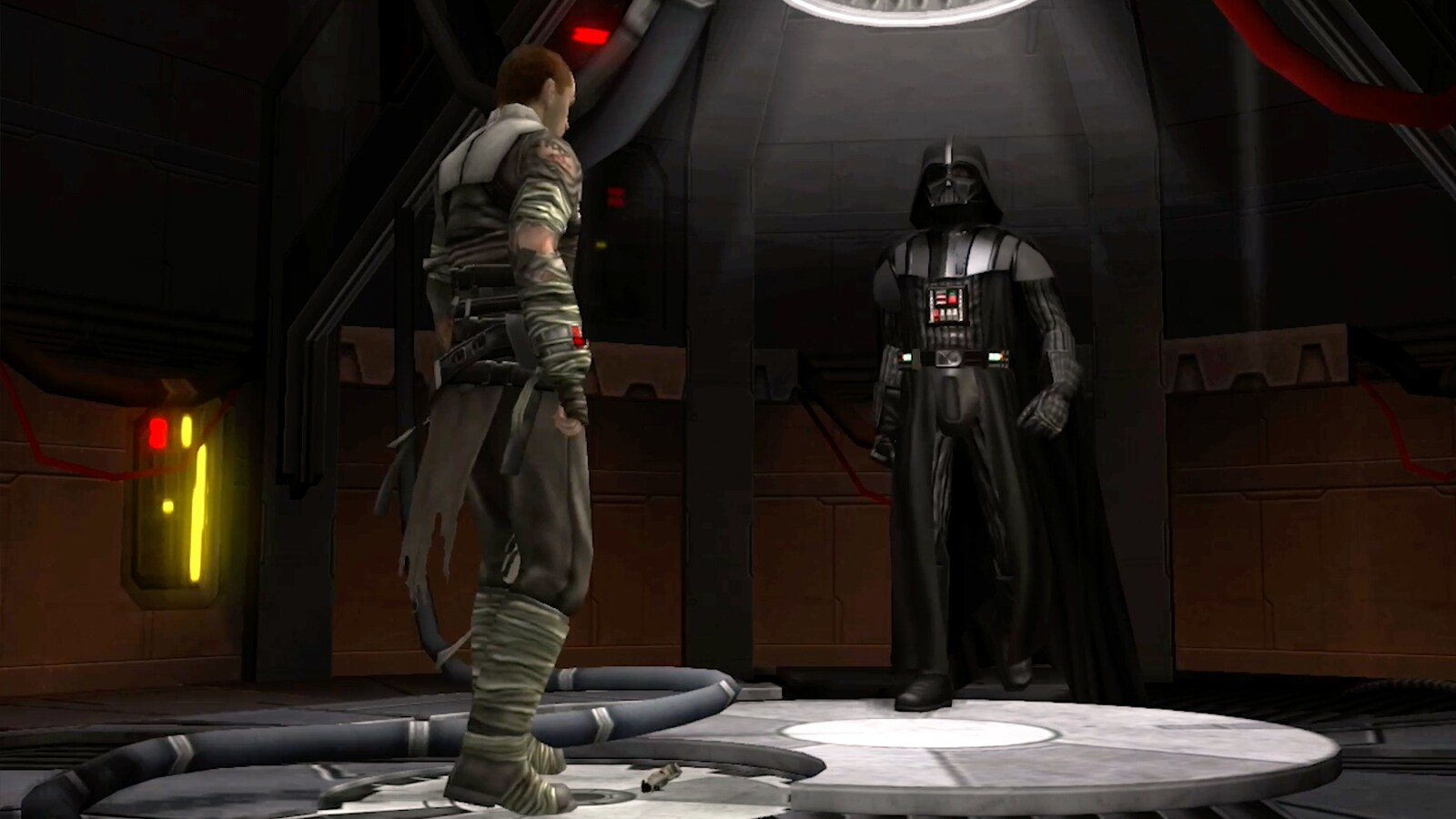
In the early concept phase, the Force Unleashed team had a scant five-to-ten people. We were growing a little bit, hiring our first new engineers to work on some of the core technologies of the game. Once we had a lock on the basic game type -- third-person action game with over-the-top Force powers -- we were able to grow the team quickly, up to 20 people. By the time we entered pre-production, we got up to 30 people and continued ramping up.
In a perfect world devoid of moving targets and shifting variables, you'd have clear-cut landmarks that delineate pre-production and post-production. Rarely is it a perfect world that awaits you when you embark on such an ambitious journey, though. We faced hiring challenges, as well as hurdles in that the tools, technology, engine and the pipeline to create the game were being developed at the same time that the game assets were being built. As such, the lines between pre-production and production really blurred, and continue to blur today. But knowing that the Star Wars movies similarly smudged those lines, we're in good company.
As an example, we currently have many levels in The Force Unleashed that are in full production. Artists are building them, action is being blocked out within them; you can inhabit them as playable environments. Others levels, though, like Kashyyyk are in a much earlier state of pre-production, where we're still trying to solve the challenges of rendering the trees, or what exactly happens there. There's still concept art being developed for these levels, a process "traditionally" defined as pre-production.In the movies, sequences like the droid factory of Episode II and the Order 66 sequence in Episode III came about in a very similar way. Both were designed and executed well after principal photography had wrapped, when the movies were deep in post-production mode. Yet each was built from scratch with concept art and animatics while other parts of the movie were already being layered with finished visual effects.
Part of the challenge that necessitated such blurring is that up until the end of 2006, we were still determining the metrics of our new gaming environment. We were still getting a handle on how many polygons, lights, characters, and AI a next generation environment could support. Even something as simple as jumping from six characters to ten dramatically changes the dynamics of the scene, and may require some new brainstorming to help shape the scene's role in the story.Such shifting ground makes it necessary for the entire team to remain agile. The concept artists definitely feel it, as they're constantly getting new requests for art and designs as the developers get new ideas based on our new metrics.
The great milestone of this phase of production is the First Playable, a version of the game that really proves out our high risk design and tech items. We've hit First Playable on this project, and that really opens the floodgates an builds confidence that you can build the rest of the game.
We're now in full production on a number of our environments. Our team has finished growing. We're wrapping up the tool work in the next month-and-a-half, and have started our motion capture sessions. We've got all the data that we need for the first round of cinematics, yet we're still doing concept art and writing story in some parts of the game. We're in full production racing towards Alpha, the next great milestone.