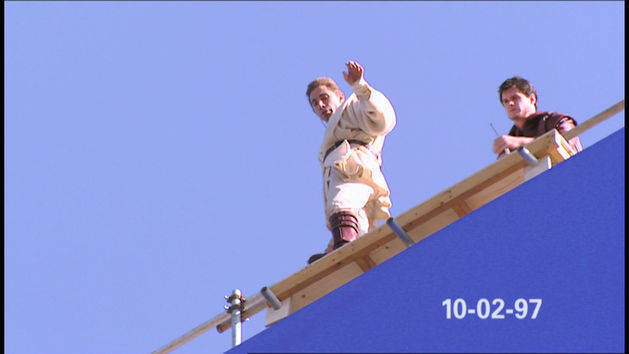
Jayne-Ann Tenggren: Lookout atop Episode I's main mast

Email Archives
November 24, 1998
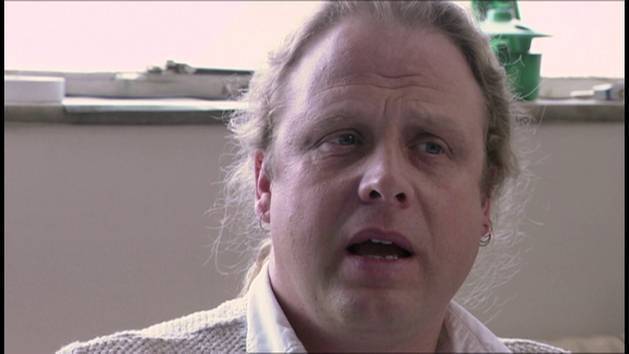
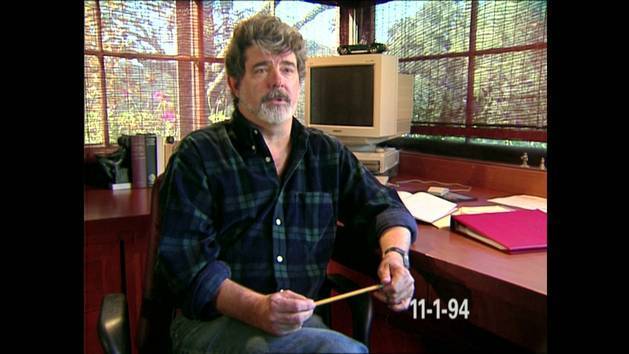
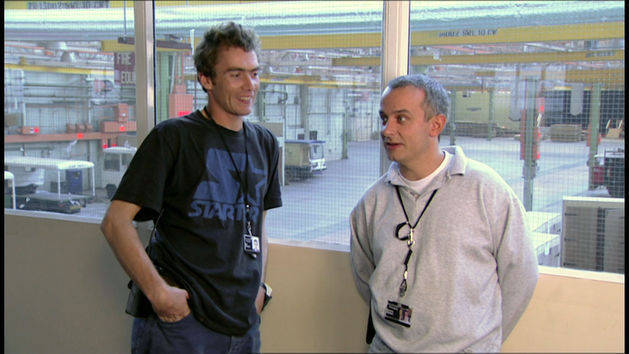
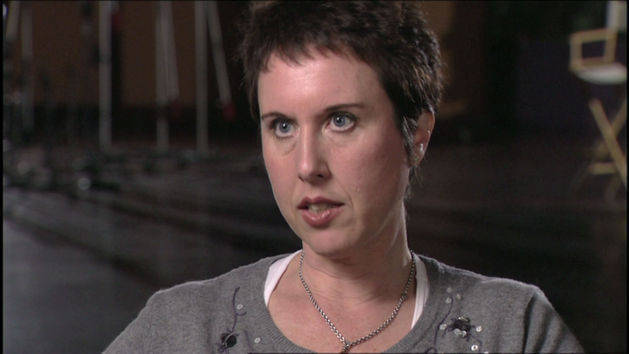
"Continuity" is the name of the game for Jayne-Ann Tenggren. As Script Supervisor for the main unit of Episode I, she had to make sure everything captured by the camera eye was consistent with the script -- and also with what had been shot before. "It's really a sort of on-set editorial position," she says, "but it goes beyond that as well."

Script Supervisors wield their pens with the painstaking accuracy of Nobel scientists. "After a take I would write down the details," says Tenggren, "What happened, what was good, what wasn't, the timing of it all. And then I would go to the camera people and get the setup: lens, distance, stock they're working on, and all of that."

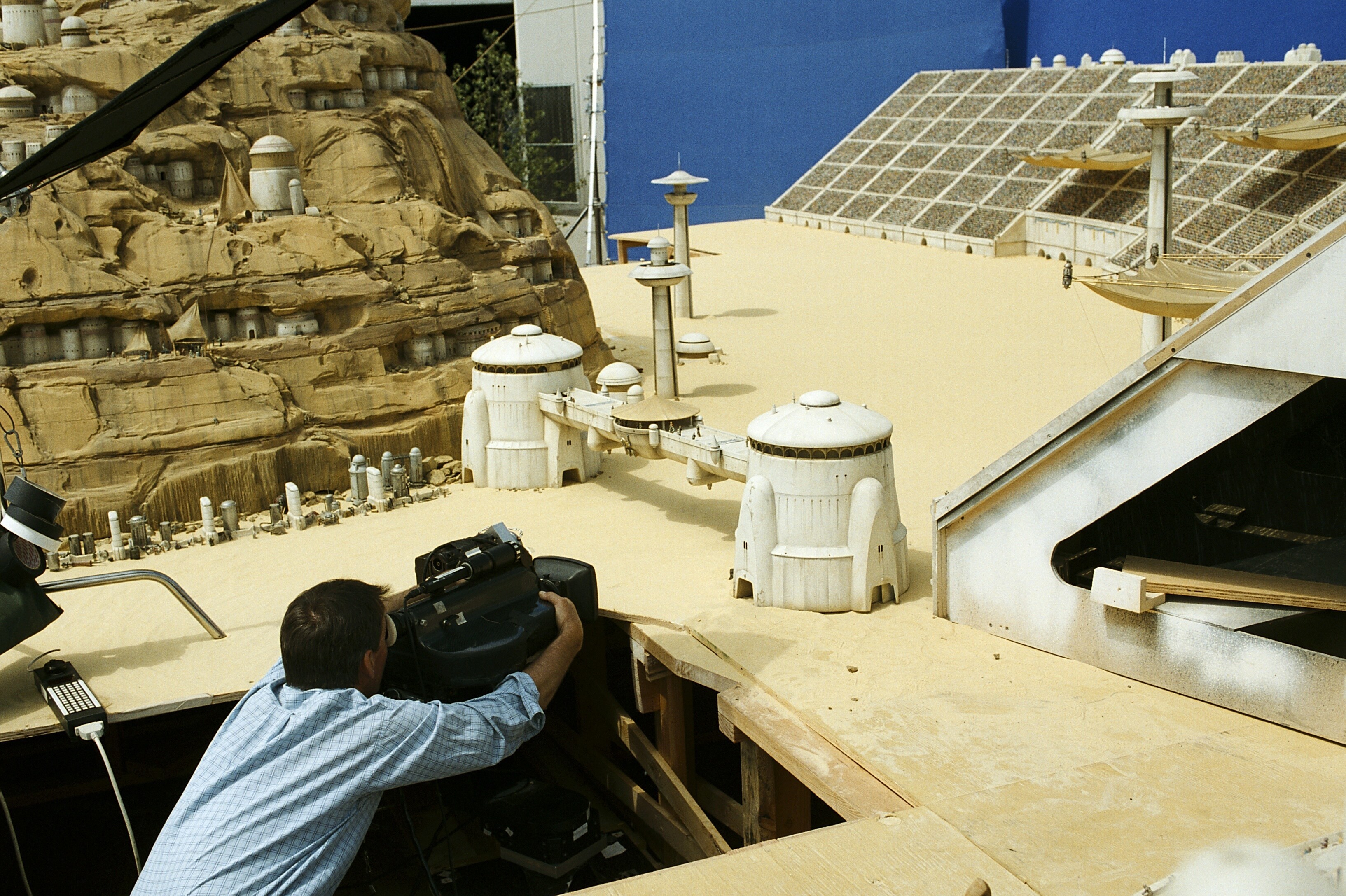
However, aboard the Episode I project, some unusual waves inevitably come crashing down on the deck. So in addition to keeping closely in touch with the usual departments - wardrobe, make-up, hair, props - in order to make sure every small detail agreed with everything else, Tenggren needed to add a few unusual contacts to her list. Industrial Light & Magic was one of them, for it was vital that continuity be maintained with a wide variety of digital props, creatures, characters and backgrounds. "The first take we did would be a reference take, and so we would have in there somebody, or something, that was representative of the digital character, and the actors would perform, with dialogue and everything. We would then do the next take without the stand-in, making sure that the timing of the two takes was pretty comparable," explains Tenggren. Keeping everything cross-referenced with ILM was standard procedure for such sensitive shots.

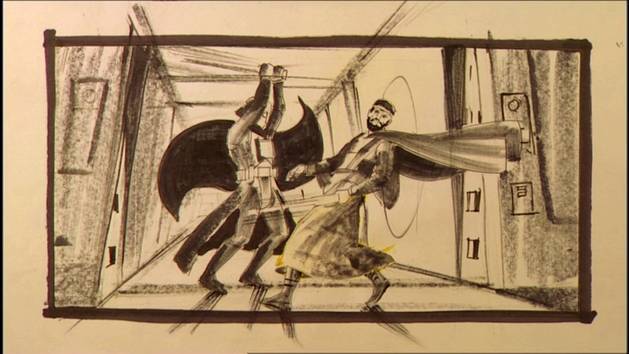
The numerous action scenes involving stunt doubles also required special care. Tenggren worked with Stunt Supervisor Nick Gillard to keep her knowledge of the fight choreography up to date, while relying on her trained eyes to spot any discrepancy in hair placement, costume arrangement, make-up condition and body position, both during filming with the actors themselves and - a more delicate operation - when switching from actors to stunt doubles and vice versa.

A less obvious problem, which nonetheless remains a major issue, is what could be called the 'motion print', the unique way in which every person moves. "At one point we were discussing a connective shot where Liam Neeson's character runs after his opponent, right before they jump to a different level. It simply didn't work. And it didn't work because it wasn't Liam Neeson running. He has a very recognizable run." So Tenggren made sure those problems were fixed and that continuity was maintained. Every last detail was examined; no exceptions were made for the fast-paced action scenes. "Even in the scenes that move the most, if somebody's got a piece of hair sticking out, and you lose a member of the audience because they're looking at the hair and not the performance, then that's a shame," Tenggren comments.

Episode I also involved multiple sets, adding to the already high total of variables Tenggren had to deal with. "The thing about multiple sets is that you have to keep tabs on where each set is supposed to be, or what multiple sets are supposed to form just one," she says. When characters round some corner, during a chase, and end up in another corridor, everything has to make sense, and each set has to connect perfectly with the next one. Fight sequences, in this respect, once again require delicate handling.
However, sometimes the simplest of problems remain the most persistent. "Long hair is always tricky, because of the way it moves around," says Tenggren. "Liam Neeson's hair was sometimes forward, sometimes back, and I had to keep track of that. It was a real issue since the scenes weren't shot in chronological order. I thought that Obi-Wan's braid was going to be more problematical than it was, though. Obviously, in a fight sequence, the braid is going to be all over the place, and you have no way of controlling that. You have to live with it."
Everything about Episode I is being entered into a database which will contain all the work done on the three movies of the prequel trilogy, so that anything can easily be cross-referenced; this meant that Tenggren would need to type up her notes sooner or later. "On the set we did discuss the idea of typing directly into the computer, but there are certain limitations to doing that," she says. "The idea behind the way in which you structure your day, in terms of notetaking, is that during rehearsals you type up the shot description, and so by the time the camera rolls, the only thing you're doing is really to focus on the action, the continuity, the dialogue. But on this particular film it was different because much of what we did was organic. The camera would roll and it would evolve and be continually evolving. So I'm glad we didn't opt to do that. It's just much easier to have a handwritten pad and, you know, jot all over it."

Even in a situation where technology seems to be leading the way, the solution sometimes comes in the form of non-technological means. History remembers that an evil Empire once found that out on a lush forest moon...


Keywords: Behind-the-Scenes

Filed under: The Movies, Episode I
Email Archives
 (
0 ratings
)

Comments: 0 total     See All

Celebrate 10 Years of The Phantom Menace
On May 19, 1999 the Star Wars saga began anew....
Celebration Soundbites: Nick Dudman Part II: Q&A
Our Celebration I panel audio continues with an audience Q&A with Star Wars creature effects supervisor Nick Dudman
A Look Back at Star Wars Celebration
Splish Splash, the Star Wars Celebration was a Smash! Fans from all corners of the globe descended on Denver, Colorado April 30-May 2, 1999, for the grand three-day event.
Celebration Soundbites: Nick Dudman
Listen in on the goings-on in Hall A of 1999's Celebration I in this first of a four-part audio series commemorating the fan event's tenth anniversary.
Spherical Solutions
"When you're putting a CG character into a shot and you want it to look like it's really there," says Visual Effects Supervisor John Knoll, "it's extremely important to get the lighting right."
Episode I Virtual Paradox
Episode I exists in a technological paradox. It is a chapter of the Star Wars story that takes place decades before the classic trilogy, and yet it was created two decades after the original movie.
Snapshot: 'Splosions!
The Trade Federation Droid Control Ship's reactor core disintegrates in this fiery set explosion.
Snapshot: Podracing Hangar
The Mos Espa Podrace hangar in an unusually peaceful state. During racetime, the hangar is a frenzy of activity.
Episode I goes French
As they had done for every version of the movie, the sound mixers of Skywalker Sound used their expertise to ensure that French fans would enjoy the best aural experience possible.
Let There Be Light!
As one of the three Industrial Light & Magic visual effects supervisors who worked on Episode I, Scott Squires had to deal with the creation of virtual realities on a daily basis.
Tattoo Art Shirt Series #1
First in a new series of t-shirts in collectible tins using the designs of well-known tattoo artists
In Stock Now
Our Price: $29.99
The Secret of Monkey Island Poster  $12.99
Darth Vader Toaster  $54.99
Celebration Japan Program Book  $9.99
Newsletter sign up!
Enter your email here and receive exclusive Star Wars updates