More Than Just Stunts

Email Archives
November 17, 1999
When Nick Gillard was given the role of Stunt Coordinator for The Phantom Menace, little did he know that, for the climactic lightsaber duel between Jedi and Sith, he'd be called upon to exercise the full range of skills required by film-makers.

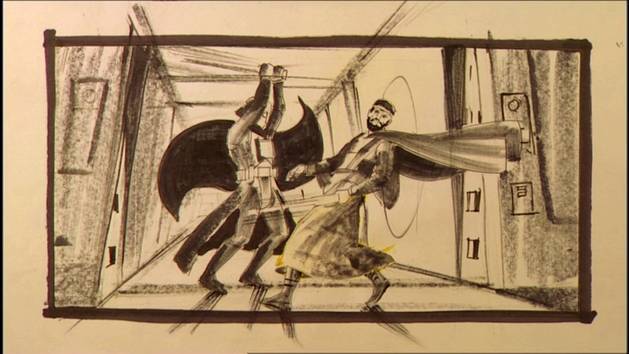
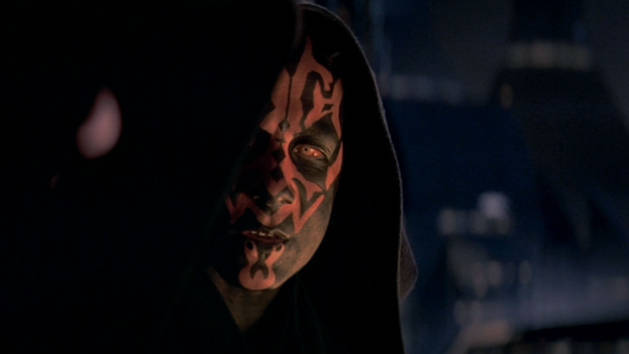
Once he had helped define the style and art of Jedi swordplay, Gillard was faced with the task of writing the final confrontation with Darth Maul. The process began with George Lucas' script, three months before shooting began. "It tells you in the script that the three of them meet in a vicious fight," Gillard explains. "You know where it begins and where it ends, it's the part in the middle you have to get right." For Gillard, the planning process came naturally. "Providing you've studied the characters enough, you know who's going to lead off. You know who'll start it or you know who will finish it it, where they should be, who's going to be looking out for whom. It's knowing the characters really. And then I just stay with the characters. So even if there are three involved in the fight, I'll write Obi-Wan all the way through. Then I'll write the Sith part and then Qui-Gon."
Of course, revisions were necessary along the way. "Whenever you see anybody fighting near a big hole, it's a pretty sure bet someone's going to go over the edge", Gillard says. However, originally it wasn't Obi-Wan who was going to plunge. "It was going to be Qui-Gon going over and hanging, and then coming back and having another fight, and then getting killed. But that seemed unnecessary. What we came up with was just more economical, and I think, really better for the audience."
Since the specialized notation used to write the combat sequences wouldn't clearly convey the motion of the scene to others, Gillard adopted the practice of creating animatics - a form of video storyboarding. He taped the routines with stunt doubles using any available video equipment, ironing out any trouble spots. The results would be shown to Lucas who could approve them or ask for changes. Gillard says the use of animatics "worked really well for this film because a lot of stuff had never been done. It broke new ground, and you have to see in advance how it's going to look."

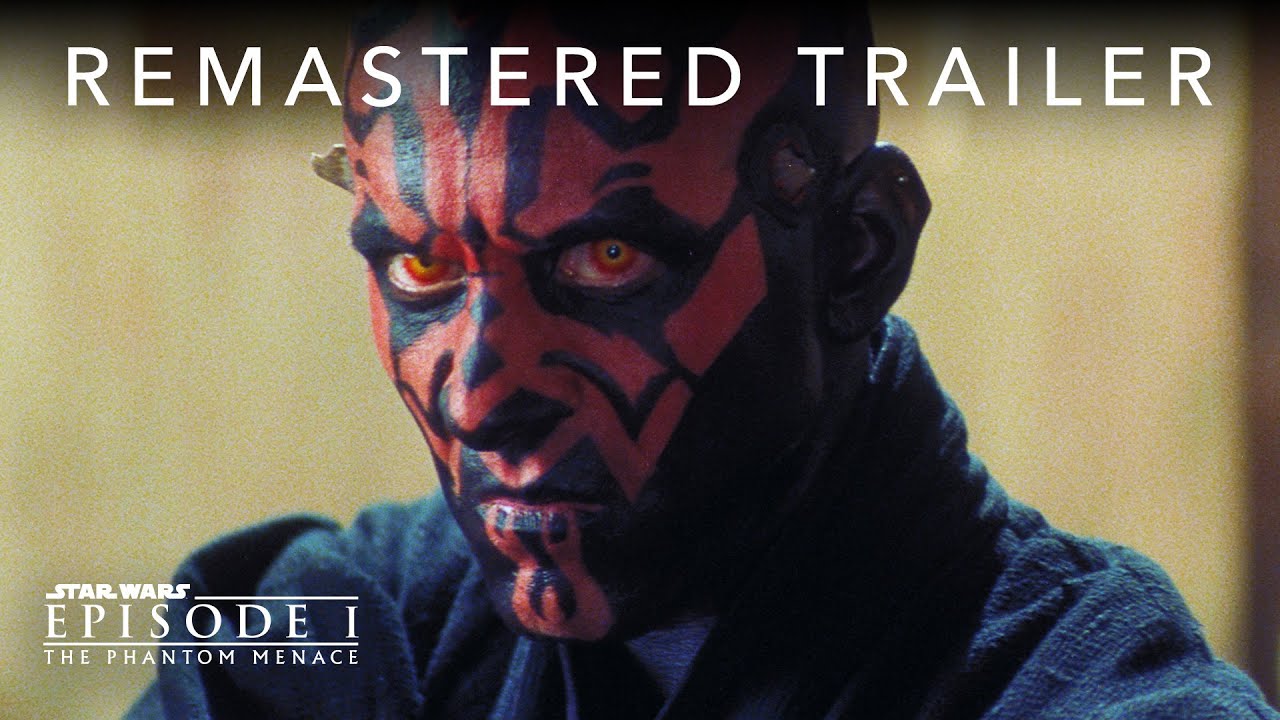
Gillard also had a hand in casting. Producer Rick McCallum suggested that since the part of Darth Maul had relatively little dialog, it might be better for a stunt performer to play the role. So Gillard found gymnast and martial artist-but film newcomer-Ray Park to play the Sith apprentice. Gillard recalls, "It was just a matter of teaching him the double-ended lightsaber. I didn't have to do an awful lot with him. He's very good and picked it up very quickly." That confidence and focus is important to Maul's character. "It doesn't make any difference whether he thinks he's going to win or lose. He's going to attack no matter what happens."

Eventually, Gillard had a chance to try his hand at directing. For one week, a "fight unit" was created to capture required pieces of action that could not be filmed by the busy main unit. The small unit worked with the main actors and stunt performers to produce shots that would have to be inserted seamlessly into the final film. When it came time for cameras to roll, everyone on the unit was occupied with their assigned task...except Gillard, who was more than happy to take the empty director's chair. "They couldn't sit in the chair and shout and scream at people," Gillard explains. "They all had proper jobs, and I didn't. I didn't get paid any more, but I really, really loved it."

Whether his role was writer, trainer, animatics artist, casting, director or plain old Stunt Coordinator, Nick Gillard did his best to ensure that the physical action transparently added to the audience experience of Episode I. "These days the audience is getting a whole lot more sophisticated and they know if something is pointless or not. You shouldn't notice stunts; it should be an experience. You leave not having noticed anything, but having a great time."


Keywords: Behind-the-Scenes, Stunts

Filed under: The Movies, Episode I

Databank: Jedi Order, The
Email Archives
 (
0 ratings
)

Comments: 0 total     See All

Celebrate 10 Years of The Phantom Menace
On May 19, 1999 the Star Wars saga began anew....
Celebration Soundbites: Nick Dudman Part II: Q&A
Our Celebration I panel audio continues with an audience Q&A with Star Wars creature effects supervisor Nick Dudman
A Look Back at Star Wars Celebration
Splish Splash, the Star Wars Celebration was a Smash! Fans from all corners of the globe descended on Denver, Colorado April 30-May 2, 1999, for the grand three-day event.
Celebration Soundbites: Nick Dudman
Listen in on the goings-on in Hall A of 1999's Celebration I in this first of a four-part audio series commemorating the fan event's tenth anniversary.
Snapshot: Shelved Creature Heads
Shelved creature heads in the Creature Effects Department at Leavesden Studios.
Q&A: What kind of new technologies were developed to realize Episode I?
Many visual effects techniques for The Phantom Menace had never been attempted before. How much new technology and software needed to be developed to carry out what was required. Who does that kind of work and how long does it take?
Snapshot: John Fensom
Malcolm Evans (Left, Animatronic Model Designer) and Vicky Winning (Art Finisher) outfit John Fensom (Designer Creatures Assistant) in a protocol droid costume in preparation for a stills shoot in the Stills Studio at Leavesden Studios.
Snapshot: Idle Landspeeder
An idle landspeeder rests on the Mos Espa main street set, on location near Tozeur, Tunisia.
Snapshot: Horox Ryyder
A close up of the fully painted head piece from the Horox Ryyder costume, in the Creature Effects Department at Leavesden Studios.
Snapshot: A Sea of Bluescreen
Qui-Gon Jinn (Liam Neeson) sits amid a sea of bluescreen. Industrial Light & Magic magicians will later digitally add a lumbering eopie and background to complete the scene.
Newsletter sign up!
Enter your email here and receive exclusive Star Wars updates