Storyboarding the Menace

Email Archives
December 22, 1999

Pen & Paper Origins

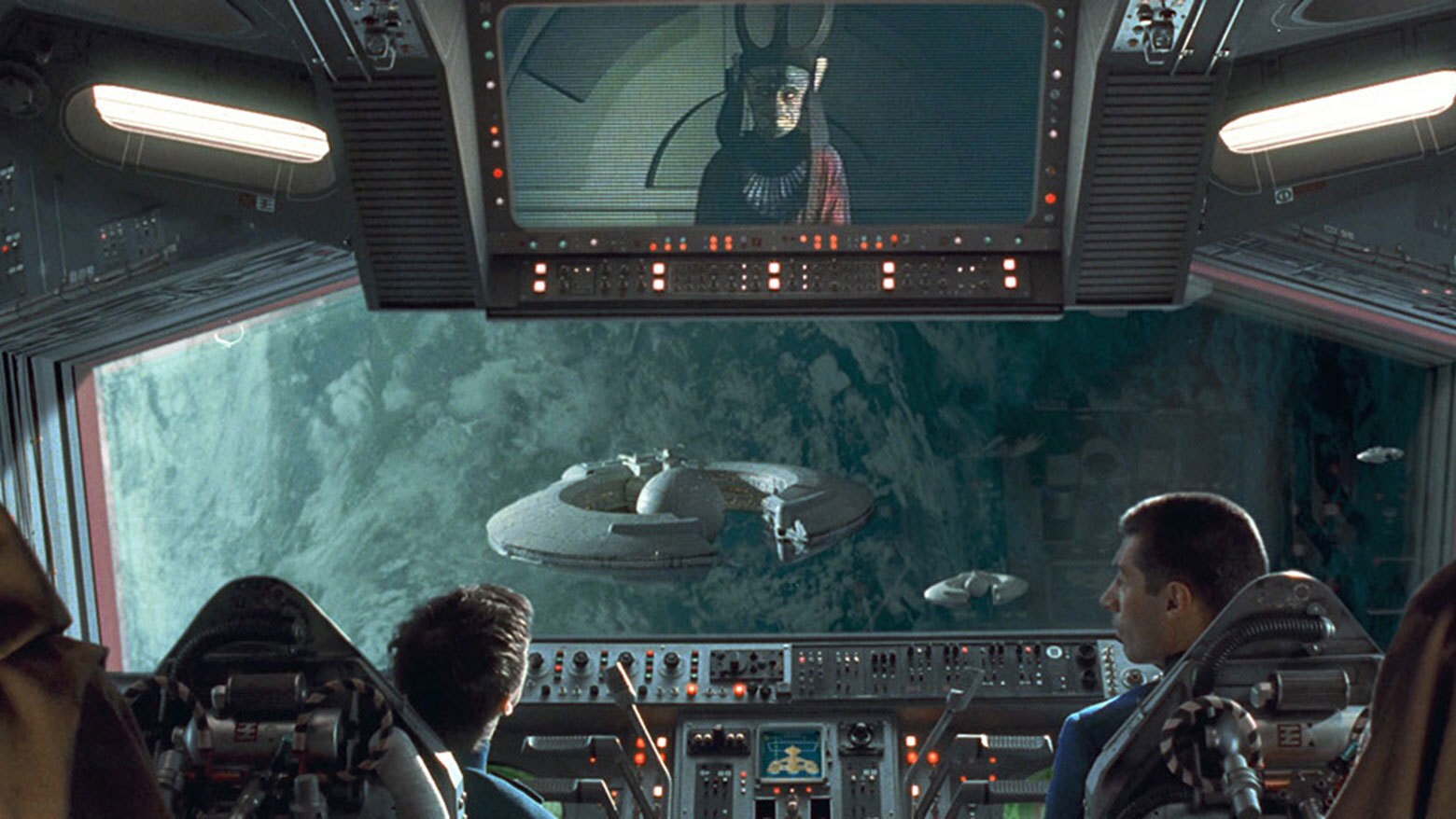
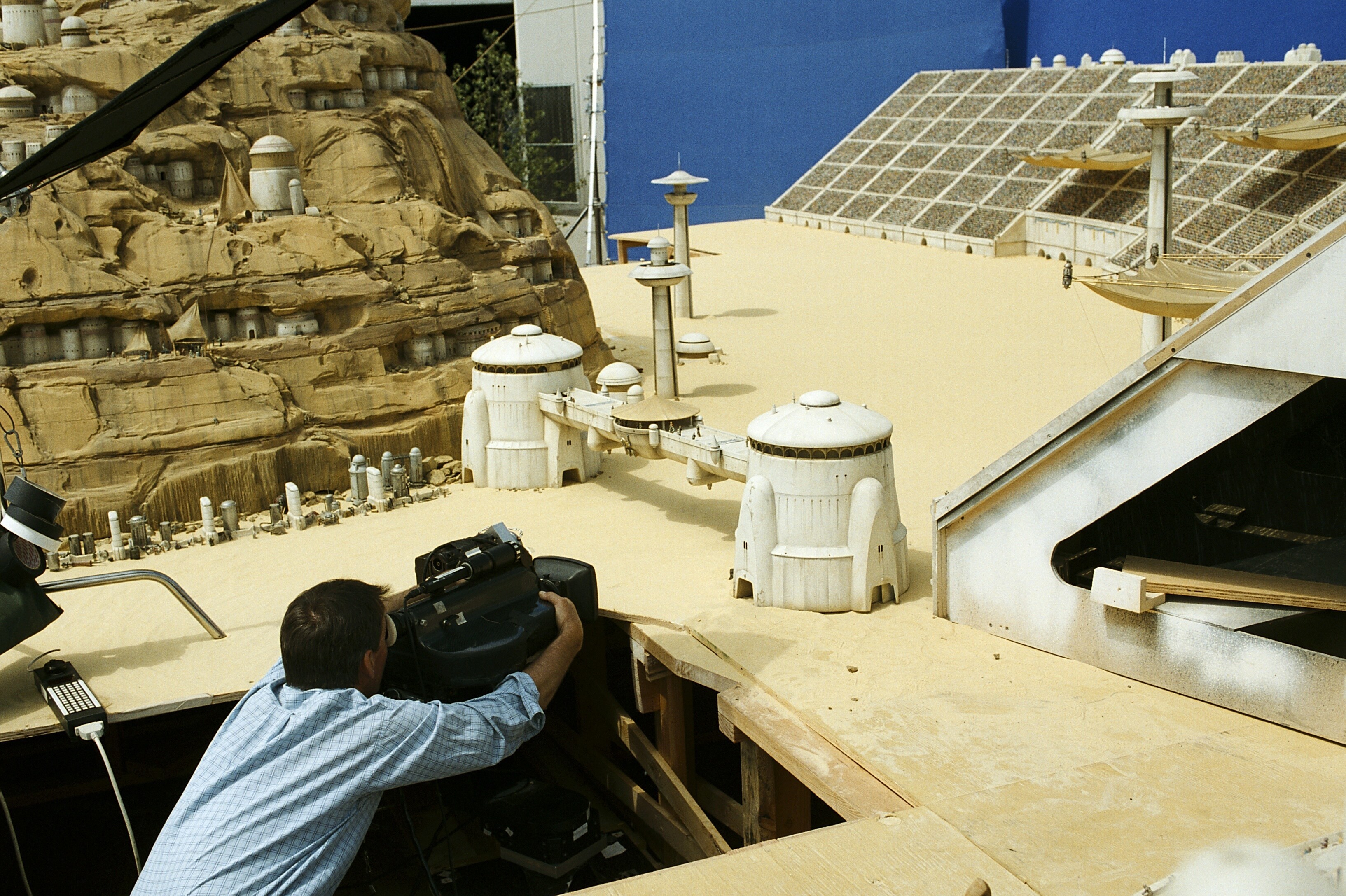
With Star Wars: Episode I The Phantom Menace, it took tremendous innovation in the areas of animatics, non-linear editing, sound design, computer effects, and character animation to bring George Lucas' vision to the big screen. For Episode I storyboard artist Ed Natividad, however, the job wasn't about technical innovation, but idea generation. "A pen and a paper, that's all I need," Natividad says with pride. "And the pencil around my neck."
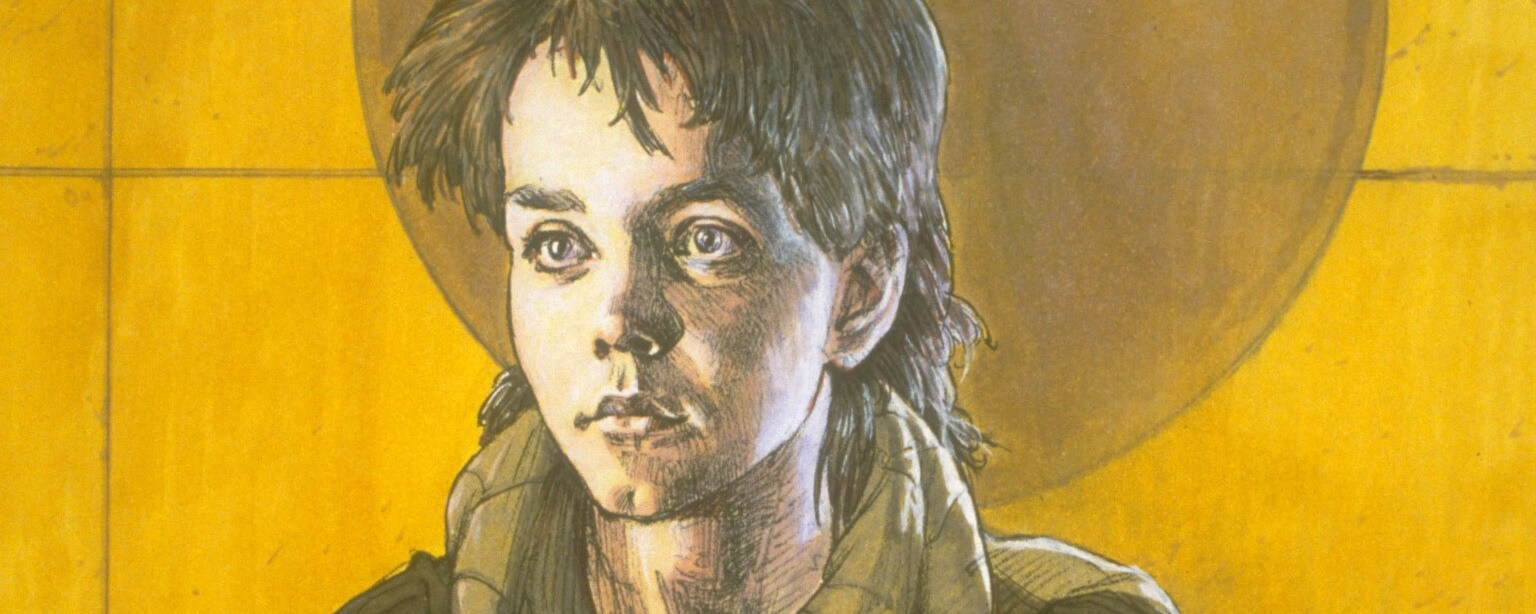
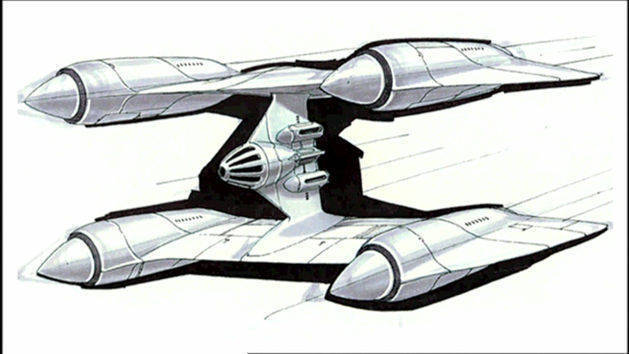
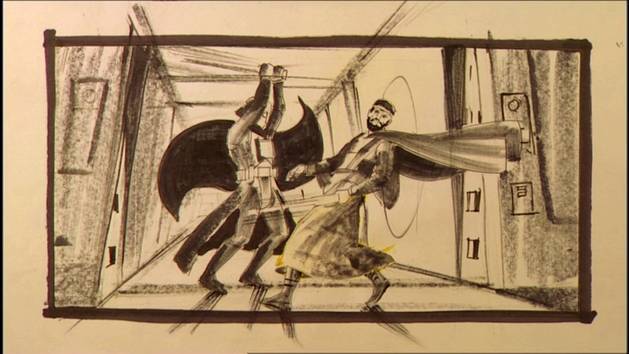
An Ohio native, Natividad joined the Episode I production team in 1997 and spent his first year fleshing out some of the initial storyboards for the film. A storyboard is an artist's rendering of a specific point of the story from the camera's point of view. Put together, the storyboards create a shot-by-shot prototype of the final film.

"While there were all these advancements in effects, storyboards were kept pretty much the same as before," says Natividad. "We were keeping in the tradition and style of the first three films. Joe Johnston's technique was carried throughout." Renowned for his concept and storyboard art for the original Star Wars films, Joe Johnston had "the best visual style - ever" according to Lucas. A tough act to follow.

Where the primary focus of storyboarding composition, continuity, and screen direction, efficiency is key. "It's very basic, mainly pencil and maybe some black marker," explains Natividad. "We use normal 8.5 by 11 inch pages, each with three panels. Then we enlarge them with the photocopier and cut them out. You can't spend a lot of time on them."

A storyboard veteran of films like Armageddon and Batman and Robin, Natividad notes that the use of standard tools didn't mean that The Phantom Menace was business as usual. In order to ensure that the many people involved in production would be clear on the direction from the beginning, it was decided that the script and the storyboards would be created simultaneously.

"In other productions, we would get the full script," Natividad says. "In this case, we never received copies of the script. Every Tuesday we would sit around a table and George would come in and read off new pages while we would draw primitive sketches. In the following days we would embellish them very quickly and present them to George on Friday."

"Each new scene would start with an establishing shot, like a large Kurosawa-style battle on rolling hills from a high angle. Doug Chiang would draw the scene's establishing shots and keyframes - the high points in the action - and we would fill in all the necessary boards in between. But later on they would change accordingly once design, exact location and casting were finalized."

Natividad and colleague Benton Jew spent most of a year exclusively storyboarding, but the storyboard team itself would often grow to a group of four or five as the need would arise. "Anyone in the art department would jump in if they weren't busy with other things. Doug was the leader and Ian McCaig was very instrumental, but we all contributed. There wasn't much specializing. Everyone had to be able to draw everything."

With such an iterative process, it is not surprising that the storyboard team had to adapt to significant changes along the way. "There was going to be a fight with the droids and tanks in the desert," Natividad recalls. "The Jedi powers were a little bit more magnified. They could jump 100 feet in the air and turn invisible - they would kind of shimmer. Obi-Wan could make a suggestion with the Force and a legion of droids would turn on each other and blow themselves away... to kind of lessen the Jedi's effort."

1
2 Next


Keywords: Concept Art, Behind-the-Scenes

Filed under: The Movies, Episode I

Databank: Boonta Eve Classic Podracers
Email Archives
 (
0 ratings
)

Comments: 0 total     See All

A Look Back at Star Wars Celebration
Splish Splash, the Star Wars Celebration was a Smash! Fans from all corners of the globe descended on Denver, Colorado April 30-May 2, 1999, for the grand three-day event.
Undressed to Kill
Never has the dark side been this sexy.
Q&A: How specific is George Lucas during the concept and design stages?
How specific is George Lucas in directing the design of a character or vehicle, and how much freedom does he allow the artist?
Q&A: How much of the real world goes into Star Wars designs?
How much of the real world goes into Star Wars designs?
Snapshot: Sebulba is Watching
Doug Chiang (Design Director) and Jean Bolte (Lead Viewpainter) review design images at the Industrial Light & Magic Art Department in Marin County, California.
Q&A: What does it take to be a conceptual artist?
What kinds of skills and talents does it take to be a conceptual artist?
Mocking-up Episode I
In the midst of making a movie, when pre-production is in full swing and everything has to take form quickly, there needs to be people to make it happen, to deftly turn clay and other media into "visualization" tools, or mock-ups. On Episode I, one of those key people was Robert Barnes.
SFSI Presents Artists of The Phantom Menace
On Thursday, November 4, 1999 from 7:30p.m. to 10p.m., the San Francisco Society of Illustrators (SFSI) will present the Lucasfilm artists of Star Wars Episode I: The Phantom Menace.
Snapshot: Anakin's Podracer
This picture of Anakin Skywalker's Podracer appears on the cover of the newest volume of The Art of Star Wars, which was released in September of 1999.
The Art of Star Wars: Episode I
Explore the worlds of Star Wars like never before, and take a journey into the visual imagery of the beginning of the Star Wars saga.
Newsletter sign up!
Enter your email here and receive exclusive Star Wars updates