Making Episode I was full of major challenges, but there were also lots of minor ones, and one of them was a familiar character:
R2-D2. For Episode I, R2-D2 had to handle a variety of different types of terrain, and that turned out to be very difficult for a real-world robot. In the
Star Wars universe, R2 can go up and down stairs, he can cross rocky canyons or sand dunes... pretty much anything he needs to do. Unfortunately we are stuck filming in the real world, where those things are a lot harder or even impossible. Editing, shot-framing and the use of a number of specialized units made the movie droid look like his movements were easy and natural. But behind the scenes, it took some pretty complex work and a lot of trial and error to make R2 look so capable on the screen.
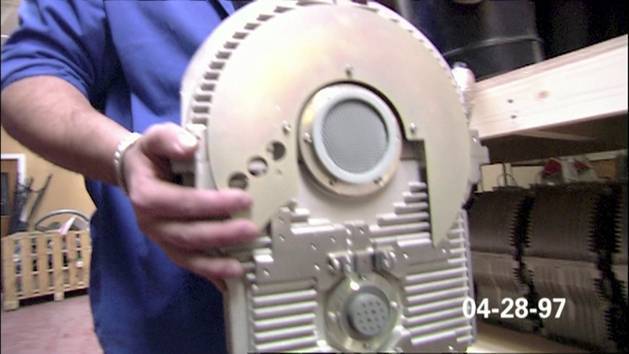
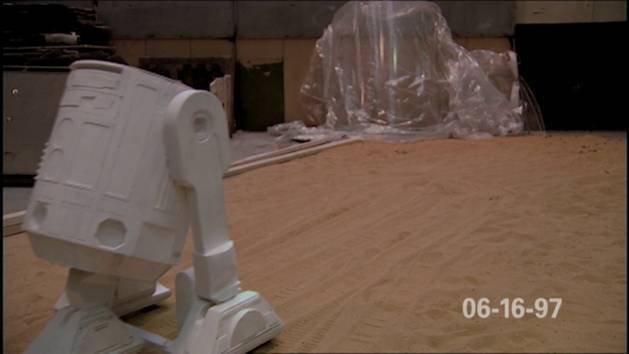
Back in the days of making Return of the Jedi, we had about fifteen R2 units, many of them built to perform particular tasks or work best on one kind of terrain, like sand or hard surfaces. A group of the surviving units were shipped to Leavesden Studios for the making of Episode I, and the Leavesden crew dismantled most of them and made new R2's with updated technology. Many of the original R2 units had been metal, but the new ones were mostly made of painted fiberglass. A couple of the originals were kept, including one that would hold Kenny Baker and another 'pneumatic' R2 which could extend a third leg -- only one of the droids could actually do this complex maneuver.
During the production, we found that R2 had a bit of trouble doing what we needed him to accomplish. Everyone had gotten so used to seeing the super-capable R2 on the screen that we tended to think the real-life R2 could do all those things just as easily. It turned out that crossing narrow door thresholds (like in Anakin's hovel), loose sand, or the uneven forest floor were really difficult challenges. Door thresholds would catch R2's small front wheel, sand would get into the wheel drive chains and ruin the machinery, and tree roots on the ground would topple the rather unsteady little tripod of a droid.
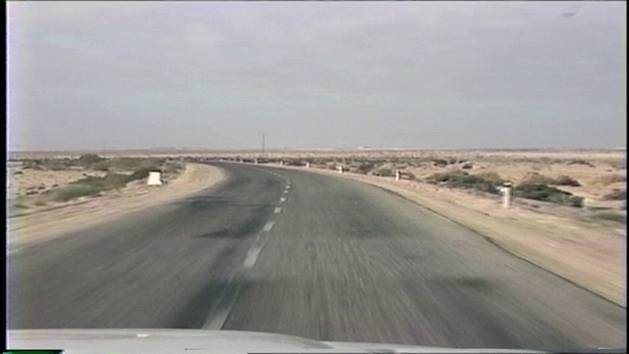
Our dauntless producer Rick McCallum decided at one point to create new R2 units that would be unstoppable. He had the crew at Leavesden make a new unit, and at the same time had ILM in California create a new one as well. The two teams worked separately, and both came up with their own innovative solutions to the problems R2 faced -- which in the end, were actually quite similar. The Leavesden team applied what they'd learned working with R2 in England and Tunisia and the ILM crew used their years of experience handling the R2 for publicity appearances to create their version of the super R2 unit. Both new droids were brought to Leavesden, and in the end we had R2 units that really could do just about anything that George needed.
Looking back, the people working on R2 told me that from a practical standpoint R2 would have been a lot easier to deal with if his unstable and unsteady design had been a little different from the beginning. The Leavesden crew made some minor changes to their unit in the interest of practicality, like widening his feet a little and adding a crossbar between them (which you don't really see in the film) that improved his stability. From a viewer's point of view, though, I think that R2's unique personality gets something from the touches of impracticality that make up his design, as well as the way he almost magically seems to be able to do anything in the film. It's hard work for a lot of people on the production side, but the cinematic results combine all their efforts and turn a machine into a personality we love to see.
![[ Lynne ]](/episode-i/bts/me1/img/lynne_sig.gif)