[ Welcome ] [ What's New ] [ The Movies ] [ Beyond the Movies ] [ Gaming ] [ Community ] [ Kids ] [ Shop ] [ Hyperspace ] [ Starwars.com ]
[ Starwars.com ]

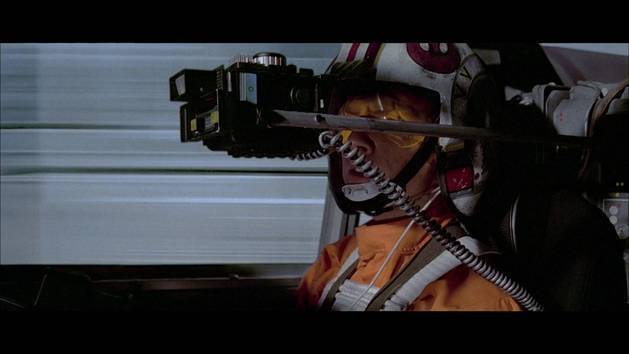
[ X-wing starfighter ]
X-wing starfighter
A symbol of the Rebellion's starfighter corps...
[ Read More ]
News: The Art of Star Wars exhibit tours Japan
Feature: Holographic Artist: Philip Metschan
Feature: Star Wars: The Magic of Myth at the Smithsonian
News: Comic-Con 2003 Star Wars Guide
 
[ Episode IV ]

Introduction
Transition Effects
The Missing Negative
Concept Art
The Lucasfilm Archives
Pre-Visualizing the Scene
Continuity Report
Plate Shots and Other Ancient Traditions
The Virtual Model Shop
The People Behind the Pixels
Anatomy of a Dewback
August 11, 1997

Concept Art

[ dewback sketch 2 ] It was Terryl Whitlatch's job to turn the rough dewbacks that appear in the original Star Wars into detailed and realistic creatures.

Terryl studied vertebrate zoology, the study of animals with backbones, at Sonoma State University. She later transferred to the Academy of Art College in San Francisco. Her biological training has been invaluable for creating amazing but plausible creatures. She said she uses animals that exist in nature as models and blueprints for evolving her own creations. She pays strict attention to skeletal details and chooses realistic skin textures and colors.

[ dewback sketch 3 ] Terryl approached this particular challenge by asking herself questions about the dewbacks. What physical characteristics would this creature need to survive in the harsh Tatooine desert? Is it clumsy or graceful? What particular features make the dewback a convenient animal for the stormtroopers to use on their desert missions?

[ dewback sketch 4 ] Terryl answered these questions graphically -- giving the dewback a hump to store energy much like a camel. It has dark, rough skin with sparse hair. Her dewback doesn't look very comfortable to ride but they work well for the stormtroopers because they've adapted well to life in the desert. The details in Terryl's design make the dewback a creature that an audience would find plausible in the context of the movie.

Terryl used the example of a horse in a Western to illustrate what she tries to accomplish when designing creatures.

[ dewback sketch 5 ] "If the horse just stood there not moving while the cowboys talked, no one would believe it was a real horse. The little movements like twitching ears, and a flipping tail are important details in making the animal seem real and alive."

Terryl needed to create several sketches for the digital artists so they could build a properly proportioned computer model of her design. The full color sketch defines the dewback's skin texture and color, its proportions and size. She drew the top view of the dewback to establish the dewback's ribcage and pelvis size and length.

[ dewback sketch 6 ] Not all the sketches were necessary for creating the enhanced Tatooine dune sequence, but they represent the amount of thought and care Terryl puts into each creature she designs. She says she develops a real affection for some of her creatures.


[ Archives ] [ Discuss This ] [ Email This ]

© Lucasfilm . All rights reserved. | Terms of Use | Privacy Policy | Business inquiries