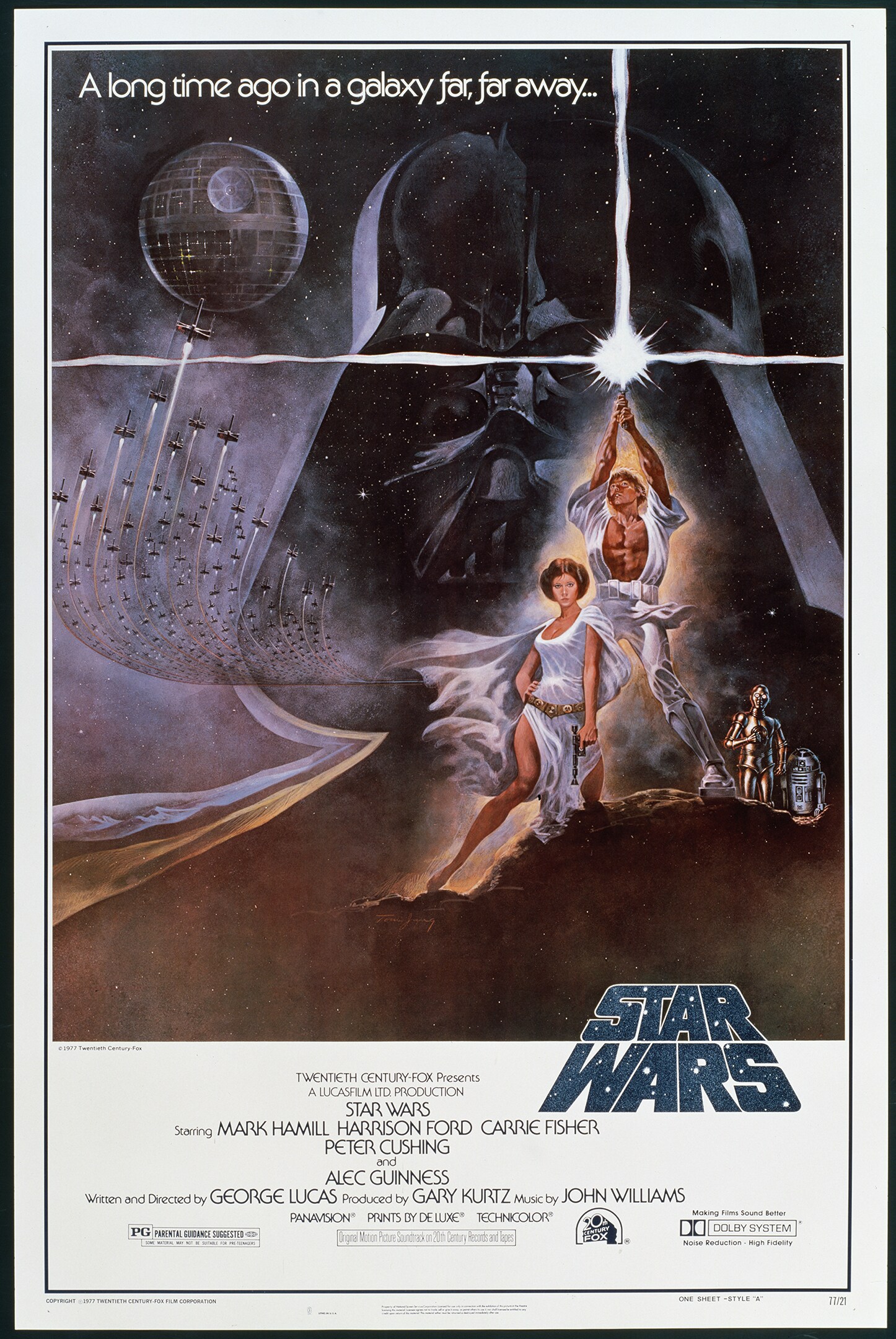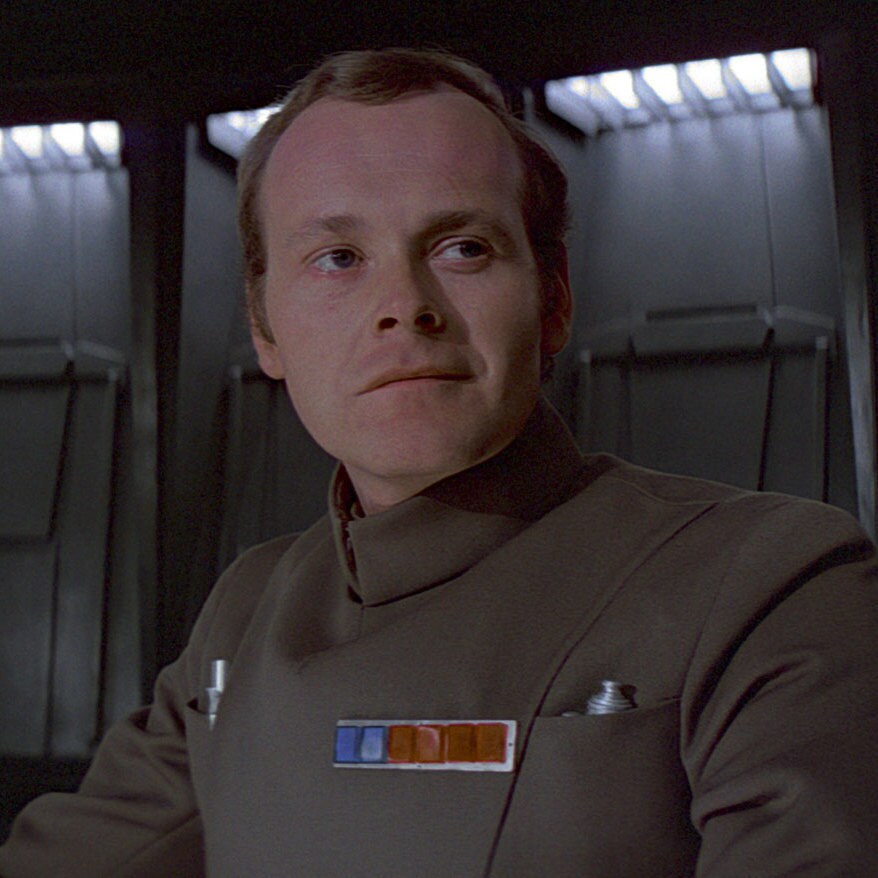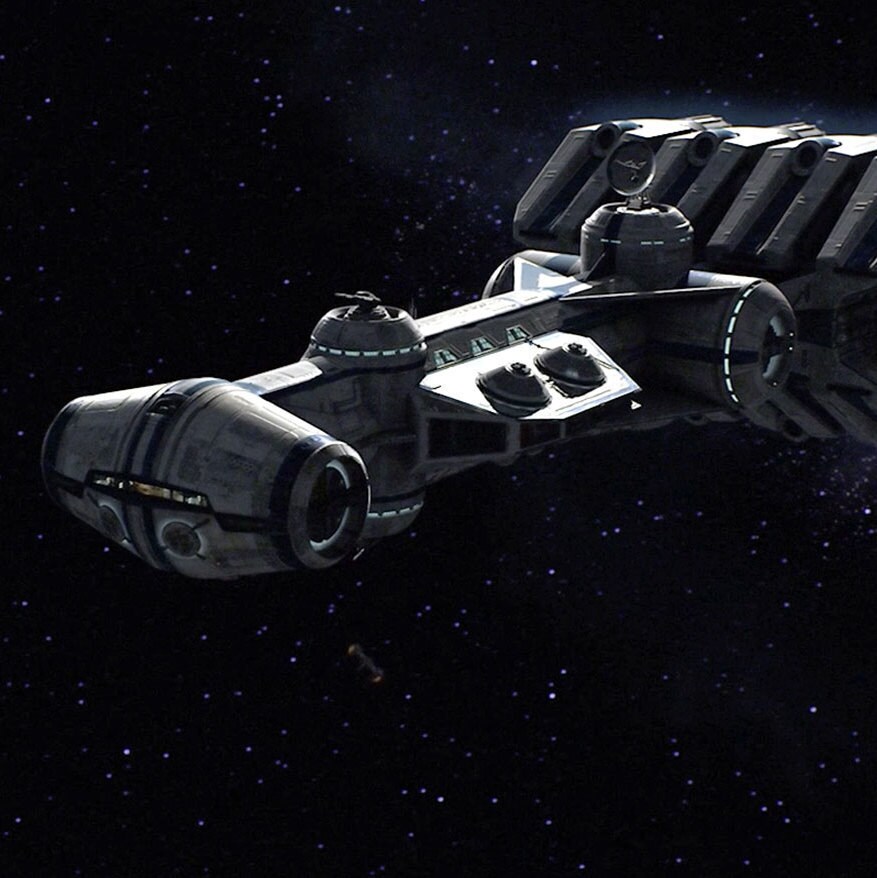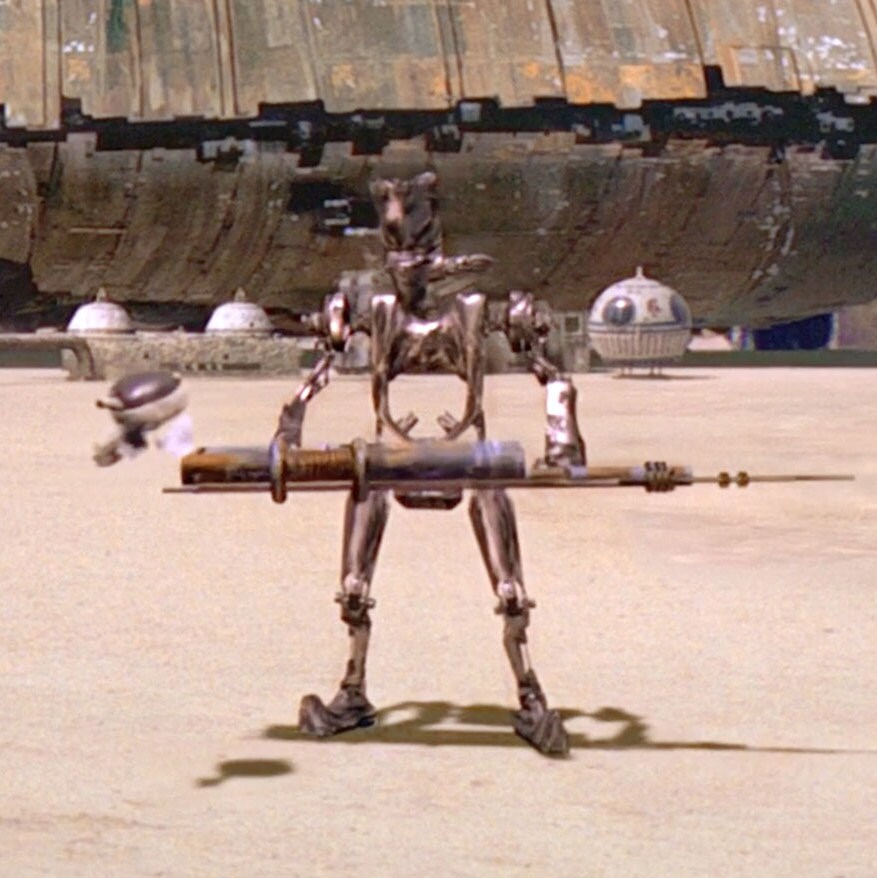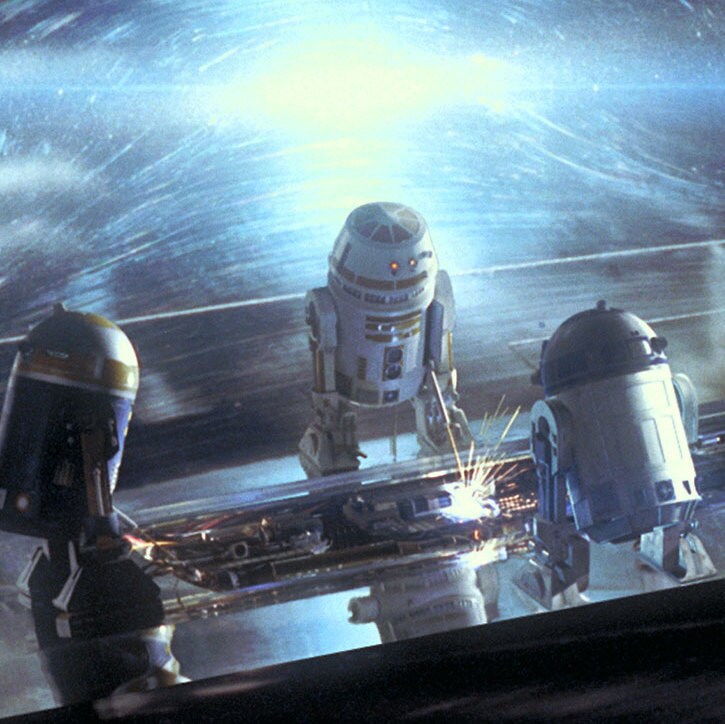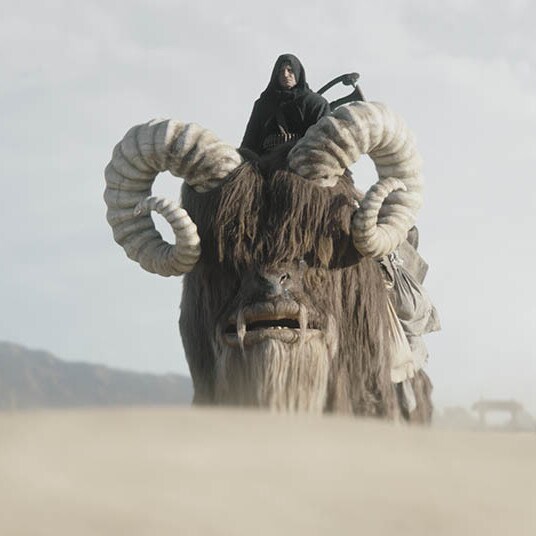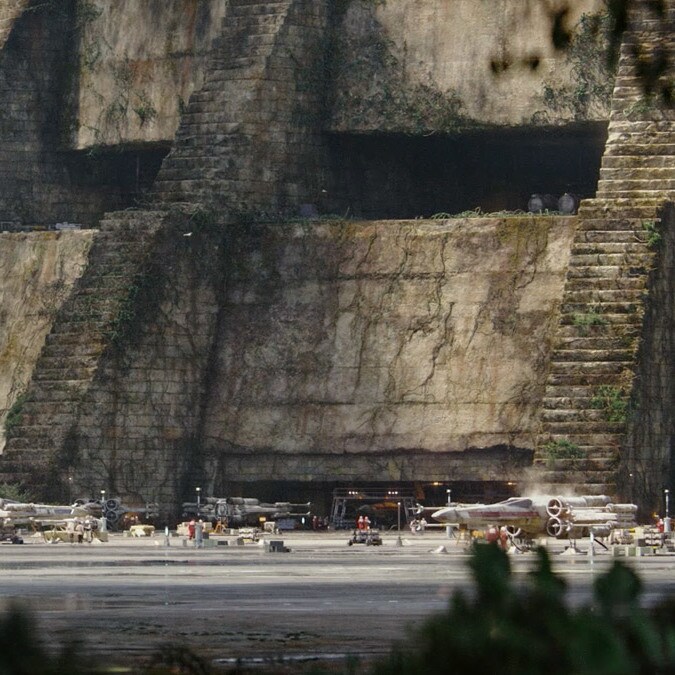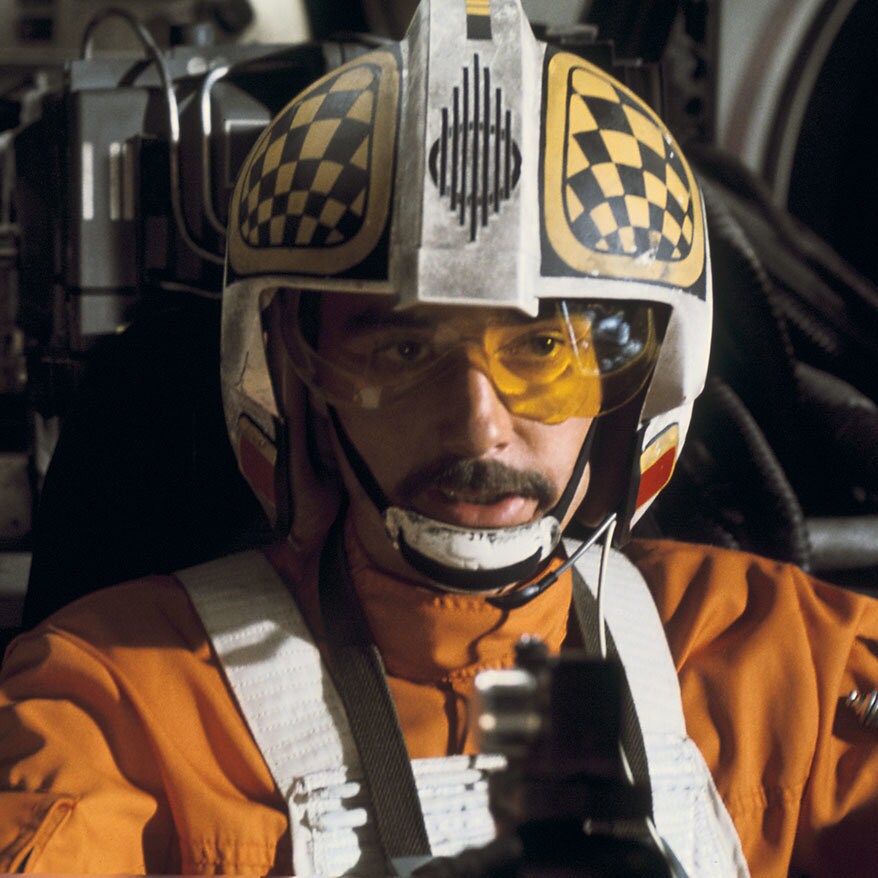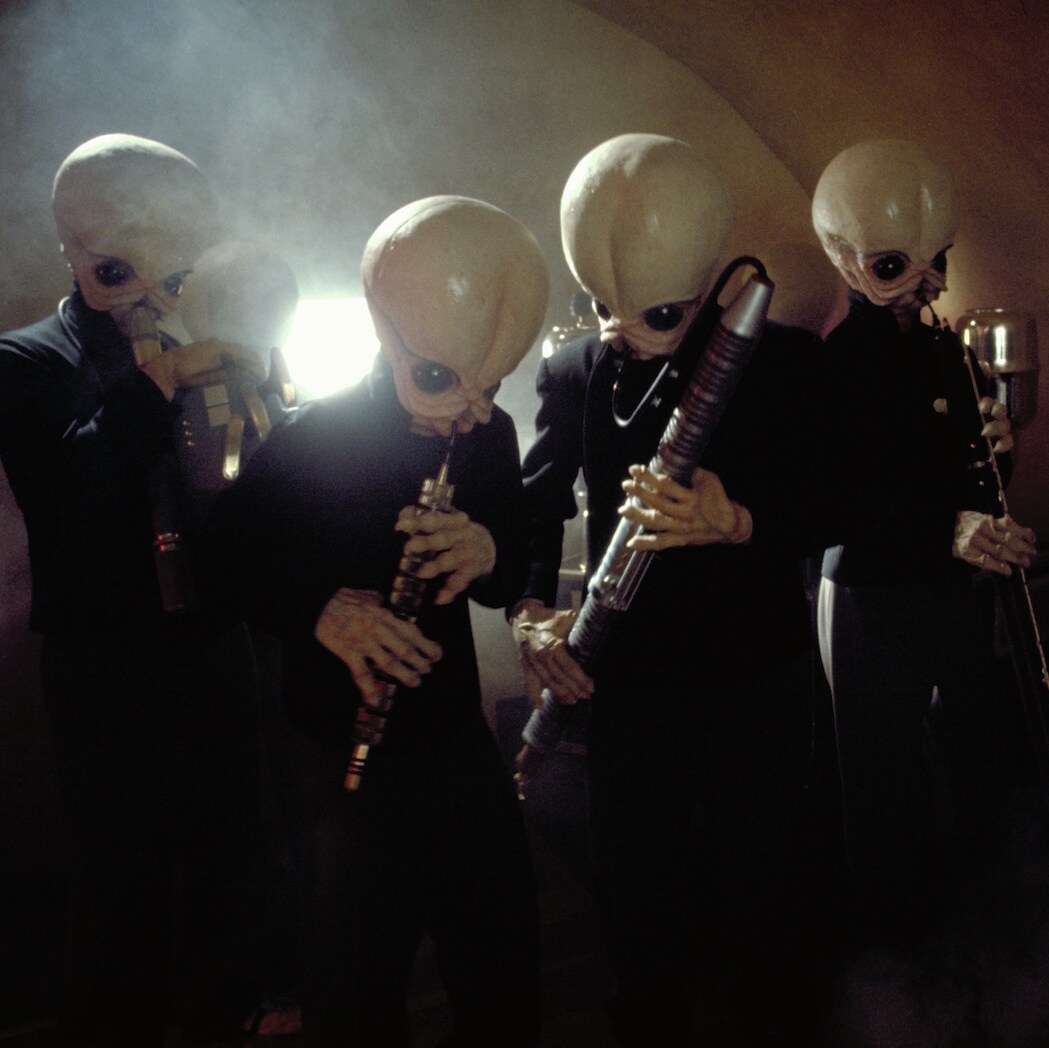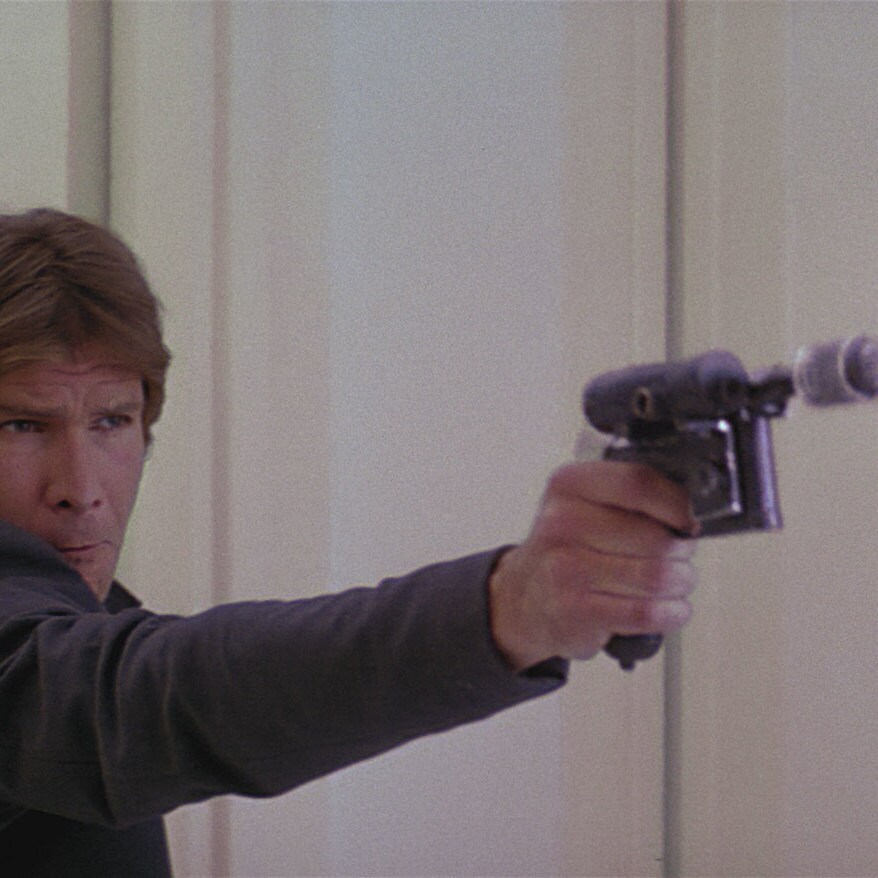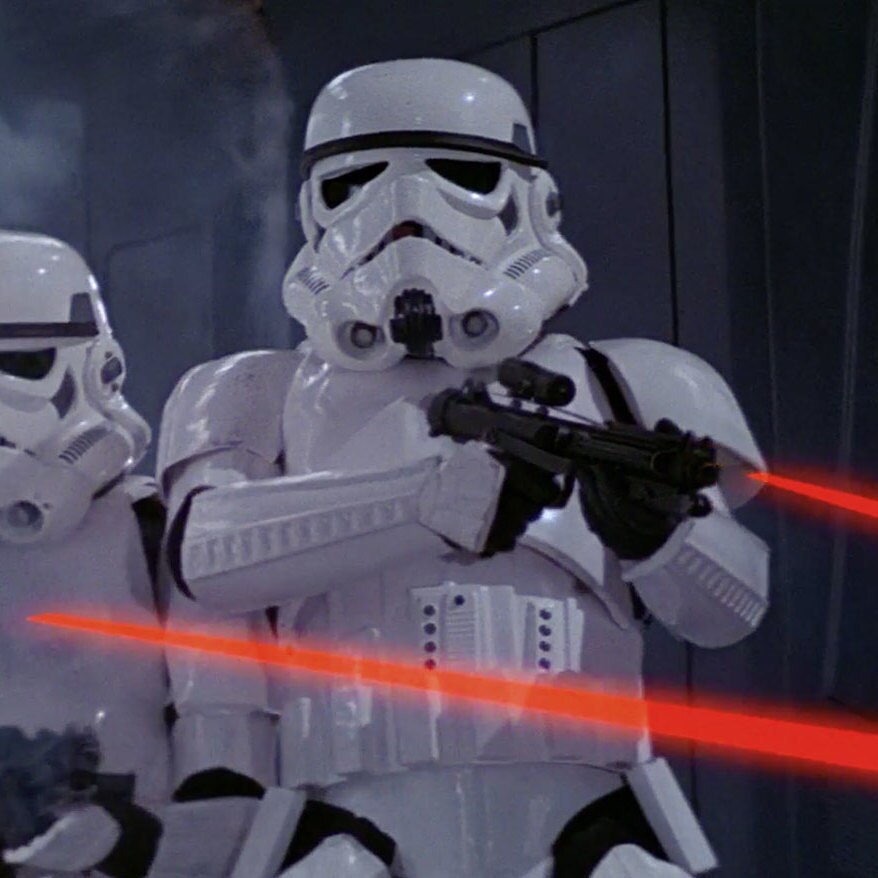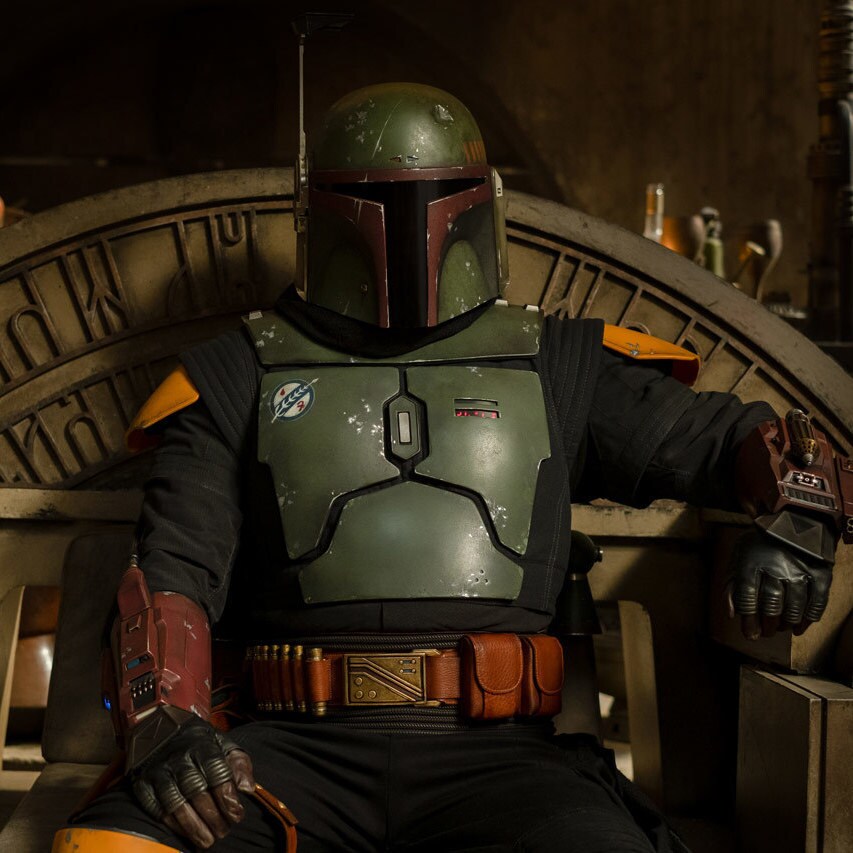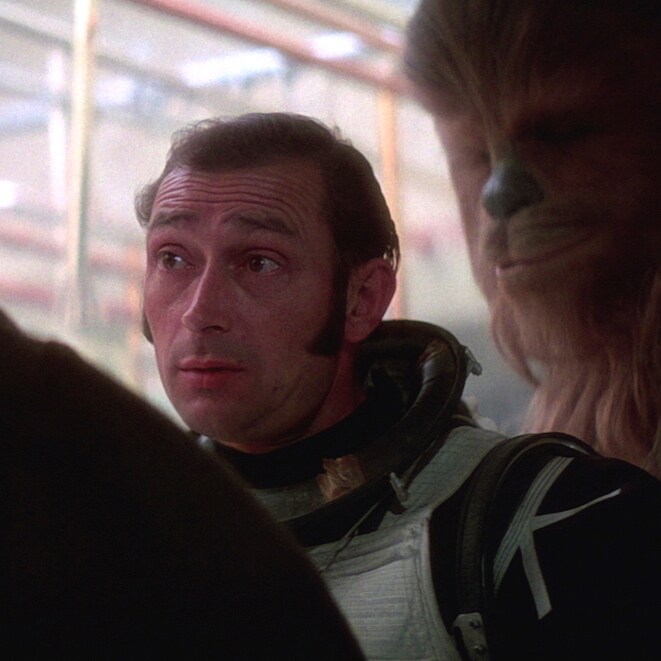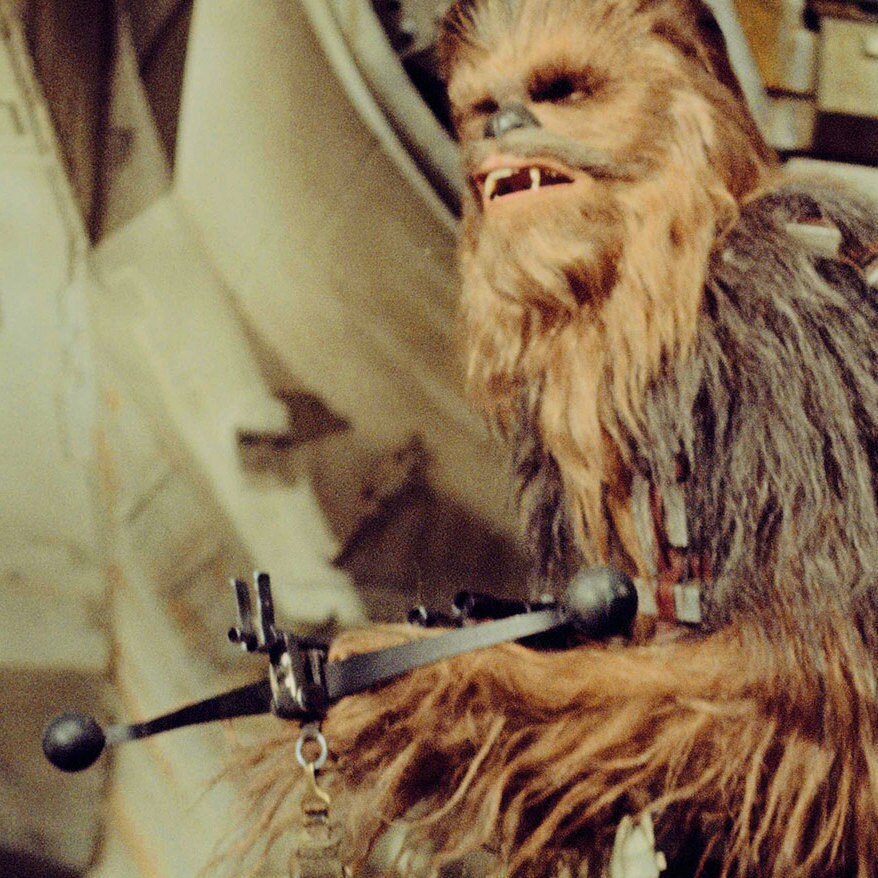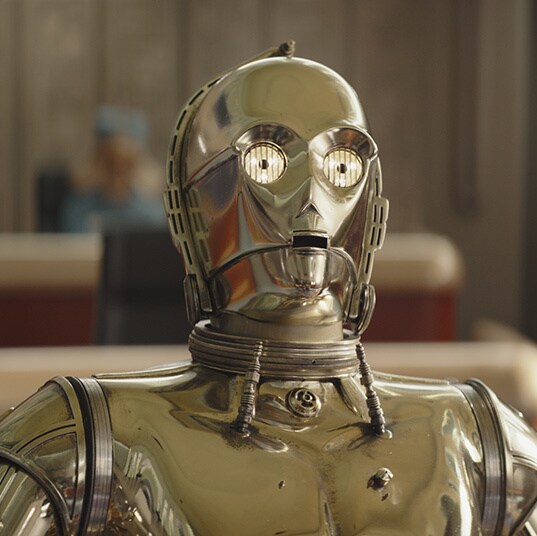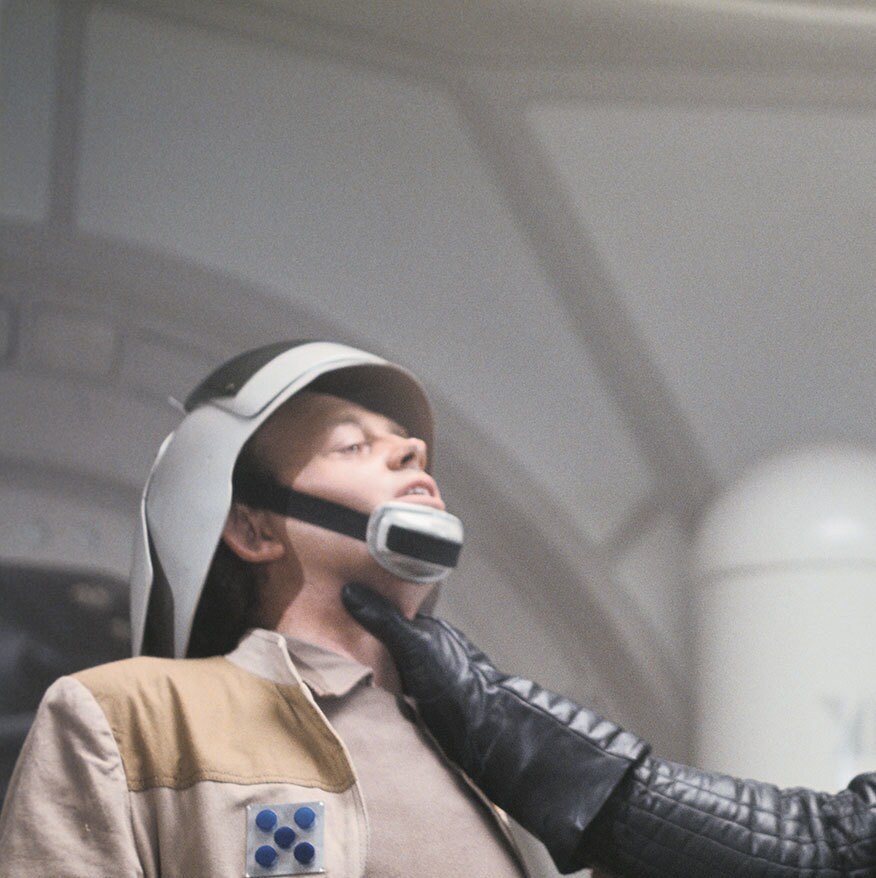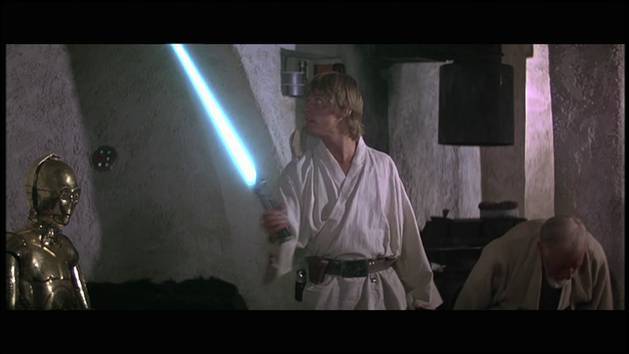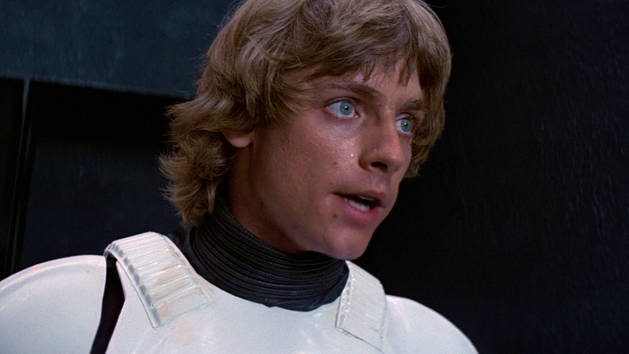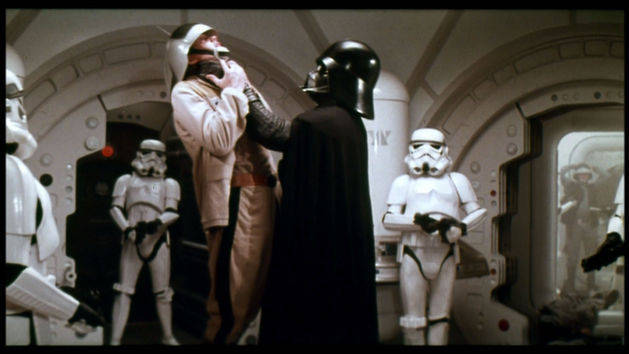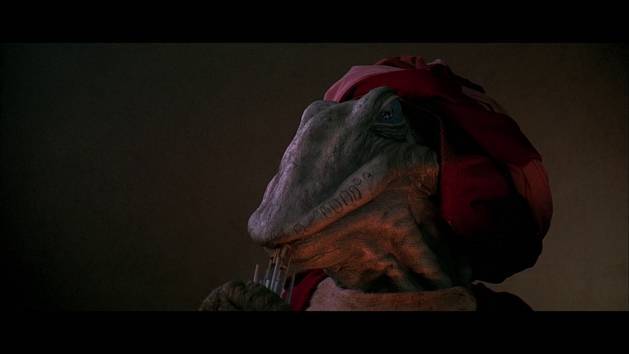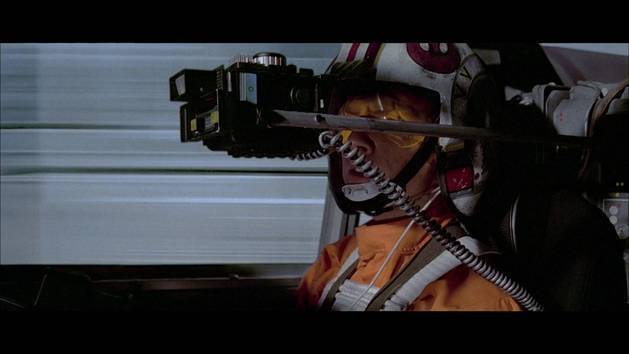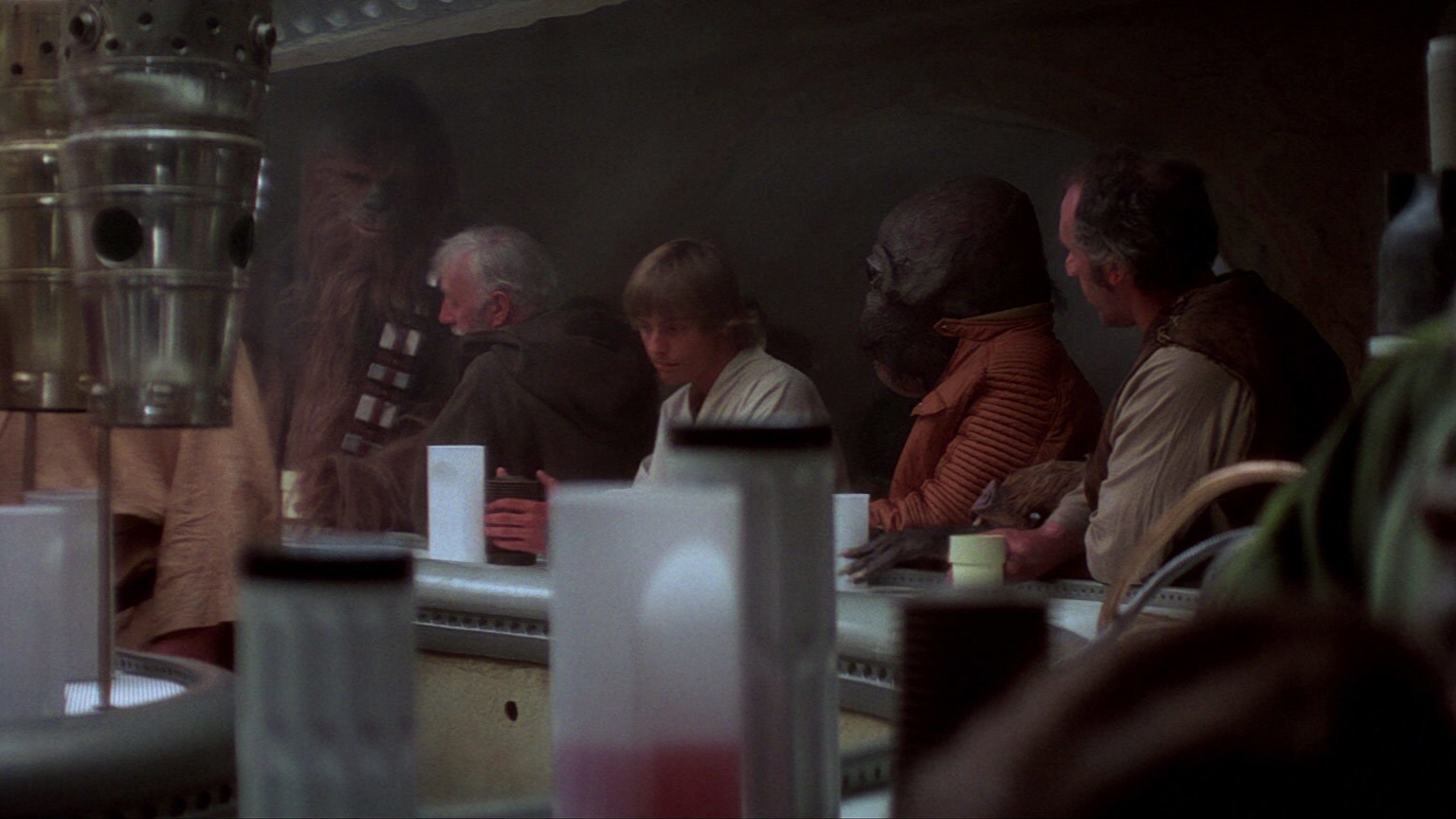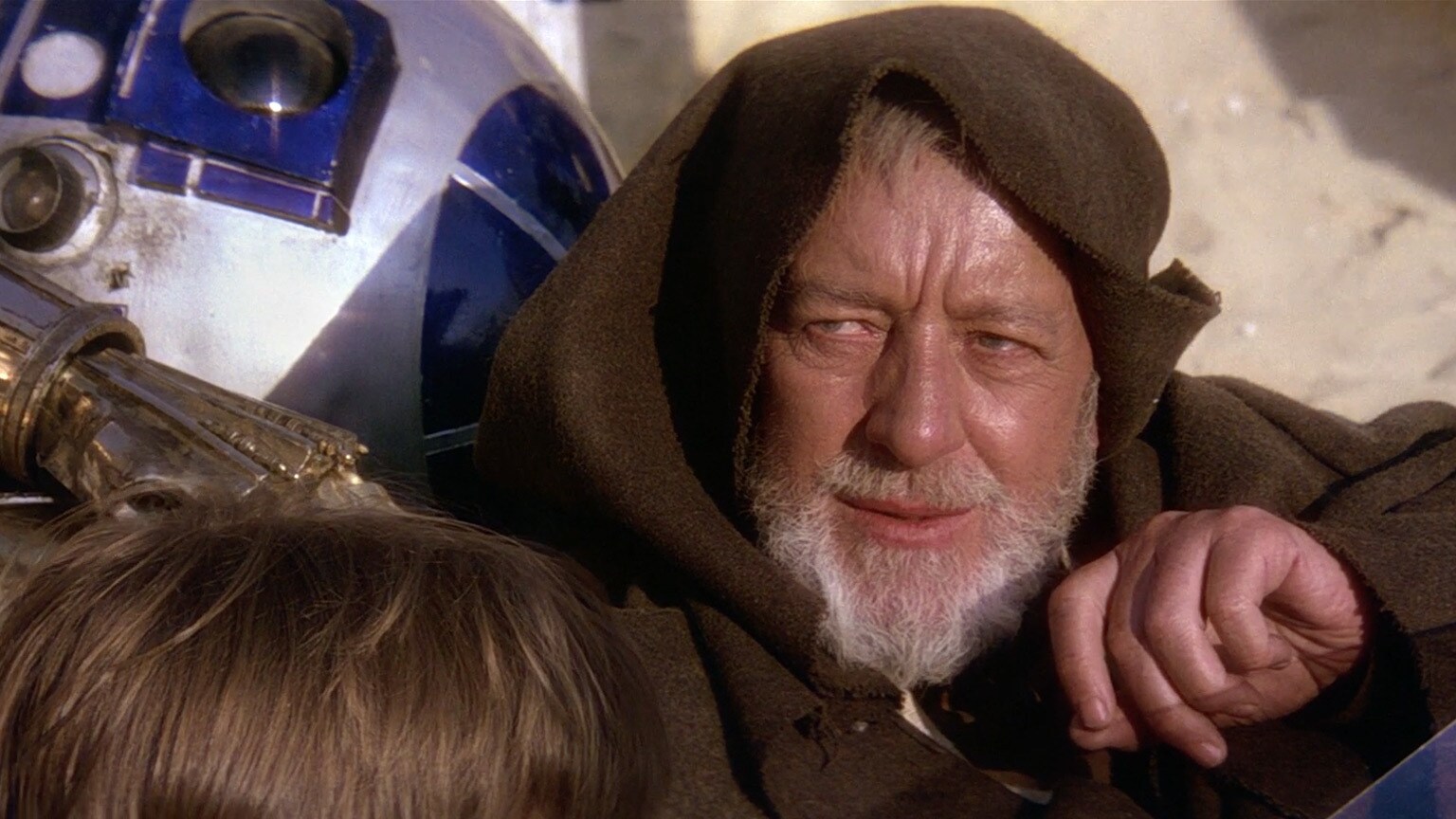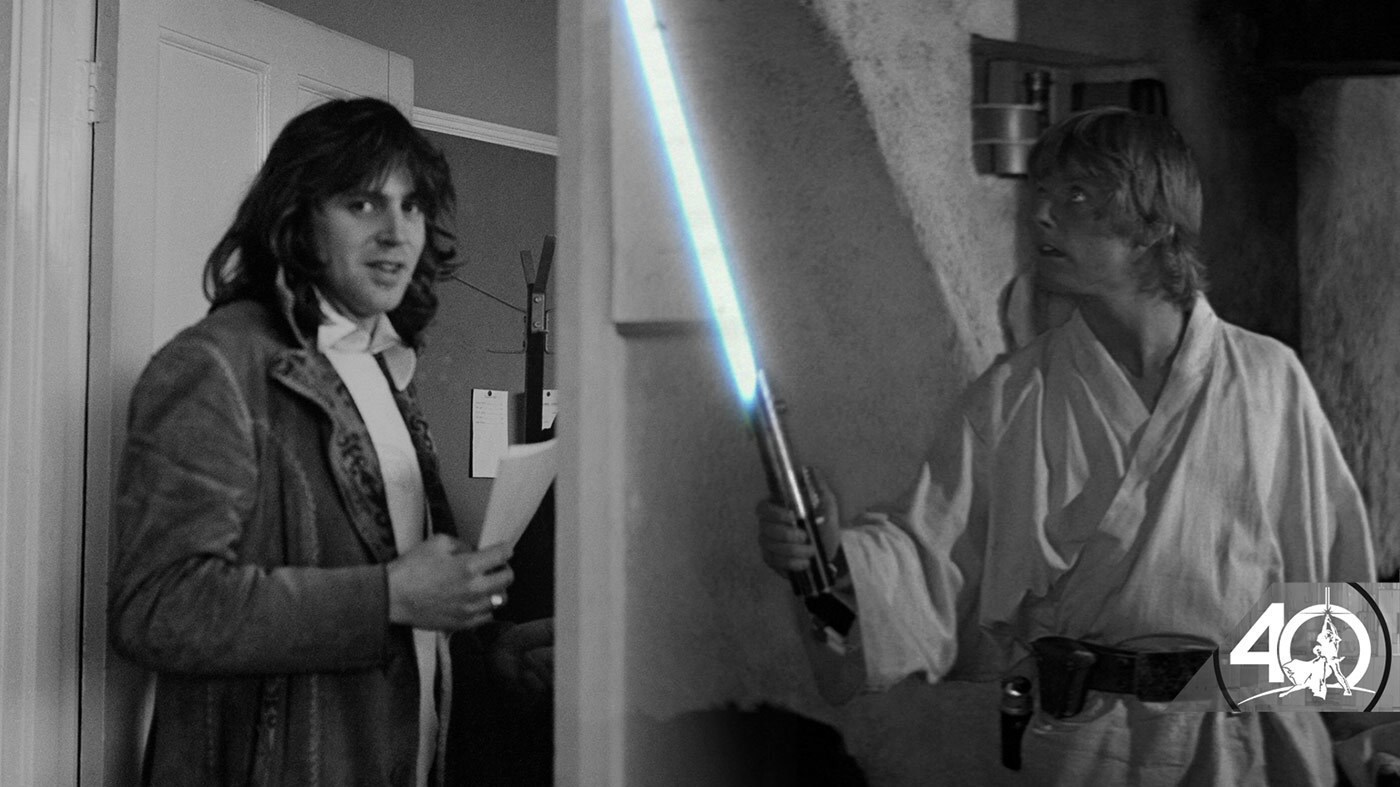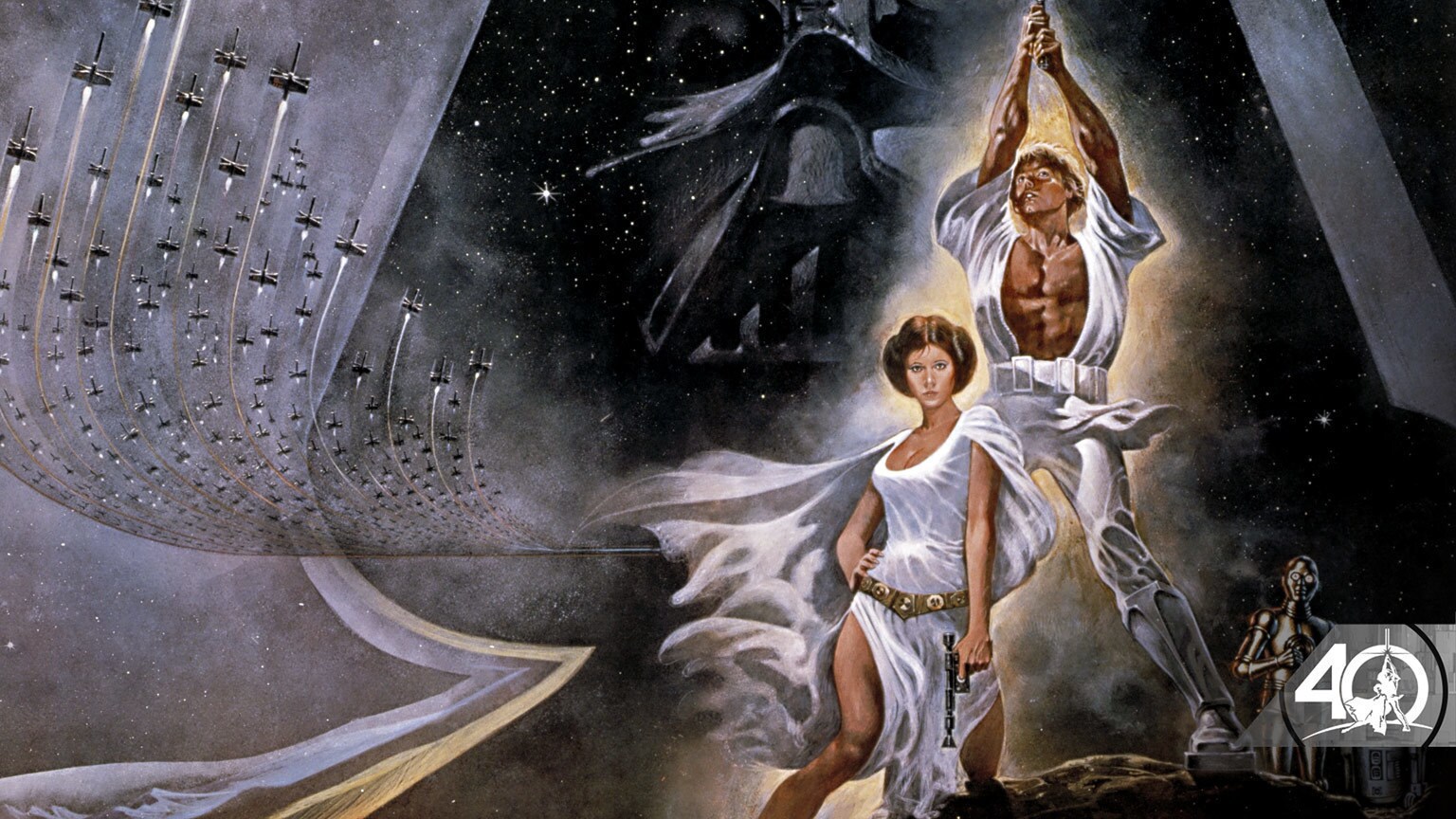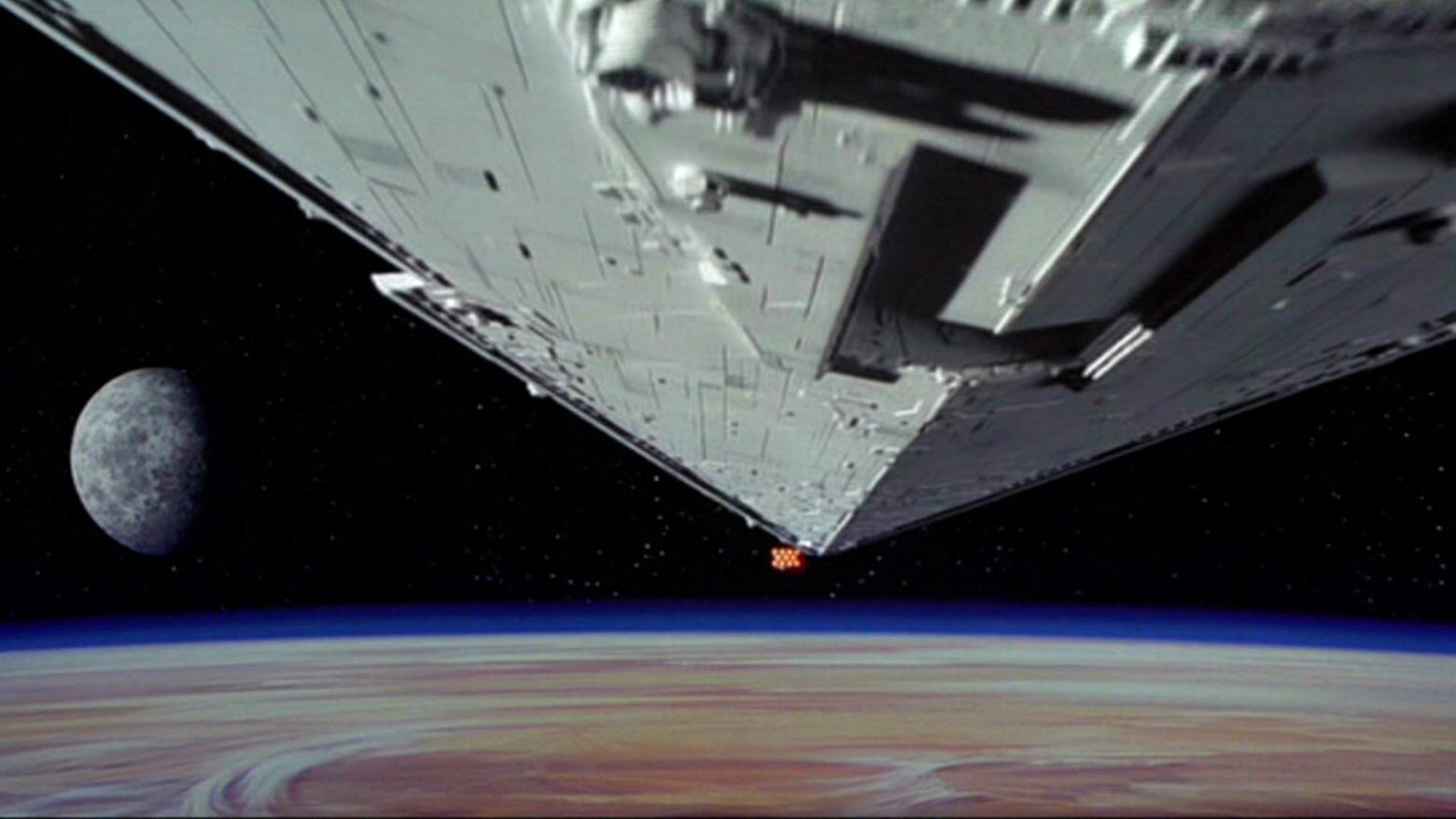

But in 1977, lobby cards were still in full swing -- and for Star Wars, interestingly, lobbies were apparently the primary means of advertising the movie at the theater level in its first weeks of release. Photos of theaters showing Star Wars during May and June of '77 reveal that lobby cards were often the only form of advertising displayed, with no posters in sight (even the famous footage captured at the Chinese Theatre footprint ceremony held on August 3 shows no posters -- only lobby cards).
For Star Wars, there was an endless array of images and sizes produced in lobby card form. There were eight mini lobbies (8"x10"), eight standard (11"x14"), four jumbo (16"x20"), and two scene cards (20"x30"). There were also six portrait cards of the core cast (12"x17"), although these are often found printed together on a single uncut sheet. (Collectors note: The earliest mini and standard lobbies were designated with the number "77-21-0", while subsequent printings exhibited the same code without the "0".There were also cards printed with no number codes at all. Also, early printings of the jumbo card depicting Luke and Leia in the Death Star chasm included the soundstage's floor in the shot just below the heroes. For this reason, most of these jumbo cards are found with the lower edge trimmed by the printer to preserve the scene's intended illusion of a perilous height).
Licensee DisplaysSome Star Wars licensees tried to reach their target consumers directly at the theater level, touting sweepstakes, rebates, or premiums to generate interest in their products.
In 1977, Toyota ran a sweepstakes which awarded a grand prize customized Star Wars Celica to one lucky winner, a promotion that was advertised both in car showrooms and in movie theaters. Posters and counter displays were sent to theater owners, graced with rare artwork by noted rock-and-roll illustrator John Van Hamersveld. The fate of the stellar auto has since receded into the realm of collector lore.

Kenner finally took its Star Wars merchandising message to theaters in 1979 with a free handout booklet full of coupons and rebate offers -- a promotion even called out on the 1979 re-release one-sheet. They followed with a similar promotion for the film's 1981 re-release, this time installing an attractive countertop display in theaters asking kids to send in their movie ticket stubs for a $1 rebate. Not a bad deal when one considers the cost of a movie ticket in 1981 was about $3.
Coca-Cola offered a concession stand premium in 1982 for Star Wars' final solo re-release to theaters. With the purchase of a Coke, patrons could get a free 20 or 32oz plastic cup, and for the ambitious, a 50oz pitcher filled with popcorn. Interestingly, the cups and pitcher featured graphics from both Star Wars and The Empire Strikes Back, since both were appearing in re-release that year.
ProgramsAmong the very first Star Wars collectibles available was the movie program, which could be purchased directly from the theater lobby. Unusual for its horizontal format, the first printing was an immediate sell-out, since initial orders did not anticipate the strong level of enthusiasm for the film. (Collectors note: The first printing of the theater program can be distinguished from later printings by its slick cover -- later printings have a textured "pebbletone" cover and pink interior pages). Lucky attendees of early preview and benefit screenings took home the relatively scarce credit sheet, which was a slick foldout brochure listing the film's cast and crew.
Twentieth Century Fox issued t-shirts and buttons bearing the "May the Force Be With You" slogan to some theaters for employees to wear. While the t-shirts are quite rare, the buttons are still relatively easy to find, as many theaters ordered hundreds to give away to moviegoers.