
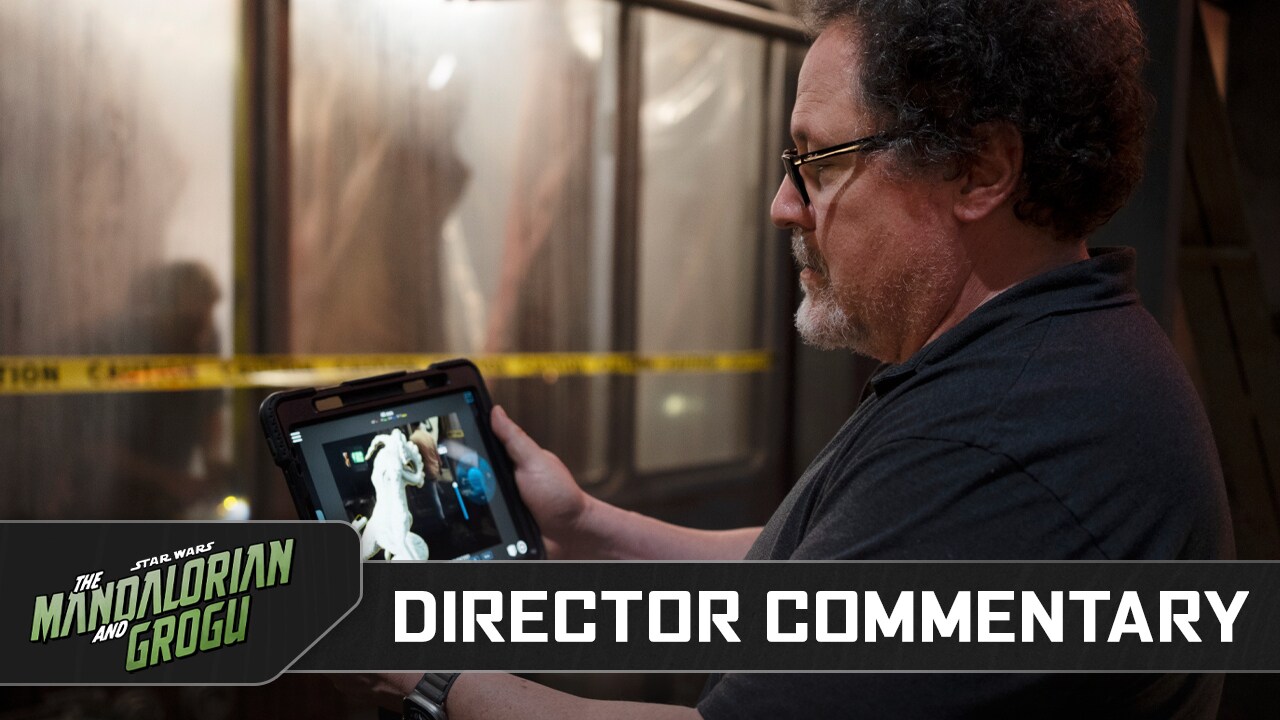
Behind the Scenes of Star Wars: The Mandalorian and Grogu with Jon Favreau’s Director’s Commentary

Learn about 15 newly revealed factoids to impress friends and family during your next rewatch.

What are the similarities between the homeworld of the Hutts and a slice of sourdough bread? Dive deeper into the latest adventures of Din Djarin and Grogu with some of our favorite behind-the-scenes trivia — and it isn't all food-related facts, we promise.

With The Mandalorian and Grogu, available now on digital, 4K Ultra HD, and streaming on Disney+, you can watch the latest Star Wars movie with a special feature-length audio track that features key insights from Director Jon Favreau, the veteran filmmaker and creator of The Mandalorian.

Here are just a few of our favorite behind-the-scenes secrets that we learned directly from Favreau's commentary.
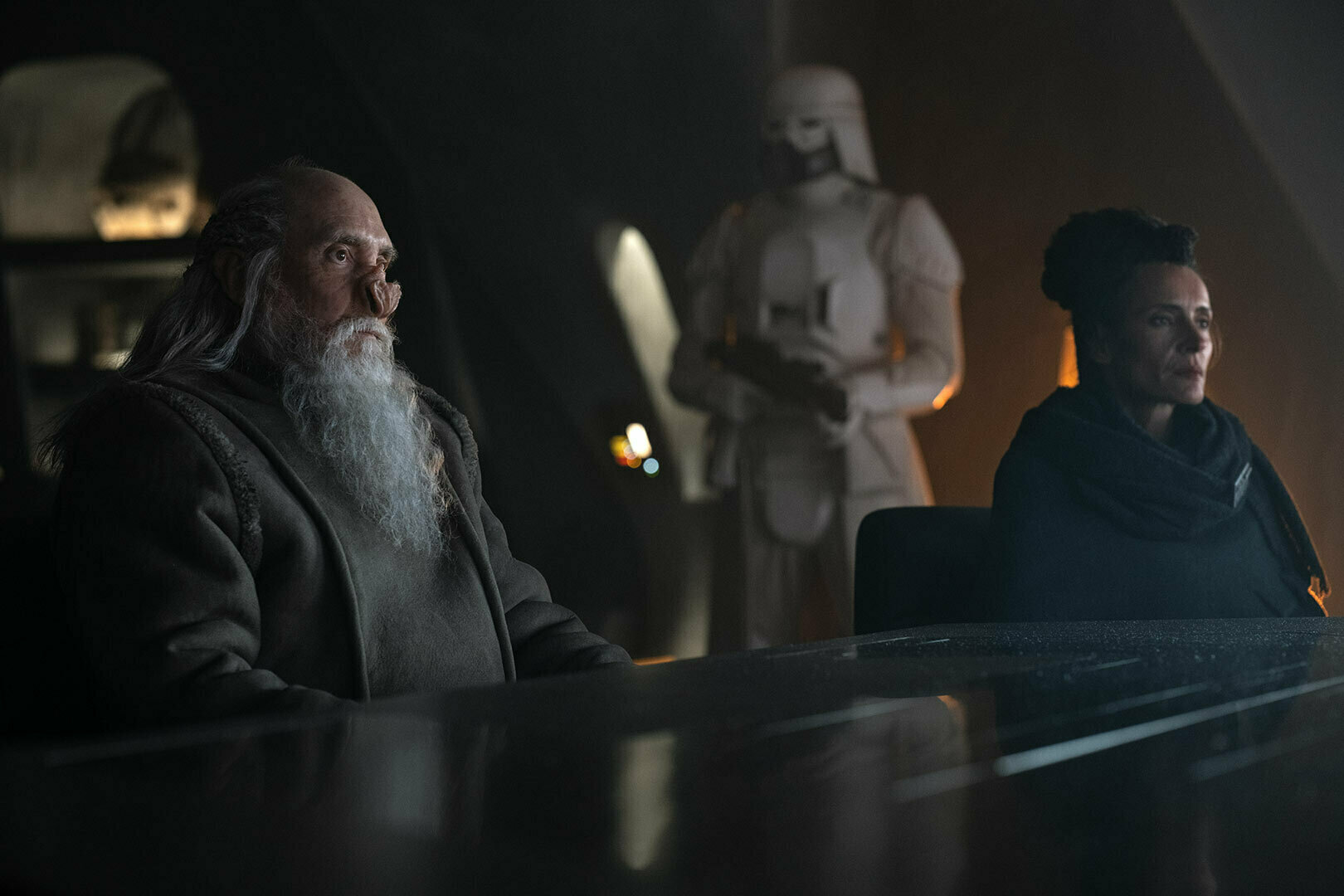
The actors during the movie's opening sequence on the Phostera set.

1. Be Cool

In order to see the foggy breath of the actors during the movie's opening sequence, the Phostera set was actually chilled overnight, a bit of movie magic that Favreau previously used while working with Marvel Studios. "The same effect was used when Tony Stark wakes up in the cave in Iron Man," recounts Favreau. "It gives a certain volume to the air — you can kind of feel the cold."

The walk down the hallway was [suit performer] Brendan Wayne, and then, on the burst of fire, we switched to [stunt double] Lateef Crowder.

2. Men Behind the Mask

When the Mandalorian is first fully revealed in the film, pay close attention to the flames. “We actually do a handoff,” explains Favreau. “The walk down the hallway was [suit performer] Brendan Wayne, and then, on the burst of fire, we switched to [stunt double] Lateef Crowder.” 

Wayne and Crowder share responsibility with star Pedro Pascal to portray Din Djarin on screen.
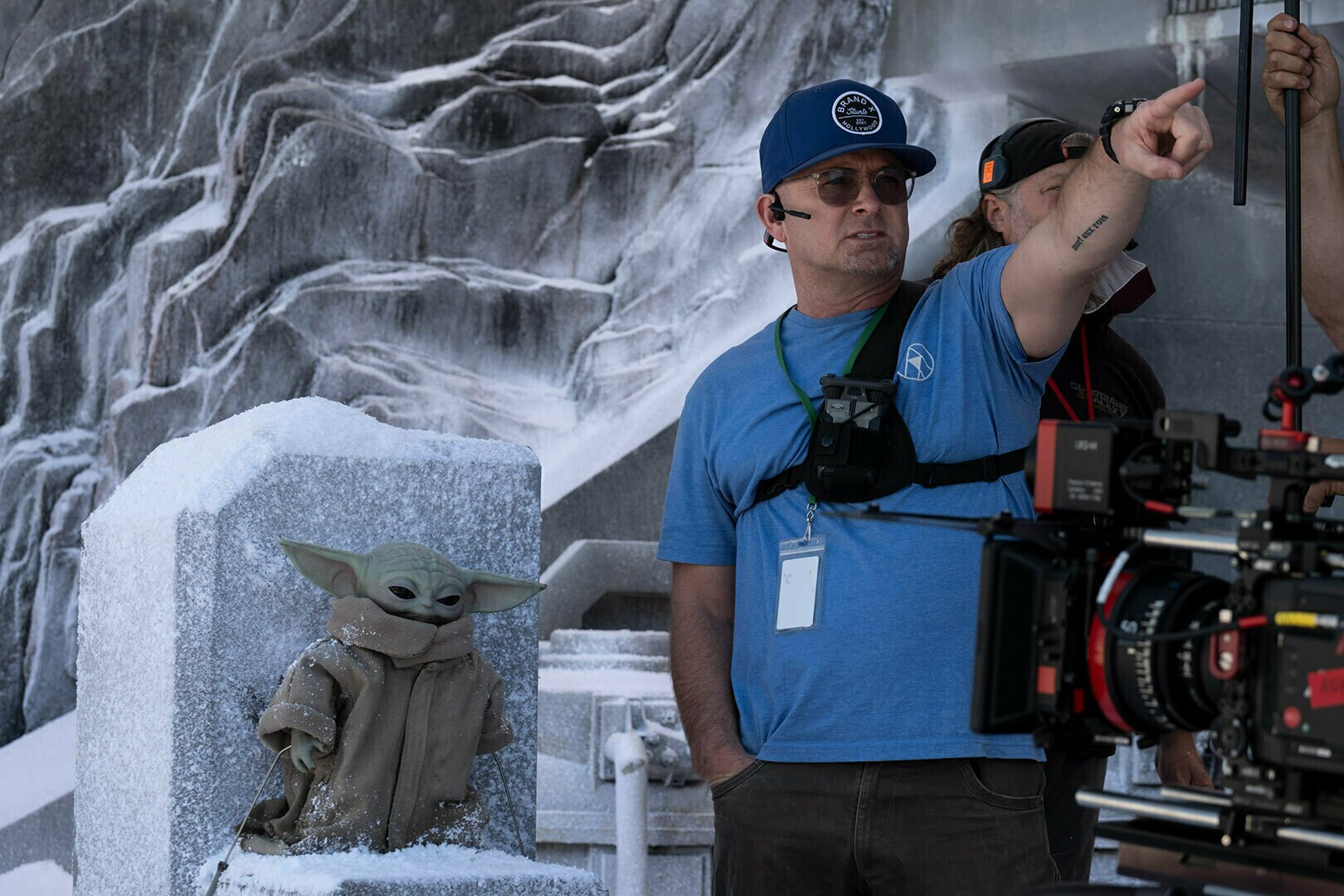
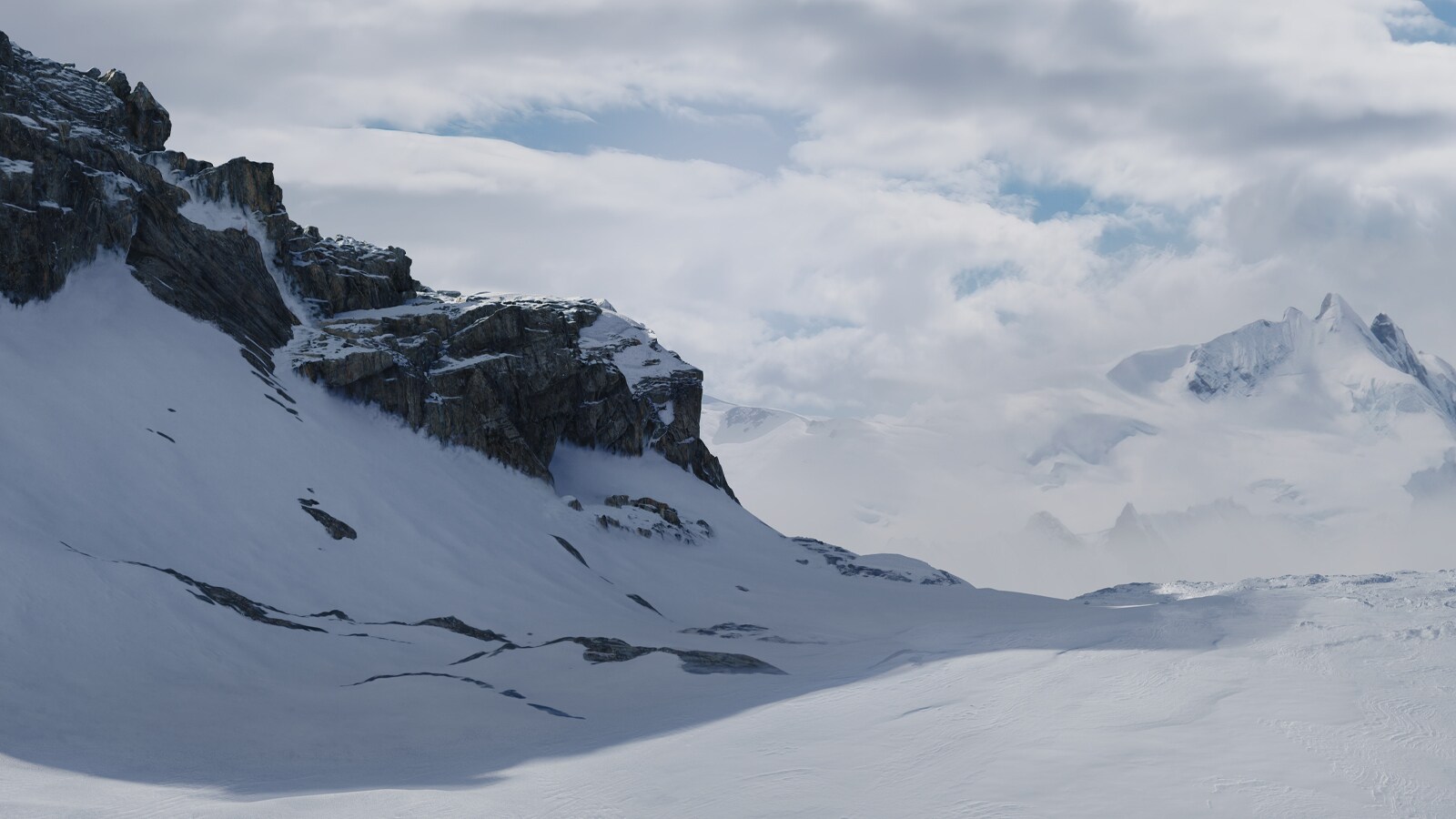
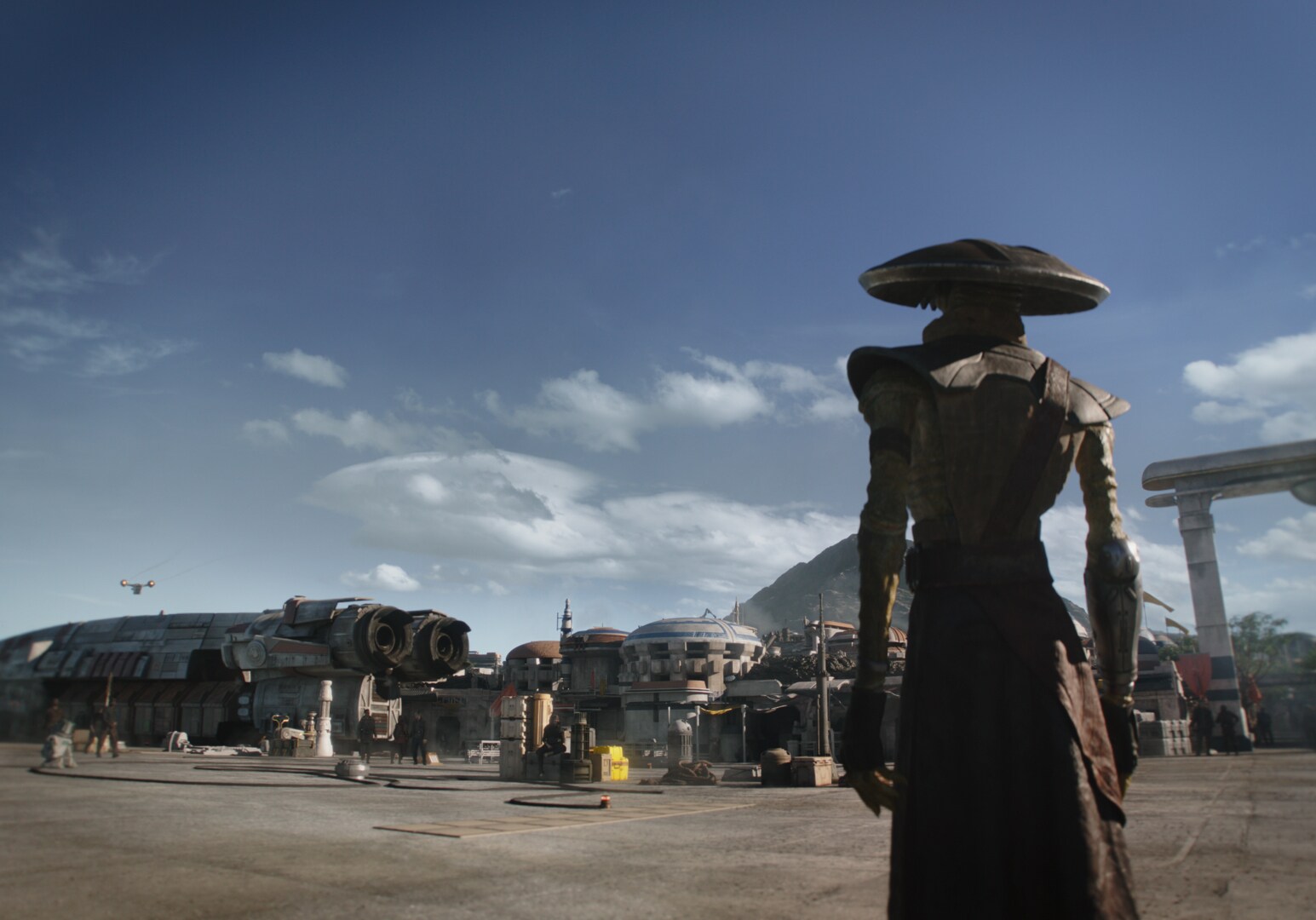
The Phostera set on a backlot in Los Angeles.The exterior environment of Phostera were filmed on Mount Waddington, north of Vancouver, Canada.

(L-R) The Phostera set in Los Angeles and the nexterior environment of Phostera set on Mount Waddington.

3. Hope You Find Your Dad

While the Phostera set was filmed on a backlot in Los Angeles, the exterior environment plates — the snowy real-life imagery later integrated into the film by Industrial Light & Magic — were actually filmed on Mount Waddington, just north of Vancouver, Canada. Scans of the frigid background, as well as drone photography, were done "not far from where we filmed the mountains from Elf," remembers Favreau.

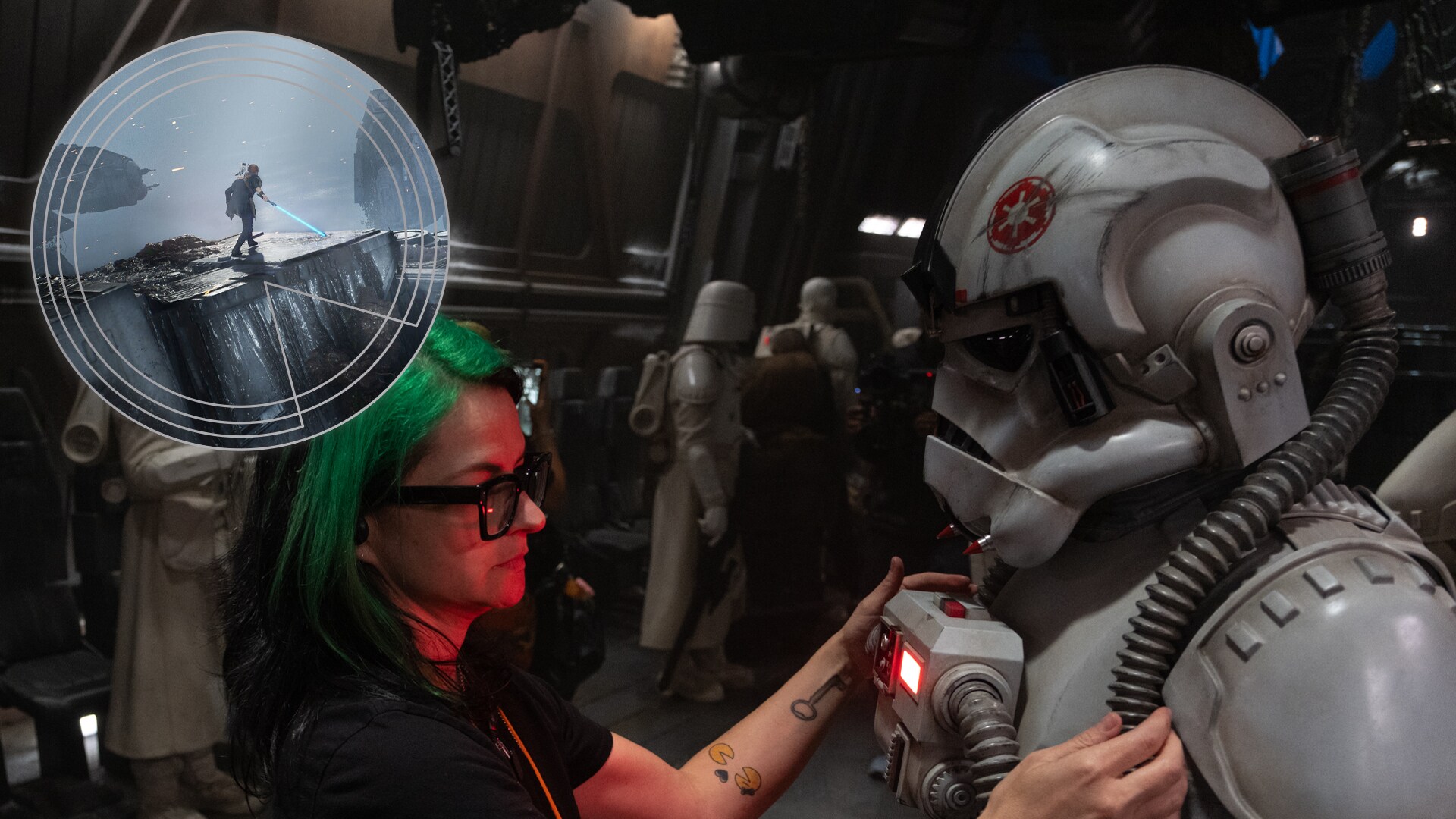
Using reference from Star Wars Jedi: Fallen Order, the team built out the fan-favorite vehicle as a practical set on a stage.

4. Walker Walkthrough

The Mandalorian and Grogu marks the first time we see beyond the helm inside an AT-AT in live action. Using reference from Star Wars Jedi: Fallen Order, the team built out the fan-favorite vehicle as a practical set on a stage.

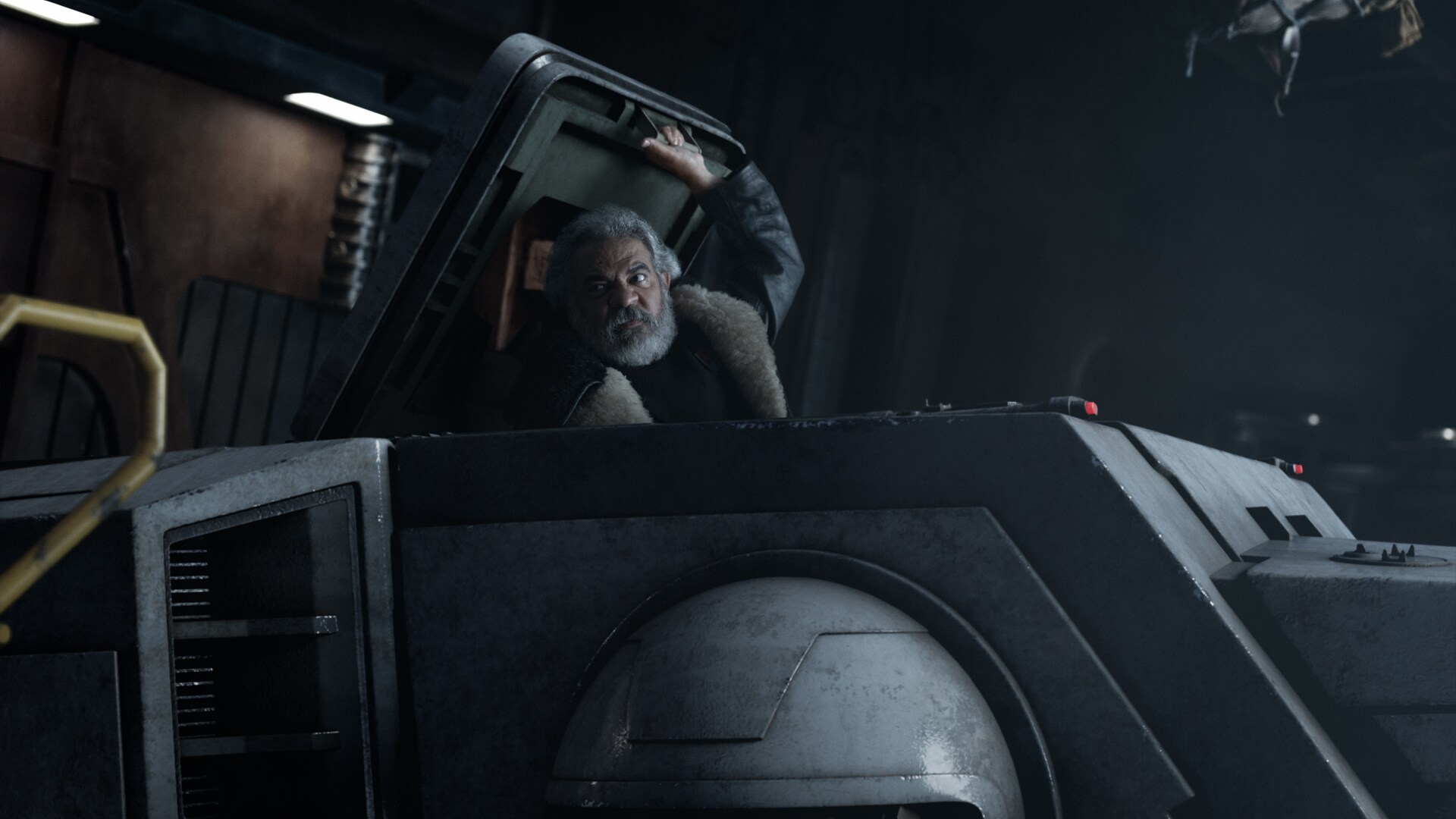
The INT-4 vehicle that the Imperial warlord uses to escape the AT-AT walker is based on the 1982 Kenner Mini-Rig toy of the same name.

As for the INT-4 Interceptor parked inside the walker, the craft was based on a "mini-rig" — a vintage toy design that was never actually seen in the Original Trilogy. "One of the things we like to do is look for Easter Eggs — not just from the films, but also from the original Kenner collection that a lot of people grew up with," says Favreau. "[Production Designer] Doug Chiang and his art department designed a really cool version of something that looked like a mini AT-AT, inside an actual AT-AT. I think they did a really good job making it look like it fits in-universe."

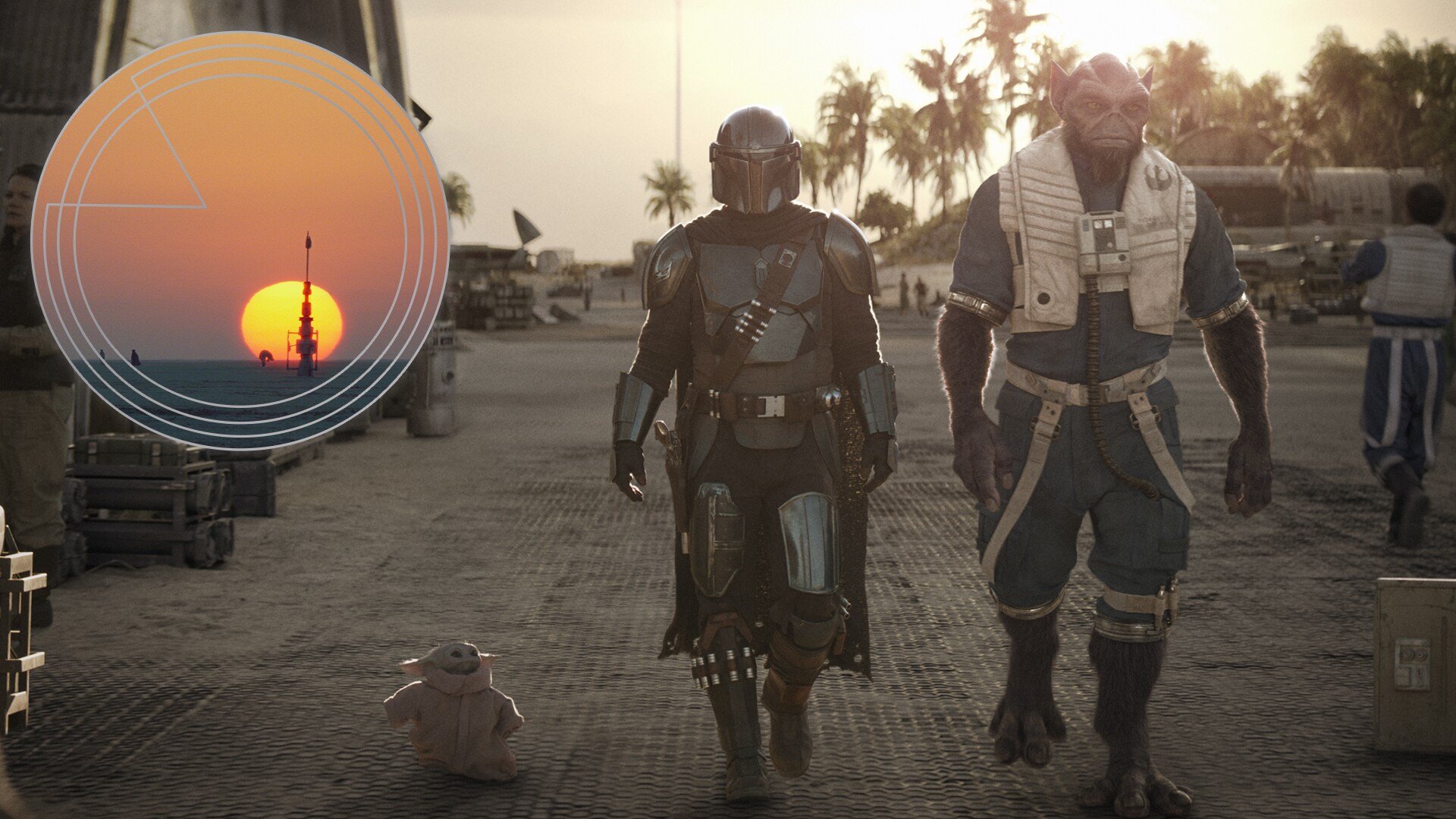
The Mandalorian and Grogu marks the first time credits have been shown at the start of a Star Wars film.

5. Credits Will Do Fine

The Mandalorian and Grogu marks the first time credits have been shown at the start of a Star Wars film. It is a breathtaking sequence that showcases some of the top-level cast and crew of the movie, as well as setting the tone for the rest of the film. Created to provide an opportunity to show off "all the ships" in the style of Top Gun, the resulting shots were quite complicated, a seamless mix of practical photography and computer-generated effects. As Favreau explains: "These plates were filmed in Crystal Cove at Laguna Beach in Southern California, including a sunset shot that took inspiration from a shot from The Force Awakens, which in turn had taken inspiration from Apocalypse Now."

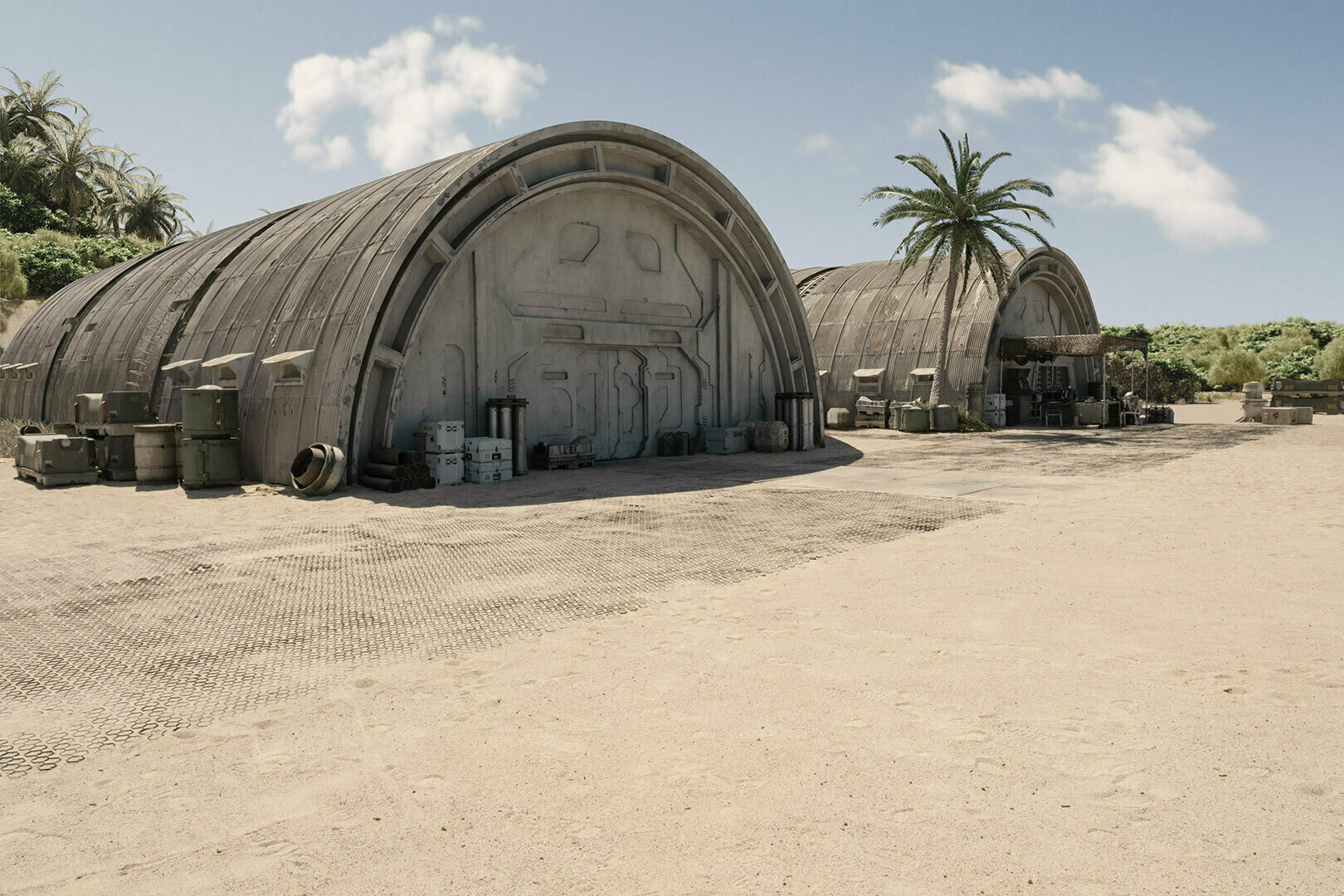
The Quonset huts that make up the New Republic's Adelphi Base.

6. The Adelphi Aviator

The Quonset huts that make up the New Republic's Adelphi Base are a nod to the exterior designs of "Thunder Alley," the nickname for Favreau's studio space in Culver City, California. Once a Howard Hughes air base and then a row of warehouses that were used to manufacture mid-century hot rod parts, the area eventually became a tech hub in Southern California.

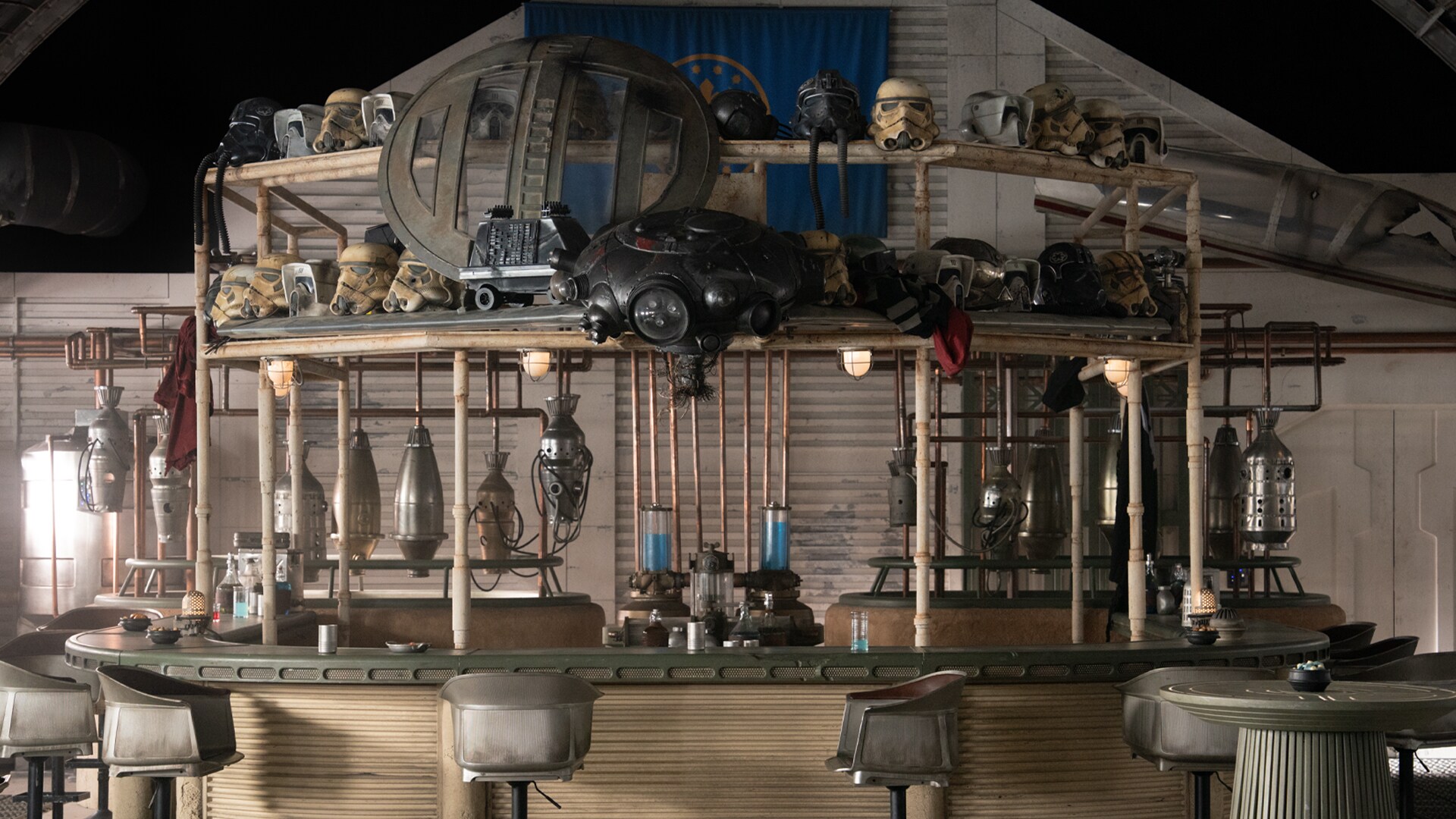
The bar at Adelphi Base.

The glimpsed interior of the base is also very much in this style, but with some Star Wars twists. "[Production Designers] Andrew L. Jones and Doug Chiang brought some Star Wars elements in, but also tied in the older architecture that already existed, in the tradition of what George Lucas did with props and sets and vehicles," says Favreau.

7. Marty Party

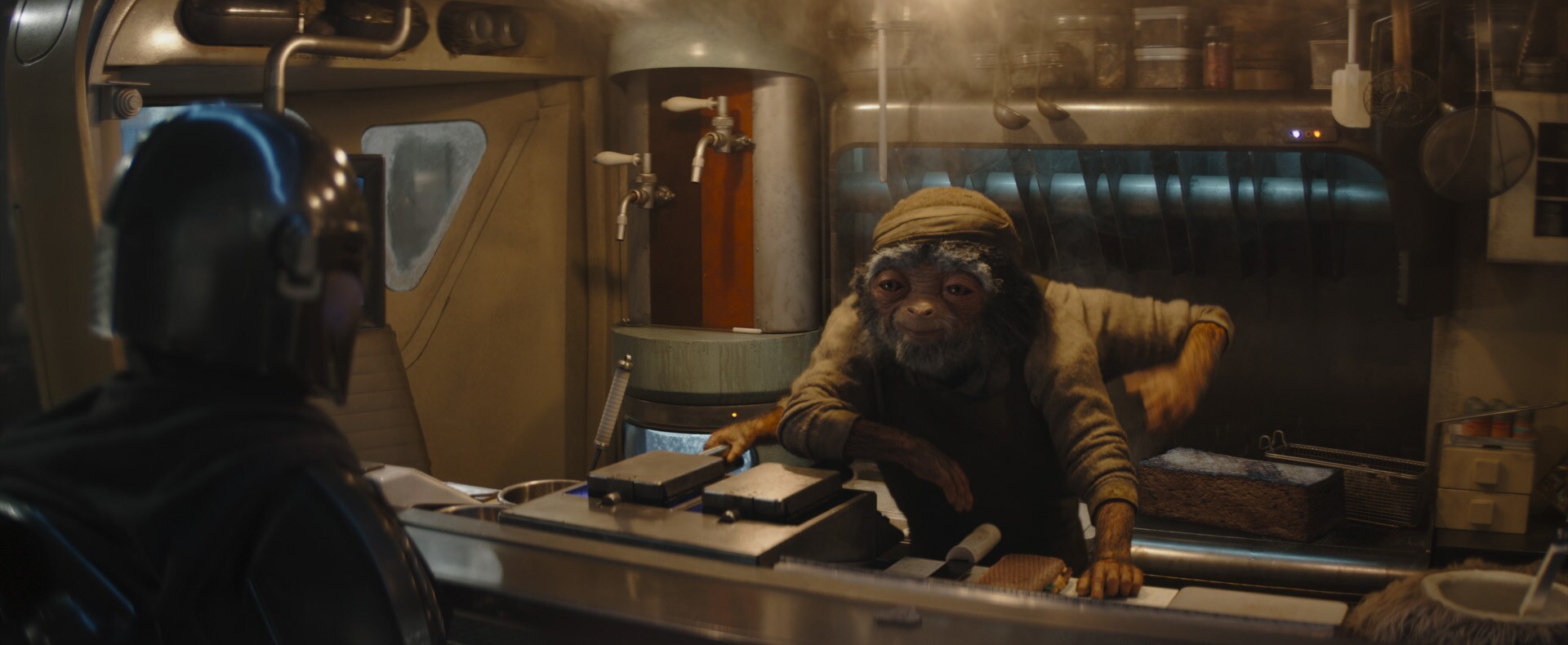
Fans of Favreau's 2014 film, Chef, might be familiar with chef Roy Choi, who served as The Mandalorian and Grogu's "culinary creative consultant" (perhaps the first ever for a Star Wars project). The director was especially proud of the on-screen treat that Choi helped craft, "a sandwich that incorporated little Taiyaki molds, a little bit inspired by shawarma, a little bit by a Cubano, a little bit by a New York street hot dog vendor."

Hugo Durant

The server of that sandwich, an Ardennian fry cook named Hugo Durant, was played by legendary filmmaker Martin Scorsese. "Most of what you hear here is improvisation," says Favreau. "We had the written scene, but he put it in his own words. I got to go back and forth with him in the recording sessions, which was one of the highlights of my career. He was fun, funny, enthusiastic, and really brought a lot to it. The animators were very much inspired by his performance." We love you, Hugo Durant.

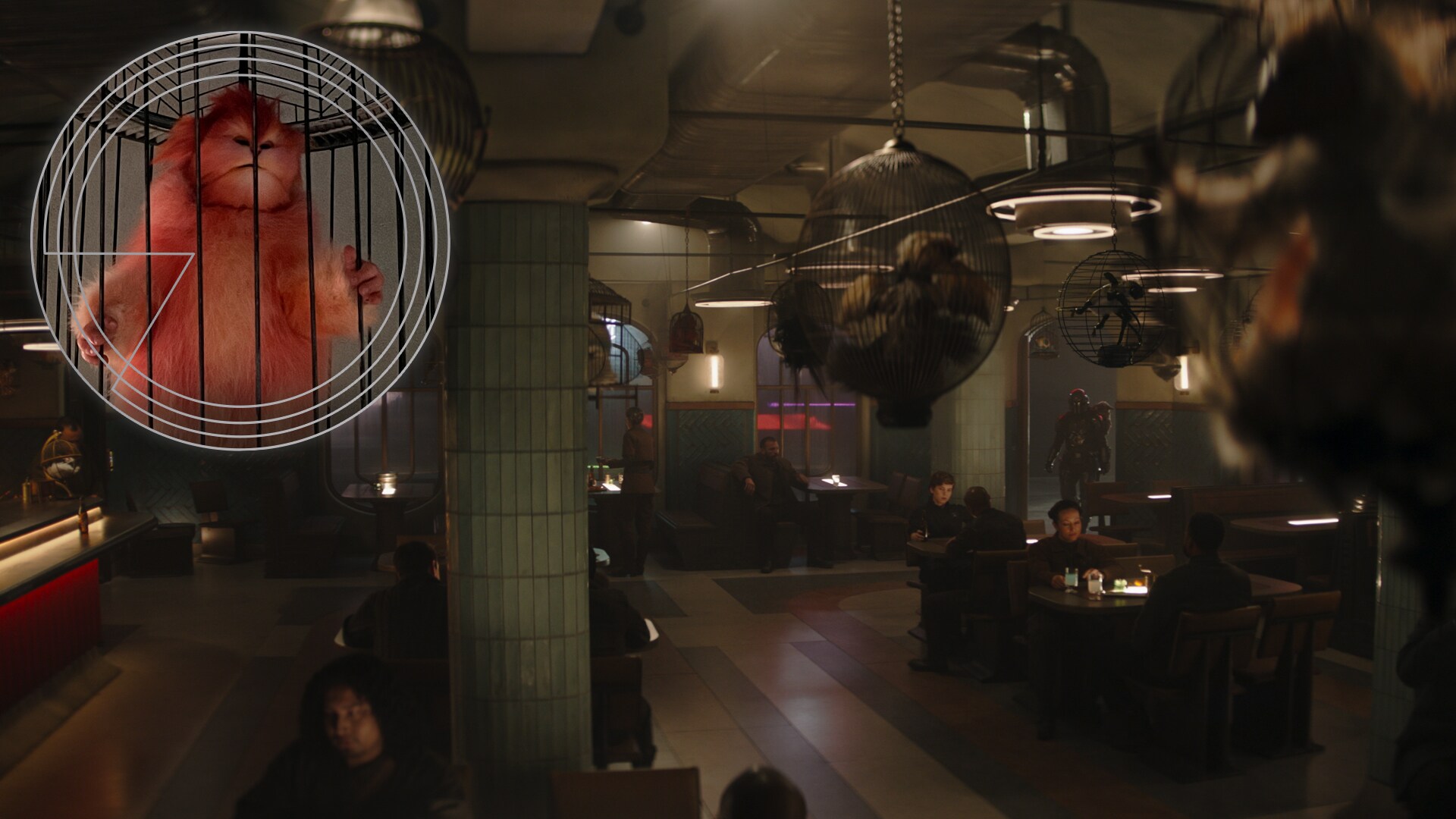
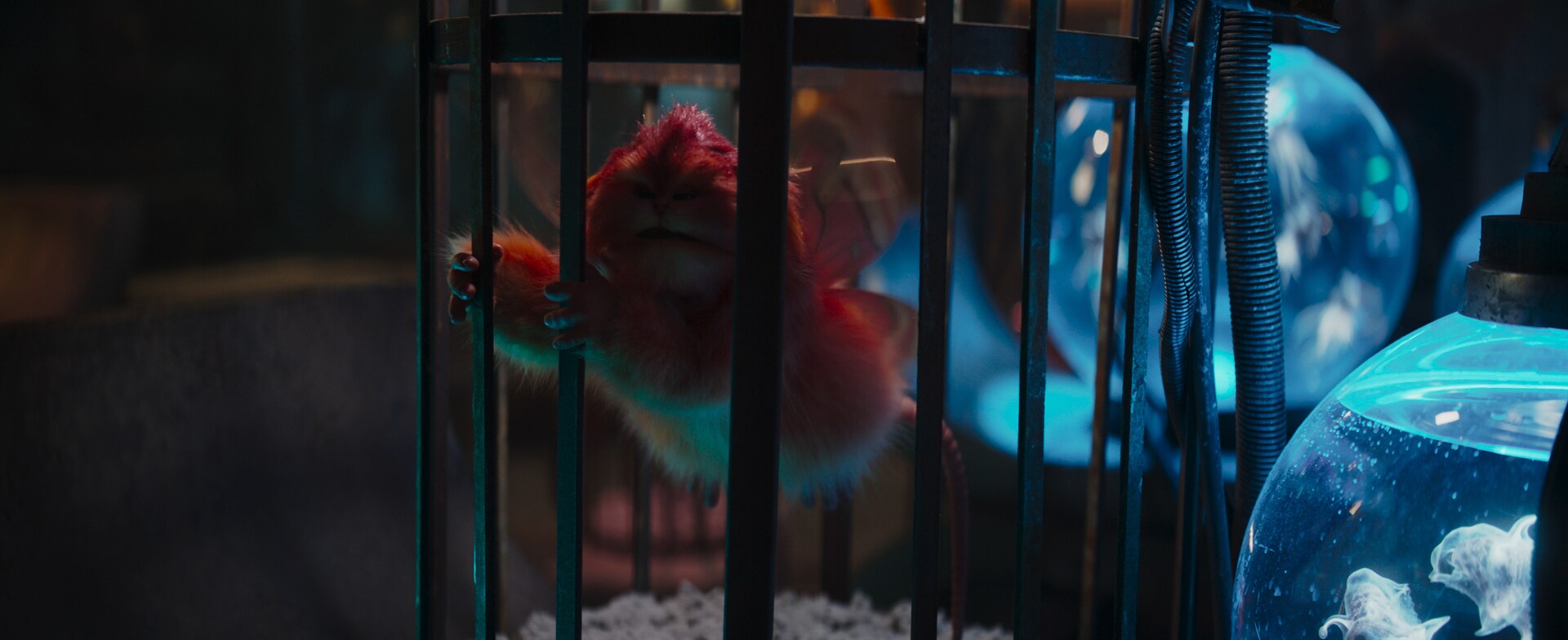
Fuzzball locked in one of the cages at the Salt Bar.

8. Birds of a Feather

In a moment inspired by the tea shop scene in Hard Boiled, the little critters seen hanging from the Salt Bar's ceilings were created through an extra special project.

Legacy Effects, the long-time creature shop for The Mandalorian, assigned their interns to each contribute a practical design to the different cages. Favreau was thrilled, saying, "I thought that was a fun way for everybody to contribute, and an opportunity for people who had been working hard at that company to get to express themselves creatively." Is this the coolest intern project of all time?

Fuzzball

It is also important to note that another captive in the Salt Bar's cages is a creature in the style of Fuzzball, a species that recently made a similar cameo on Port Borgo in Star Wars: Skeleton Crew.)

As the Razor Crest gently glides across the skies of Nevarro, we get a brief and ominous look at Kyuzo bounty hunter Embo.

9. Last Night in Nevarro

As the Razor Crest gently glides across the skies of Nevarro, we get a brief and ominous look at Kyuzo bounty hunter Embo. But the fan-favorite character from The Clone Wars was originally supposed to make his grand entrance much later in the film. In fact, it was director Edgar Wright (Shaun of the Dead, Scott Pilgrim vs. the World) who watched an early screening of the film and suggested Favreau introduce the threat of Embo earlier into the movie, "to help tie all of this together."

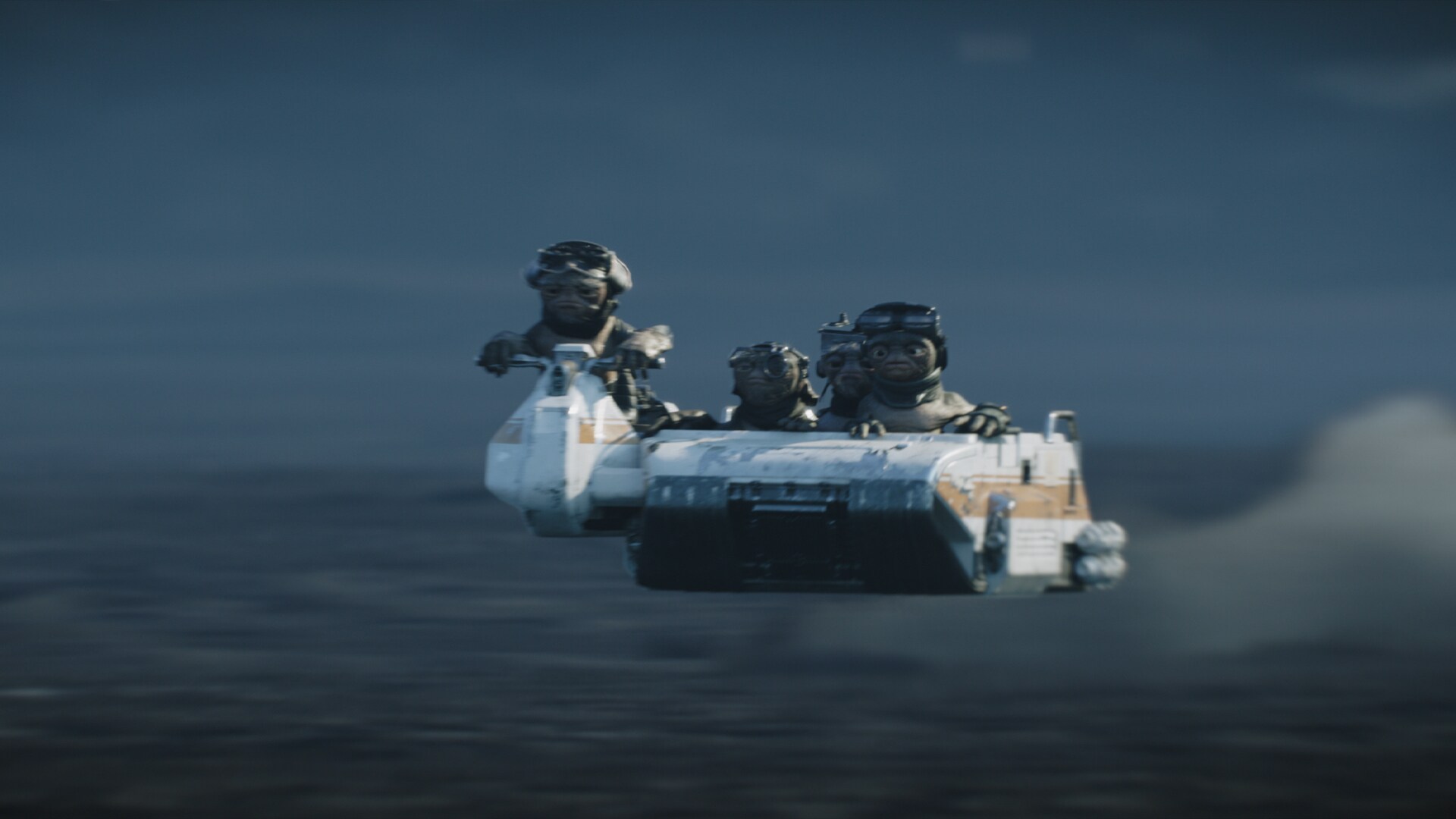
The Anzellans speed towards Mando and Grogu's Nevarro homestead.

10. Meet George Jetson

As the Anzellans speed towards Mando and Grogu's Nevarro homestead, eager-eared fans might recognize a slightly familiar, slightly futuristic sound: "The sound effect there is inspired by The Jetstons' vehicles," reveals Favreau. "I love that sound; people in my generation will have noticed it."

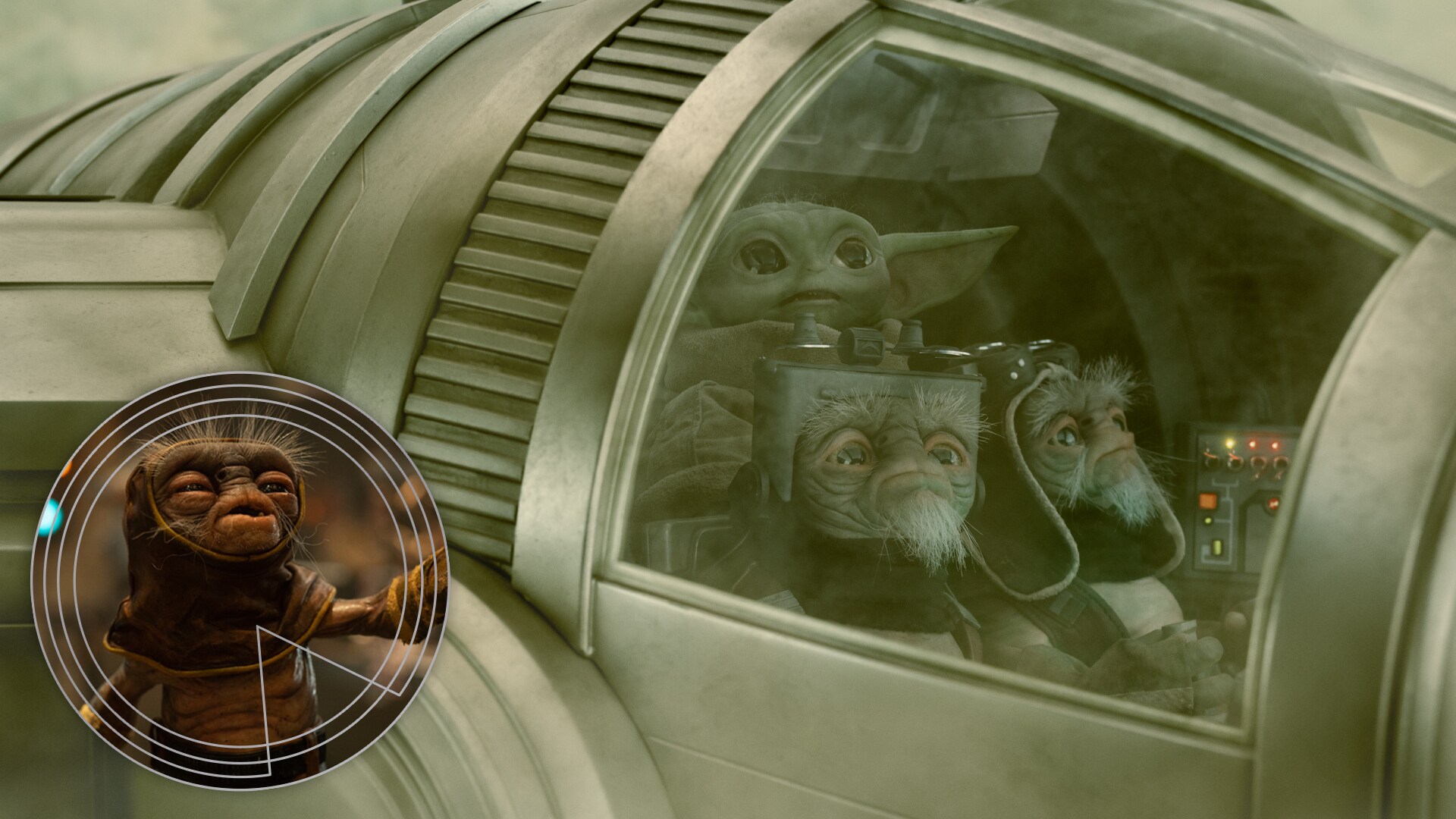
Shirley Henderson, the original performer of Babu Frik in Star Wars: The Rise of Skywalker, returned to provide the voices for all four Anzellans.

11. "Hey Hey!"

For the cute quartet of Anzellan droidsmiths, Shirley Henderson, the original performer of Babu Frik in Star Wars: The Rise of Skywalker, returned to provide the voices for all four characters. Favreau also invited Episode IX Director J.J. Abrams to the set "to make sure we had his blessing."

"When you come up with a character that's this memorable, you want to make sure he's comfortable with the way we're handling this species," Favreau notes. "I think he got a kick out of it."

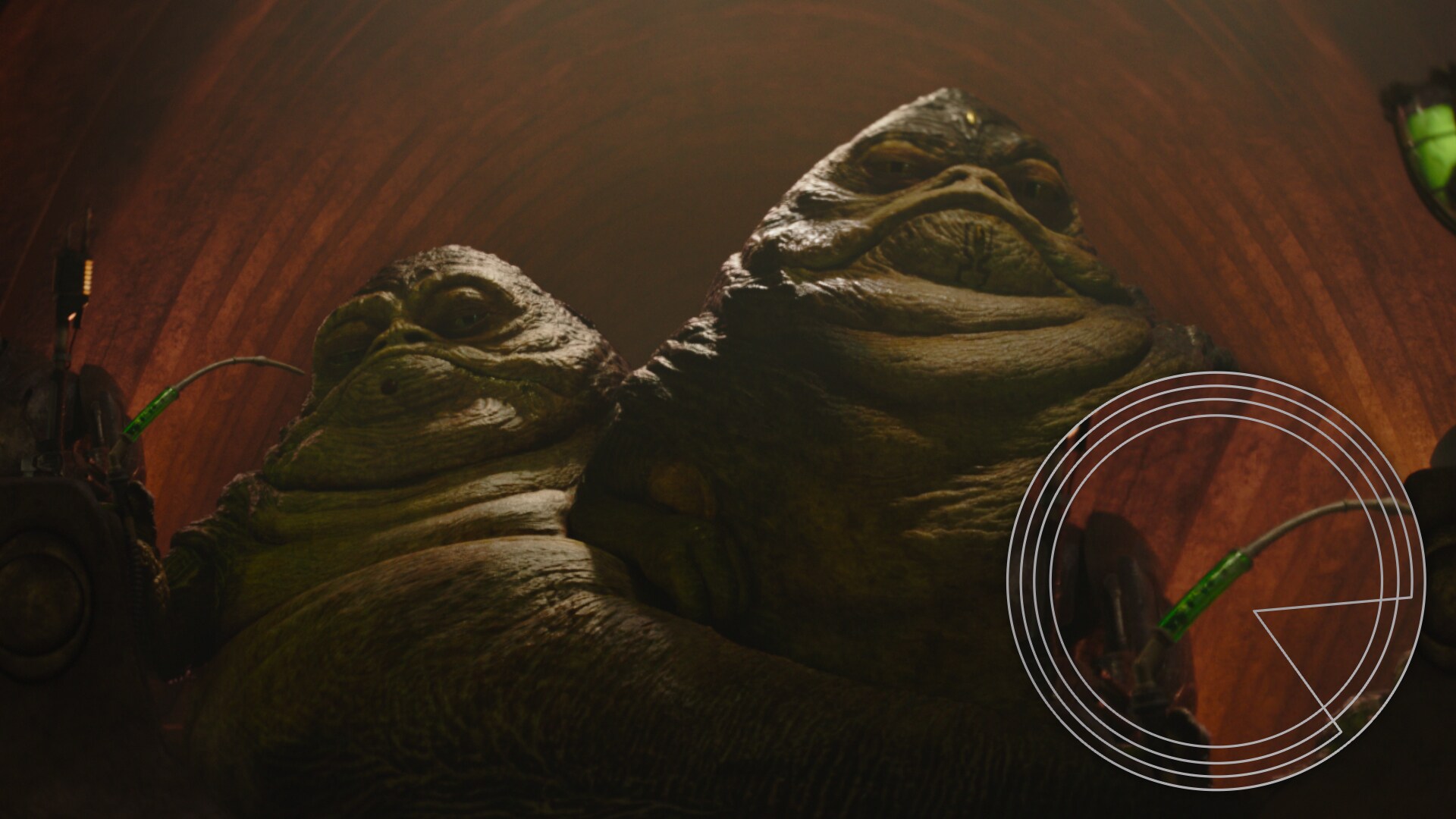
The female Hutt twin is not smoking a hookah like her cousin Jabba the Hutt, it's a straw.

12. This is Not a Big Pipe

Contrary to what some viewers may suspect, the female Hutt twin is not smoking a hookah like her cousin Jabba the Hutt. Favreau was eager to point out that she is actually drinking through a straw: "If you look closely, you can see little boba balls traveling through."

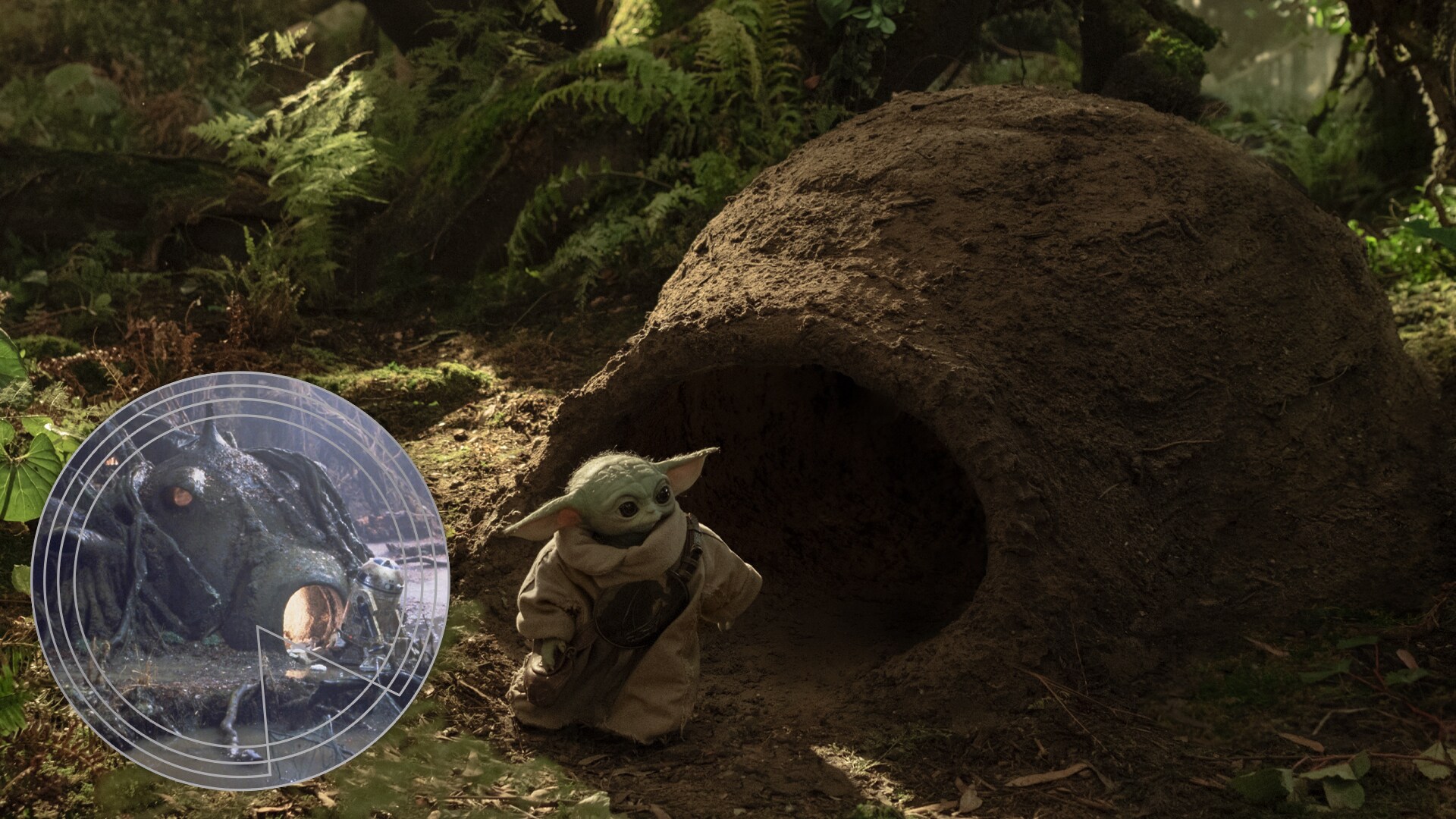
Grogu builds a small shelter out of raw materials sourced in the surrounding environment, similar to Yoda's hut.

13. My Home, This Is!

When Grogu nurses Din Djarin back to health in the swampy forests of Nal Hutta, he builds a small shelter out of raw materials sourced in the surrounding environment, a callback to Star Wars: The Empire Strikes Back. "I love him building this little burrow, because it echoes the style of what Yoda lived in on Dagobah," says Favreau. "Is that implying that this is the shape of the architecture on whatever world they're from? Is this something they do as a species?" Consider us curious to learn more.

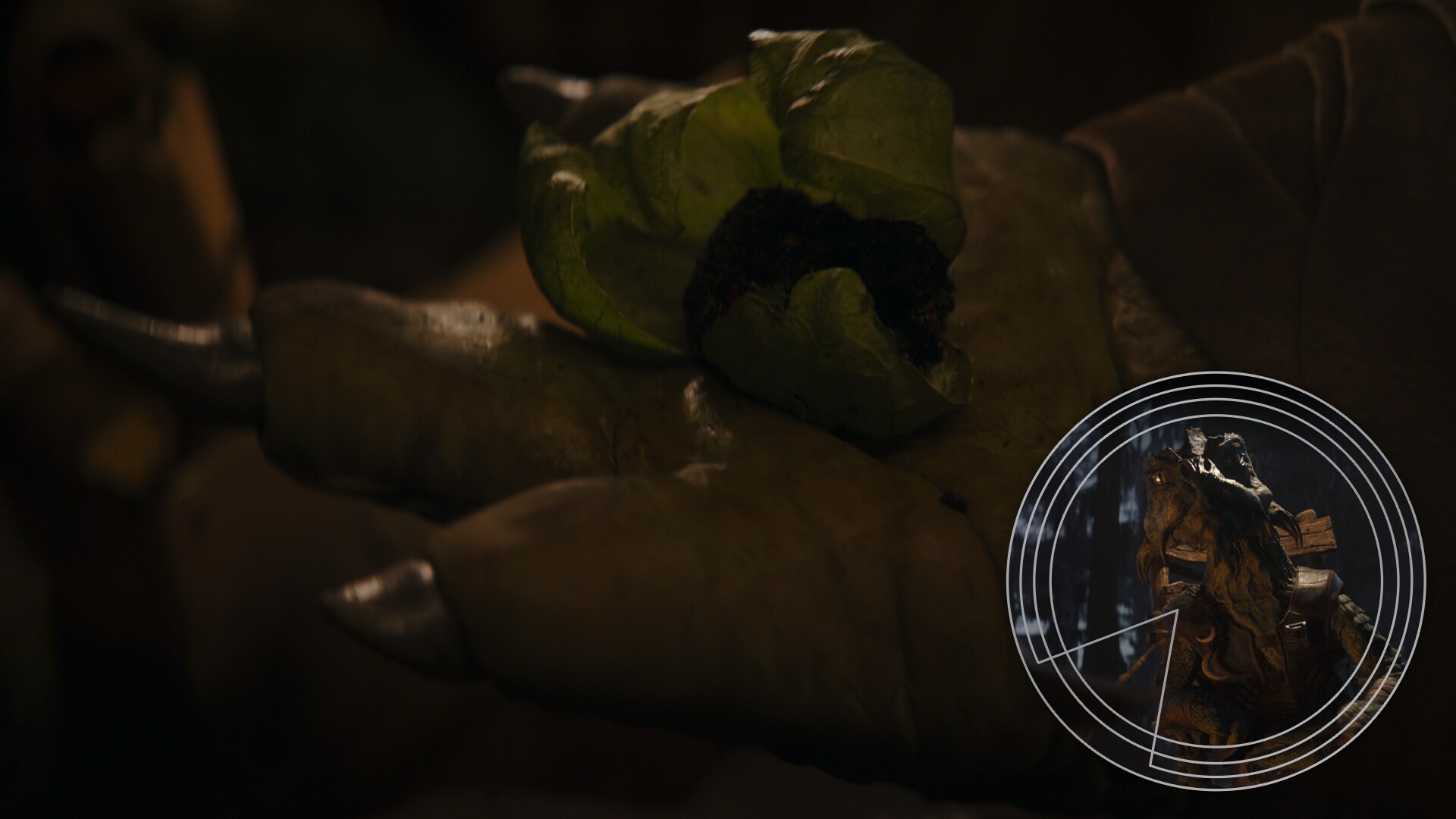
A close up on Gatori's hands.

14. If the Glove Fits

While it took many different people to bring the new character Gatori to life (including voice actor Stephen McKinley Henderson, performer Misty Rosas, and a host of talented VFX artists), there was one specific way he was totally practical: his hands. "Those are real practical gloves that Dawn [Dininger] was wearing," Favreau says. "She's one of our Legacy crew members who does a lot of suit and puppeteering work. When he is building the poultice, it is real hands, a digital face, a real set, and real prop." Movie magic!

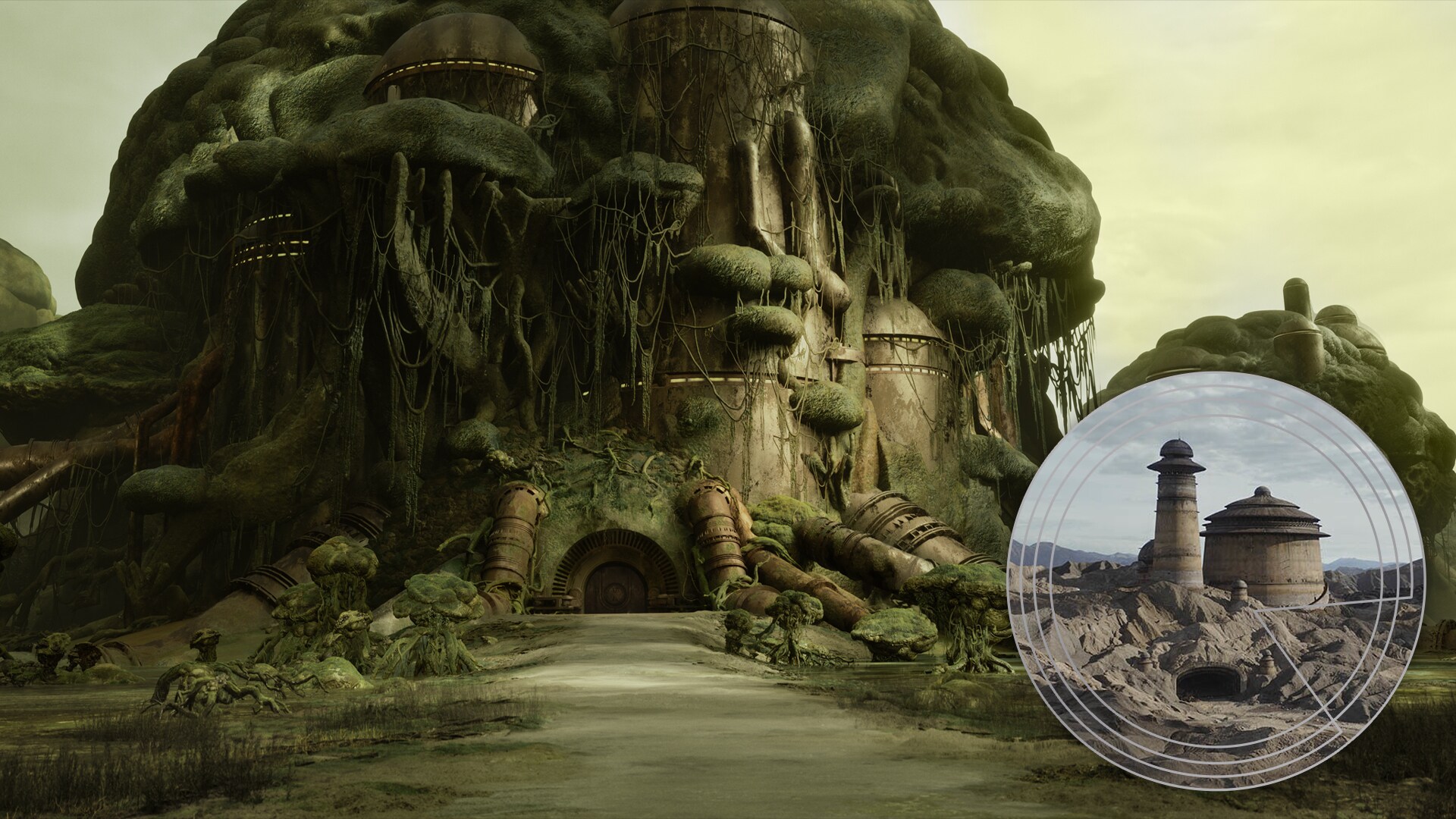
The Twins' towering headquarters has definite visual similarities to Jabba the Hutt's palace.

15. Star(ter) Wars

The Twins' towering headquarters has definite visual similarities to the arid throne of Jabba the Hutt, as seen in Star Wars: Return of the Jedi. But Nal Hutta is vastly different to Tatooine, and the palace needed to reflect those differences. "We wanted the palace to be almost organic, like a big mushroom or a spore," explains Favreau.

Inspiration came from an unusual place, further reflecting the director's love for cooking and baking: "One of the references that I kept showing them was when you take some sourdough bread that's been pulled apart after it's risen. You'll see there's a network almost like a spiderweb — very organic and weird alien looking."

These are just some of our favorite reveals from the jam-packed commentary. Give it a listen for yourself and learn more about what it takes to bring Star Wars stories to life.

Star Wars: The Mandalorian and Grogu is available now on digital, 4K Ultra HD, and streaming on Disney+. Watch it again and see what else you notice! This is the Way.

Related News + Features