
More than the previous installments of the
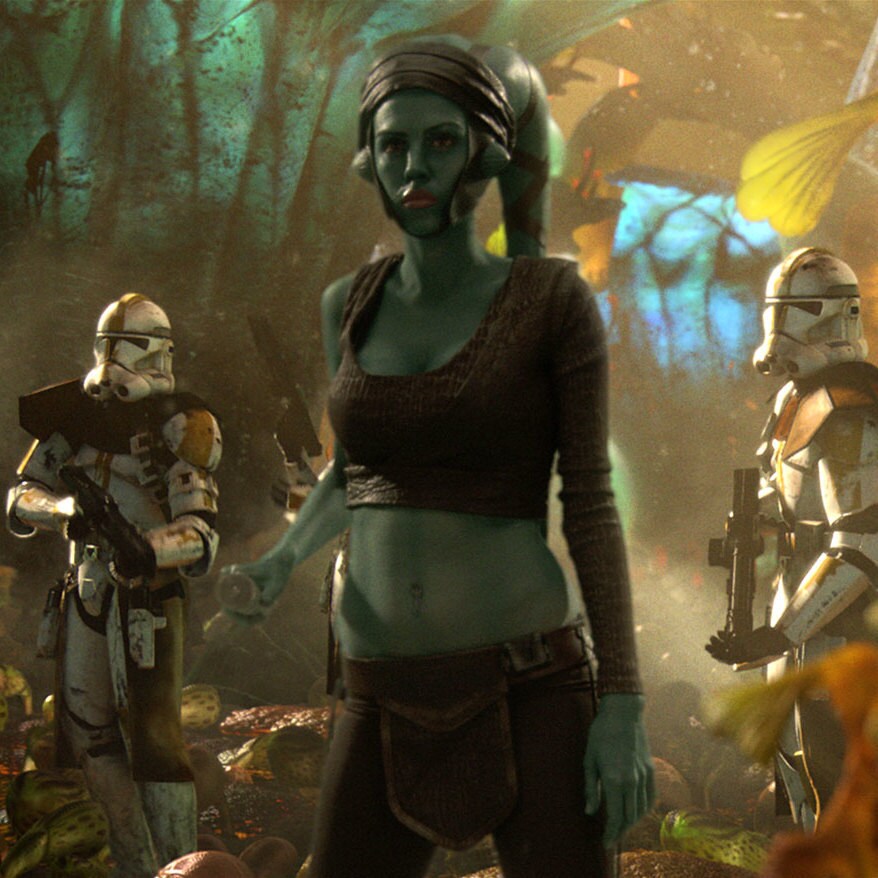
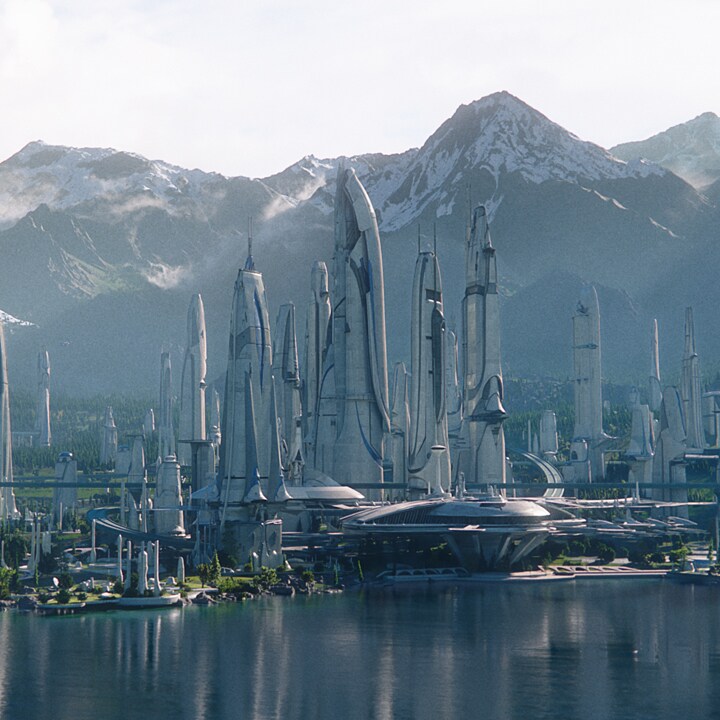
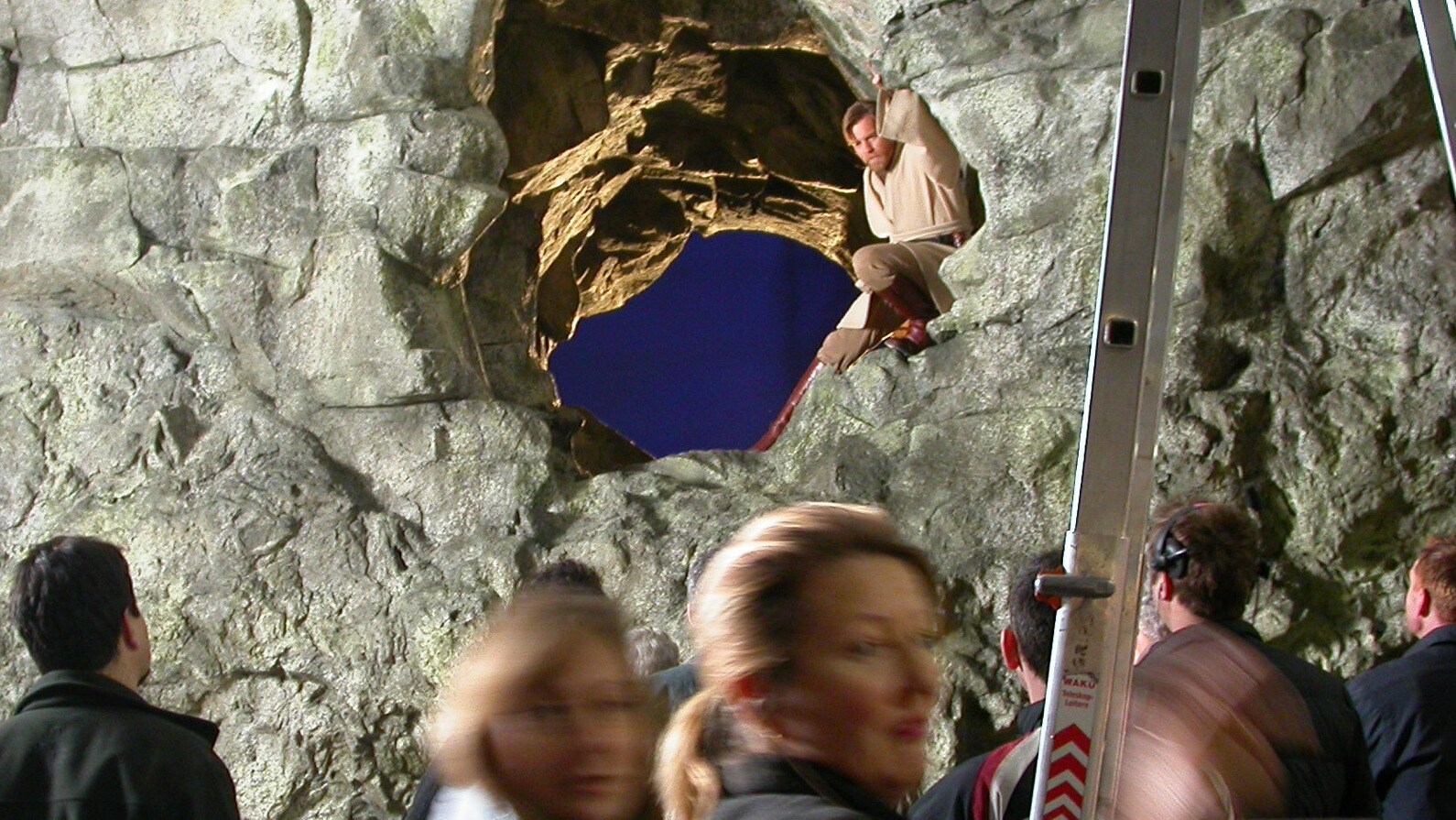
Star Wars saga, Episode III features worlds and environments that simply could not be found by scouting the world for suitable filming locations. Exotic landscapes or perilous natural conditions make for impractical or dangerous shoots, but Director
George Lucas no longer lets such mundane restrictions cage in his imagination. To create truly other-worldly experiences -- or sometimes, to squeak another set within the confines of time and budget constraints, Lucas turns to the Model Shop of
Industrial Light & Magic.
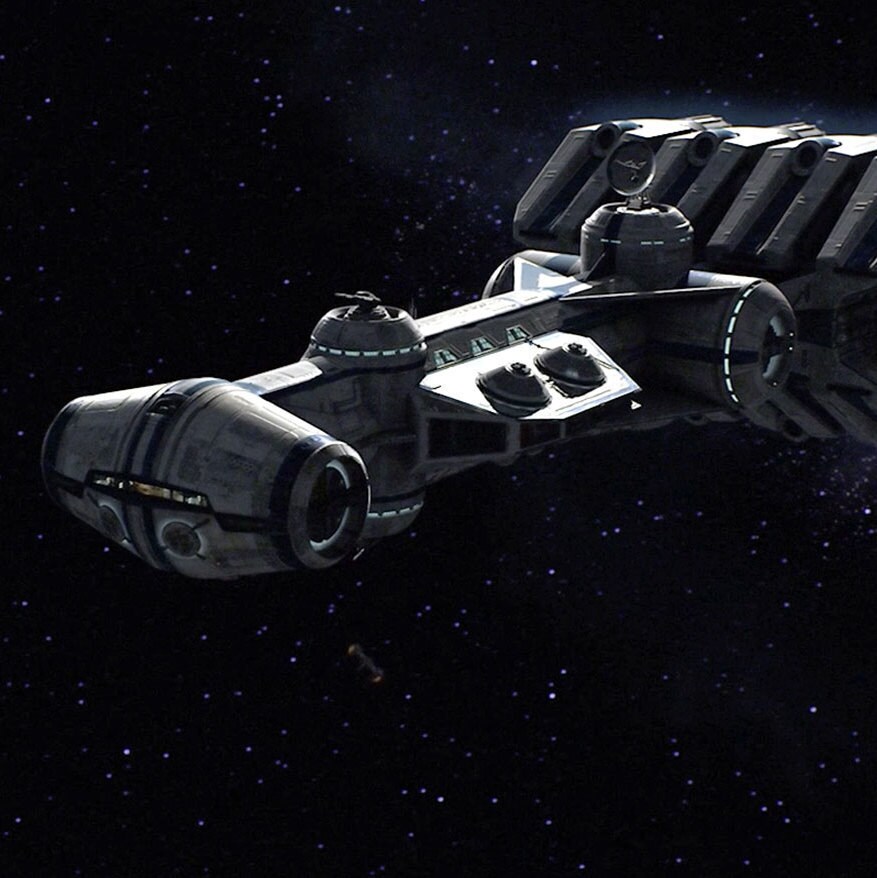
To the layman, it's become increasingly easy to credit the amazing visuals of modern effects movies to the ever-present computer. If the talents of digital artists are often casually dismissed with a simple, "it's all CG," then the physical art of miniature construction is often completely ignored. In reality, the Star Wars prequels have featured more miniature work than the original trilogy -- Episode I alone had more models than the original films combined. It's the way in which miniatures are used that has changed dramatically.
"The last show I did that involved miniature spaceships was
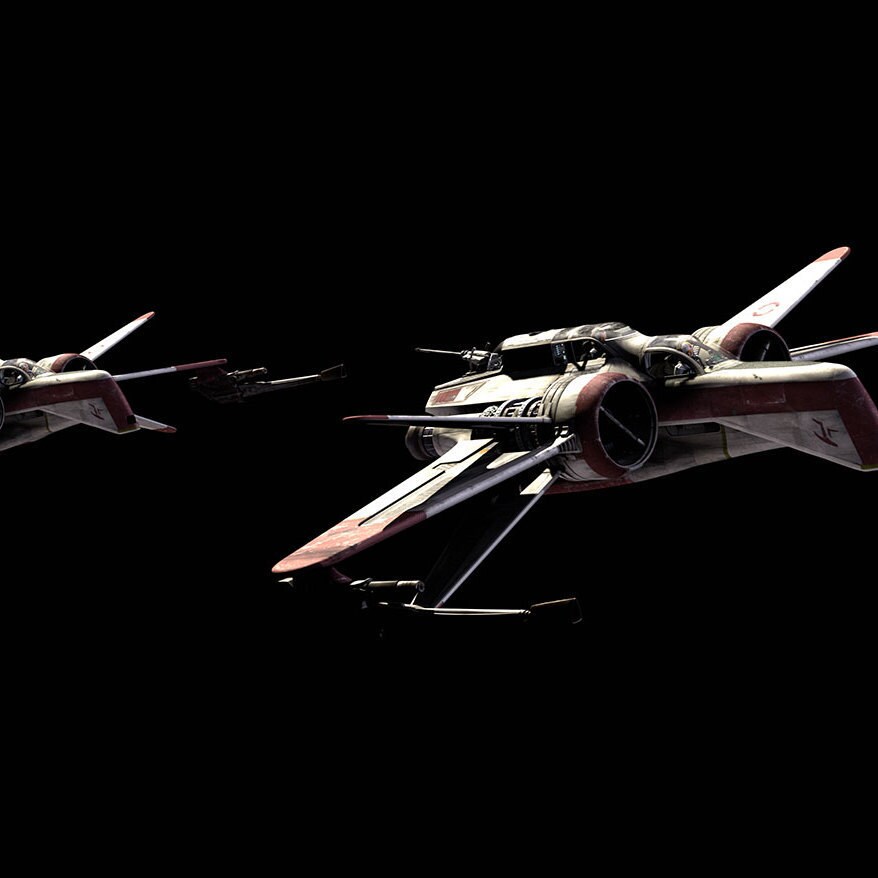
Galaxy Quest, (1999)" says Brian Gernand, Practical Model Supervisor for Episode III. "Episode I then came out, and we were still doing spaceships and environments. Beyond that, I believe the last movie to use spaceship models was
Space Cowboys (2000), and that had a very highly detailed space shuttle model. After that, it tapered off and for Episode II, we were doing almost all environments."
For Episode III, some of the major planetary settings will be realized as miniatures -- some of enormous scale -- supervised by Brian Gernand and constructed by his team of model-makers.
Gernand comes from a family with a long history of filmmaking connections. His father was a salesman for Pacific Title Art in Hollywood. One of his grandfathers was an audio engineer for Warner Bros., while his other grandfather was a camera engineer for the same studio. The latter was also a modelmaking enthusiast who would spend time building World War II models, miniature airplanes and scale trains.
"He really was my inspiration for getting into building miniatures and models," says Gernand. "And my mother had grown up around all this, so when I was a little kid and I'd be sick at home, she would go out to the hobby store and buy me a model kit. That's how she would keep me busy all day."
As Gernand grew older, he developed a love of film and photography, and after studying film and art at UCLA, he sought a career that would marry both interests. "I decided I'd take a shot at ILM because it's a combination of both," he says. He began as a production assistant in the ILM Model Shop before being given a chance to work as a modelmaker on Ghostbusters II.
"It was the classic project scenario," he recalls. '"We'll try you out and see what happens; there's no guarantees but good luck,' and 17 years later, I'm still here."
As supervisor for the miniature requirements of Episode III, Gernand works closely with the Visual Effects Supervisors -- Roger Guyett and John Knoll -- to determine what needs to be built. "They look at the reels and make decisions on what they think should be miniatures or what should be digital, or what should be a combination of both," he says. "Once that concept comes into play, they'll bring me over, and we'll look at the scene. With my input on the size, scale and coverage that this particular model might provide, we move forward from there."
The next step is bidding -- assigning a monetary and time commitment to the miniature requirements so that they can be compared against the budget and schedule. "The visual effects producers determine the cost-effectiveness of this miniature versus other techniques. It's usually two-fold. It has to do with what is the best technical way to achieve a shot versus what is most cost-effective. Lately, a lot of the decisions revolve around how many shots a miniature is in. It becomes much more cost-effective if it can be in 20 shots or more."
An environment like the volcanic fields seen at the end of Episode III may require expensive miniature commitments, but the costs are amortized over 300 major shots. "Once we get into those numbers, then the miniature is definitely the way to go."
For Episode III, the miniature requirements will run the gamut from huge landscapes (like the Kashyyyk trees and beaches) to small, quaint environments (say, the Coruscant opera box). Given his current workload, Gernand is hard-pressed to pick a favorite, but he feel satisfaction over the more subtle uses of the effect. "I remember thinking that on Episode II, there were a few that weren't really exciting but worked really well as miniatures," he recalls. "Some of those are, for me, the most satisfying, because it's all about illusion. It's really just pulling off the gag, as opposed to some of these grandiose super-dynamic wild sets that are big and beautiful, but aren't trying to fool anybody into thinking we built it full size."