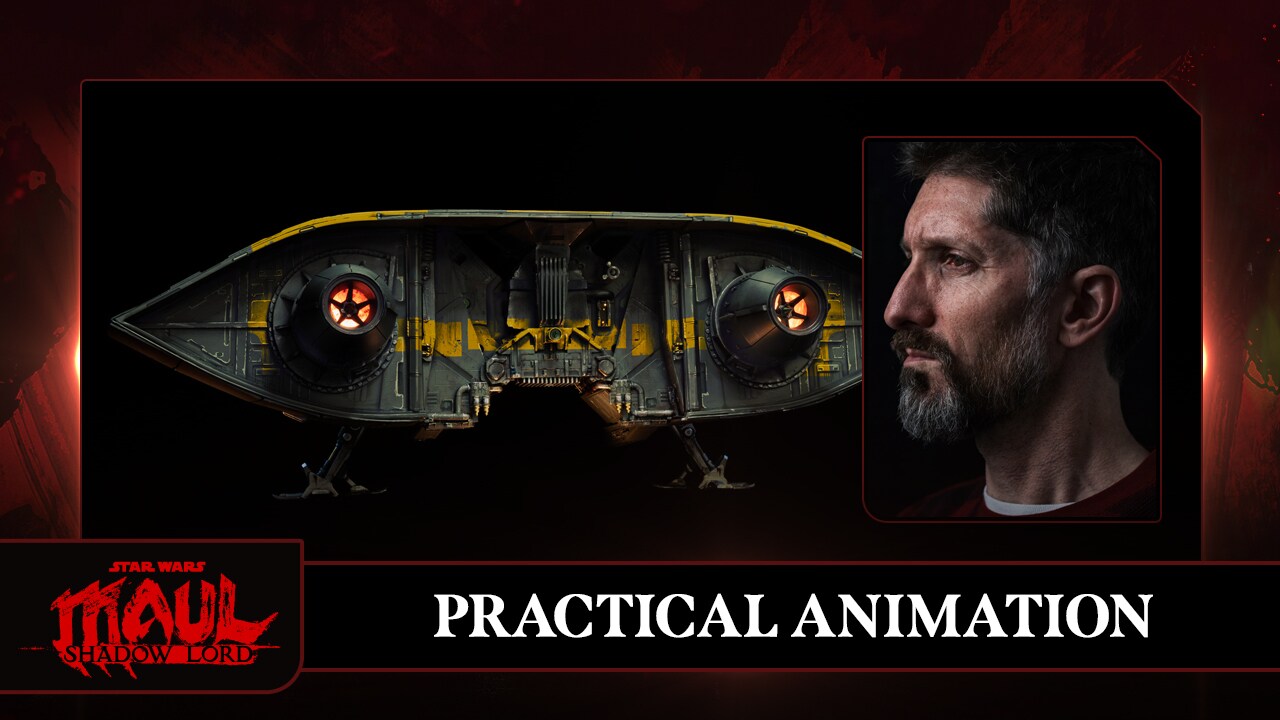

Director of Lighting, Cinematography, and Visual Effects Joel Aron takes us behind the scenes of his scratch-built cargo ship created for Rheena Sul.
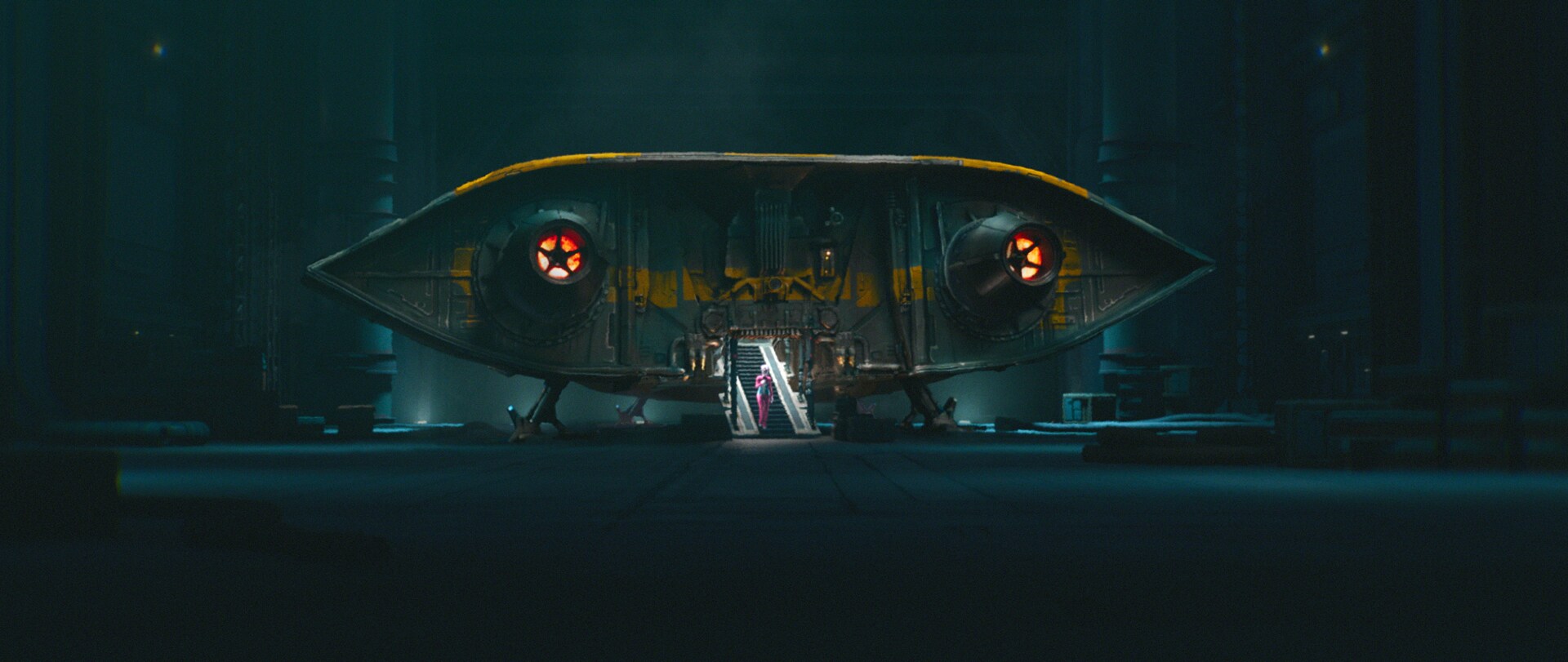
For a brief moment in Star Wars: Maul – Shadow Lord ’s eighth episode, there’s a very special bit of magic visible on screen. When the Empire forces casino-owner Rheena Sul to trick her friend Brander Lawson into thinking she will provide them with safe passage offworld, Sul decides to take matters into her own hands. Snatching a blaster away from an Imperial, she destroys the cargo ship behind them. Before it goes up in flames, the few short glimpses of that vessel are created in part with a practical miniature.
“It’s something that I want to keep alive.”
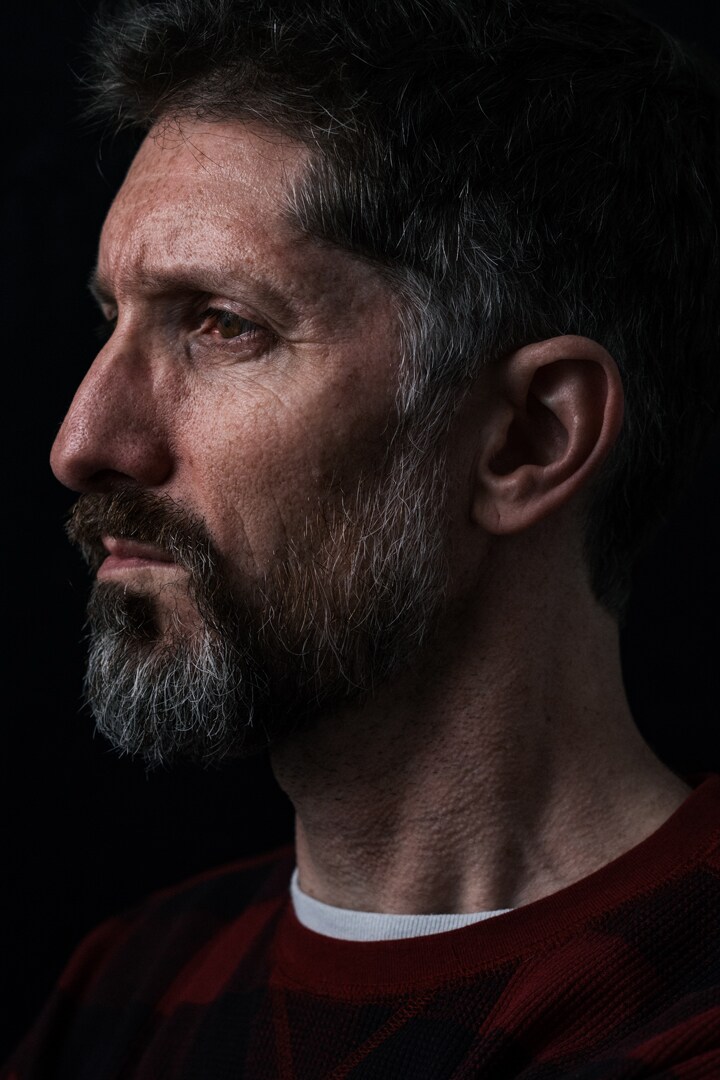
Joel Aron will never forget a day about seven years ago when John Knoll stopped by his office. The pair had once been colleagues at Industrial Light & Magic before Aron made the move to Lucasfilm Animation, where today he is Director of Lighting, Cinematography, and Visual Effects. “John comes in and says, ‘Come here, real quick.’ He rushes me downstairs to show me a motion-control rig and the miniature Razor Crest,” Aron recalls. “‘I’ve built this rig and John Goodson built the model and we are shooting it for The Mandalorian.’ From that moment on, I felt that we shouldn’t just treat animation like animation.”
As ILM’s Executive Creative Director and Senior Visual Effects Supervisor, Knoll led the effort to revitalize the use of traditional miniatures in select shots for The Mandalorian and many subsequent Star Wars productions. A devoted hobbyist himself, Aron has been inspired to create miniatures since childhood, and during his years as a digital artist at ILM, he reveled in opportunities to interact with veteran modelmakers like Goodson and Bill George. “I used to take breaks and go wander inside the different bays and look at the miniatures and cameras,” Aron says. “It’s something that I want to keep alive.”
For many years now, Aron and his team have found small but meaningful ways to incorporate practical elements into the work created by Lucasfilm Animation, from subtle atmospheric details to pieces of architecture and landscapes. In addition to incorporating physical matte paintings throughout and real smoke in Maul’s vision seen in the eighth episode, Maul – Shadow Lord provided them with the opportunity to create one of their most significant practical contributions yet.
A Practical Solution
“There’s a lot of pressure to just produce the show, and as a result, there are gaps where we need to think creatively to solve problems,” Aron explains. “One example is this miniature ship. We had the episode kick-off meeting, and in the story reel they used one of the Black Sun ships as a proxy for Rheena Sul’s. The problem was that the ship would be too recognizable.”
“We didn’t have the time to build it in CG,” adds Art Director Andre Kirk.
“So I jokingly said, ‘What if we just built one?’” Aron says. “‘We could build a miniature and shoot it.’”
The playful suggestion proved to be the most efficient solution to the team’s tight deadline. “It seemed like a great idea to do some of the old school, practical scratch-building and kit-bashing to create this model,” Kirk says. “I suggested that we paint it digitally since it’s going to be a still shot. I added more surface detail for coloration — all of the yellow striping and other detailing. That made it more interesting than just a grey model. It combined the best of both worlds. That was more efficient than worrying about physical paint that might not be visible in the final composite. The whole process was faster and more cost effective than building the entire ship from scratch as a digital asset. And Joel was very open to everyone’s input. It was very much a group effort. ”
Before Kirk and his team could paint the final asset, Aron had to construct the miniature from scratch. To do so, he utilized a combination of techniques both new to the modern era and time-tested by generations of artists at places like ILM. Throughout the month-long process, Aron pursued what he described as his "obsession for making things look as real as possible.”
Aron sketched rough designs, planning to add more detail and refinements as he went. “That’s why I chose this kind of pinched wanton shape, something more organic, something that a more commercial freighter might look like,” he says. “This is simply a cargo ship. It’s a transport offworld. It could be anything.”
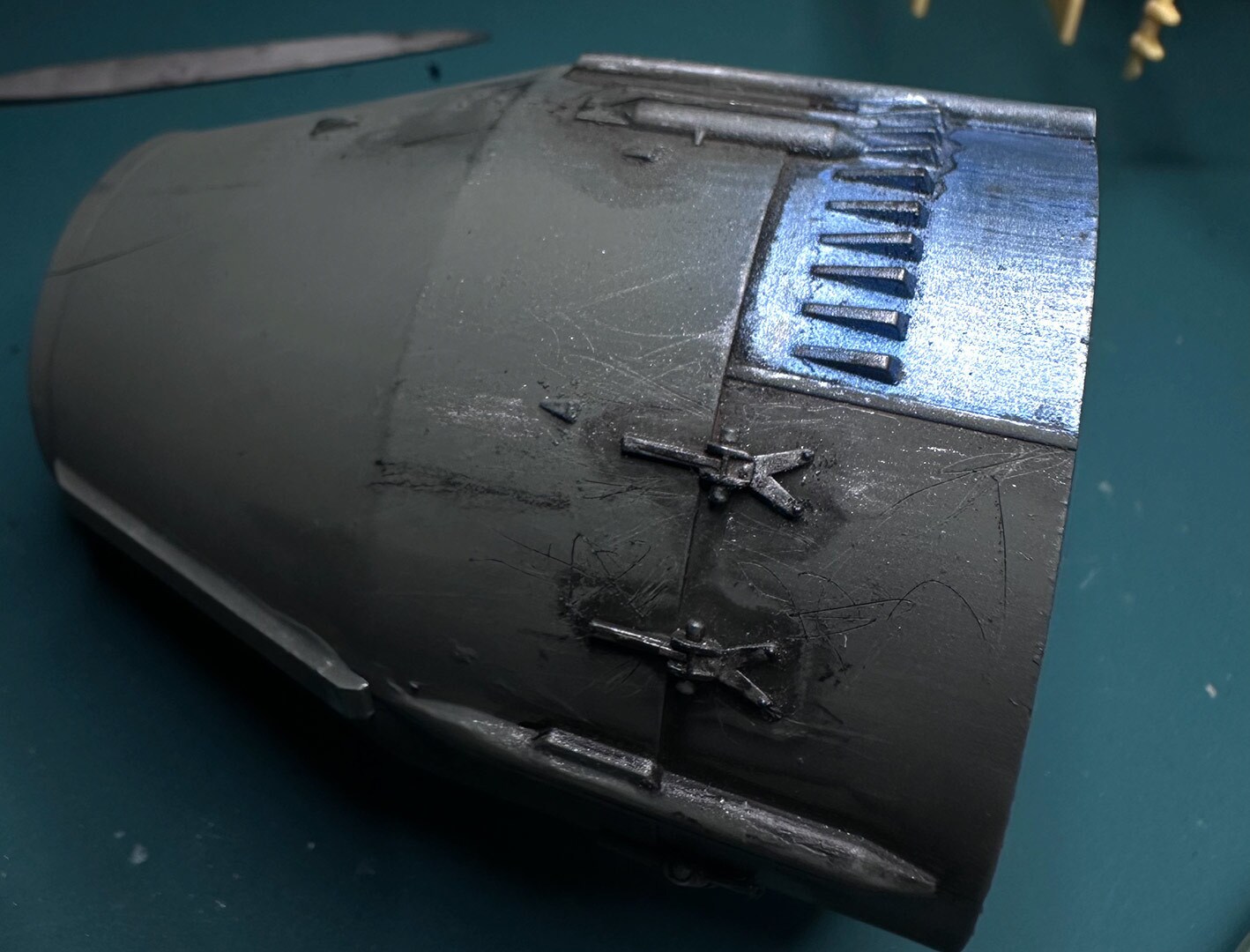
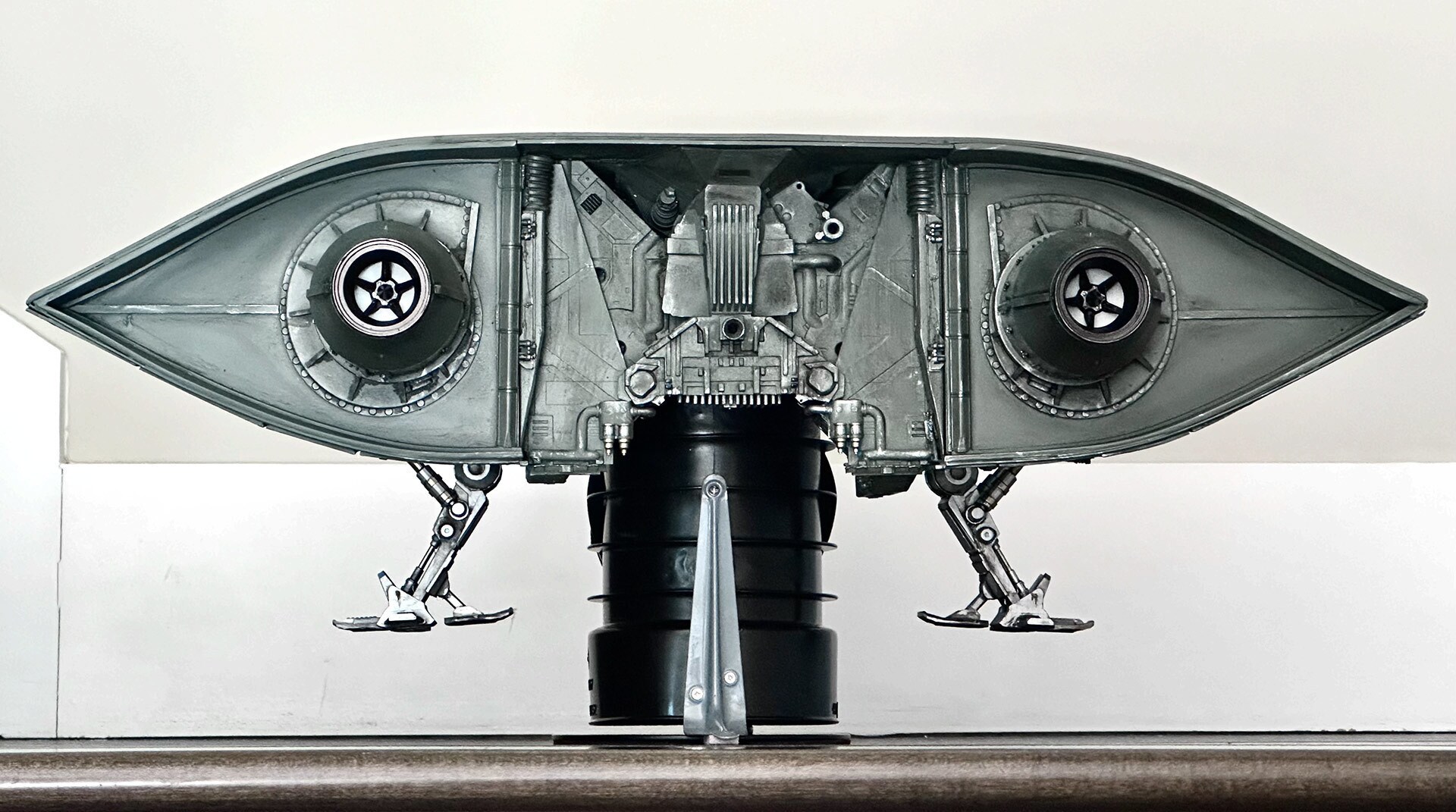
The physical ingredients for the freighter came from a variety of sources. Years ago, when first experimenting with 3D printing in resin, Aron had created a number of parts for a Rebel snowspeeder like those first seen in Star Wars: The Empire Strikes Back. He included a number of those pieces in the new ship, while using the base plate from a miniature Gundam set for the center component. The spacecraft would only be visible from behind, so Aron focused entirely on the rear section, including the engines, landing gear, and boarding ramp, as well as the sloping fuselage, the core of which he carved in foam. A handful of camera angles determined how precise elements would be finalized.
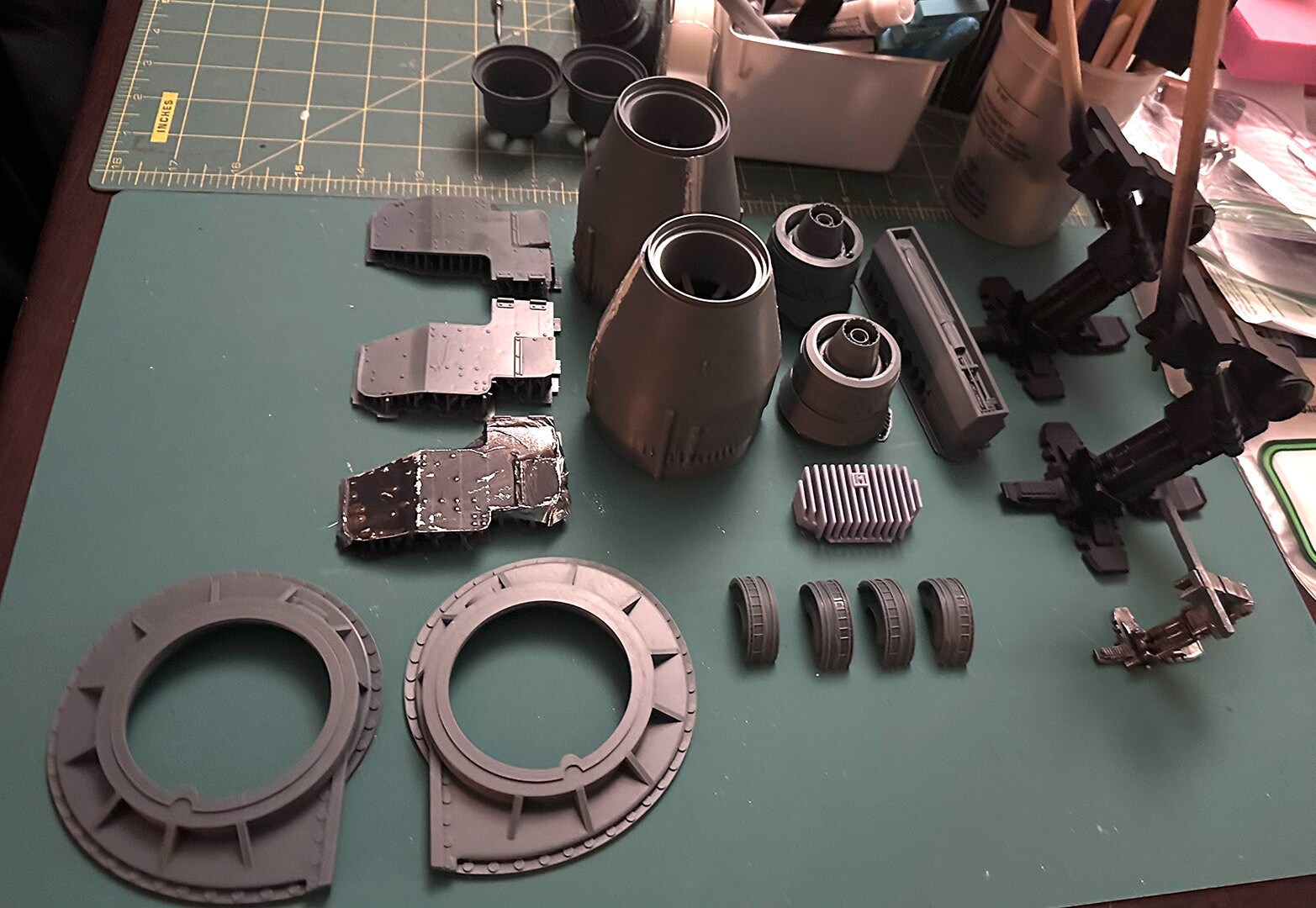
For detailing, Aron embraced the tried-and-true method of adding greeblies across the freighter’s surface. He 3D-printed components from the digital asset library shared between Lucasfilm and ILM, including elements scanned from original parts used on classic Star Wars miniatures like the first Millennium Falcon model and Imperial Star Destroyers from the original trilogy. Aron also printed small pieces from Lucasfilm Animation’s library for more specific elements that are distinct to the world of Maul – Shadow Lord and its animated counterparts.
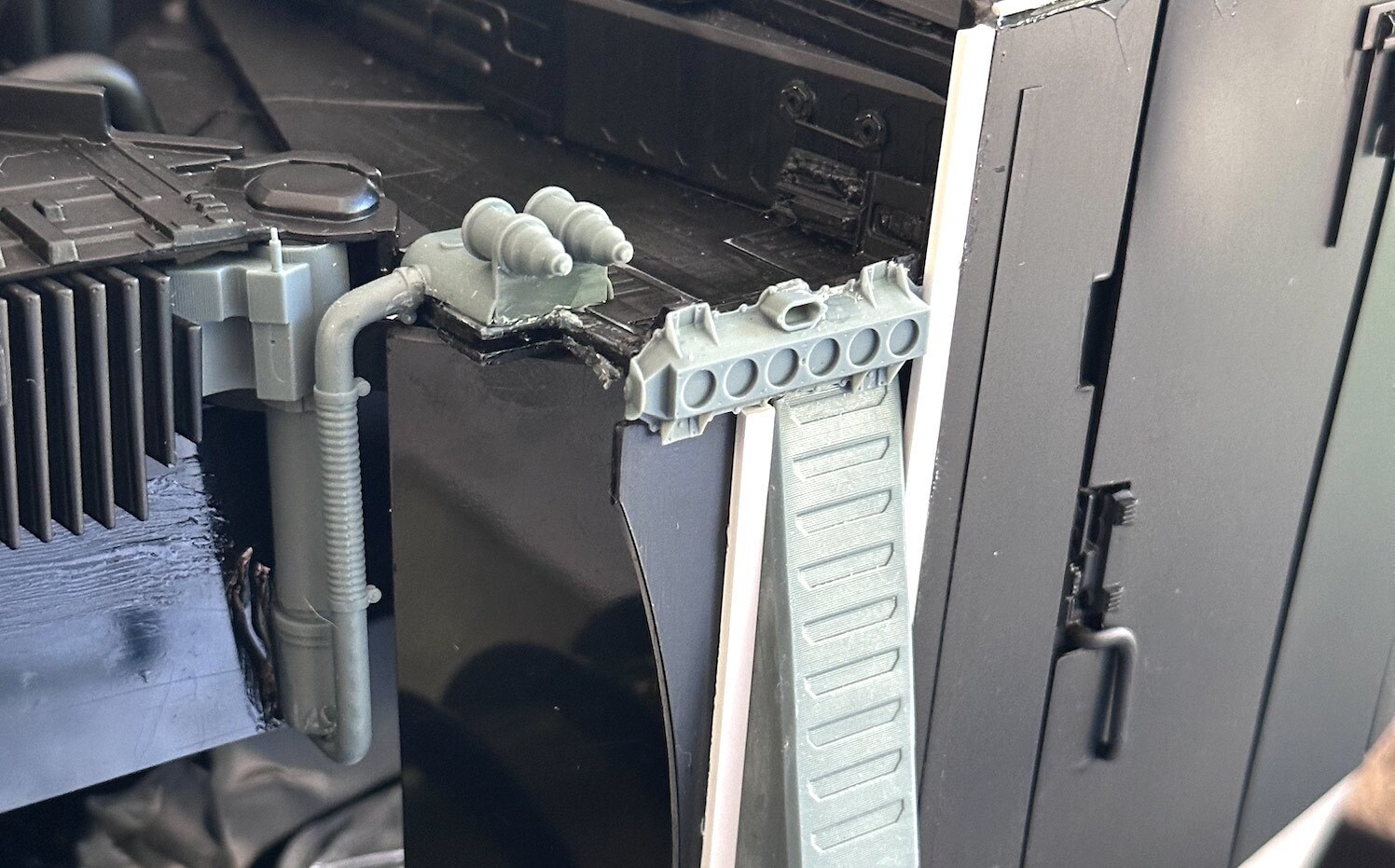
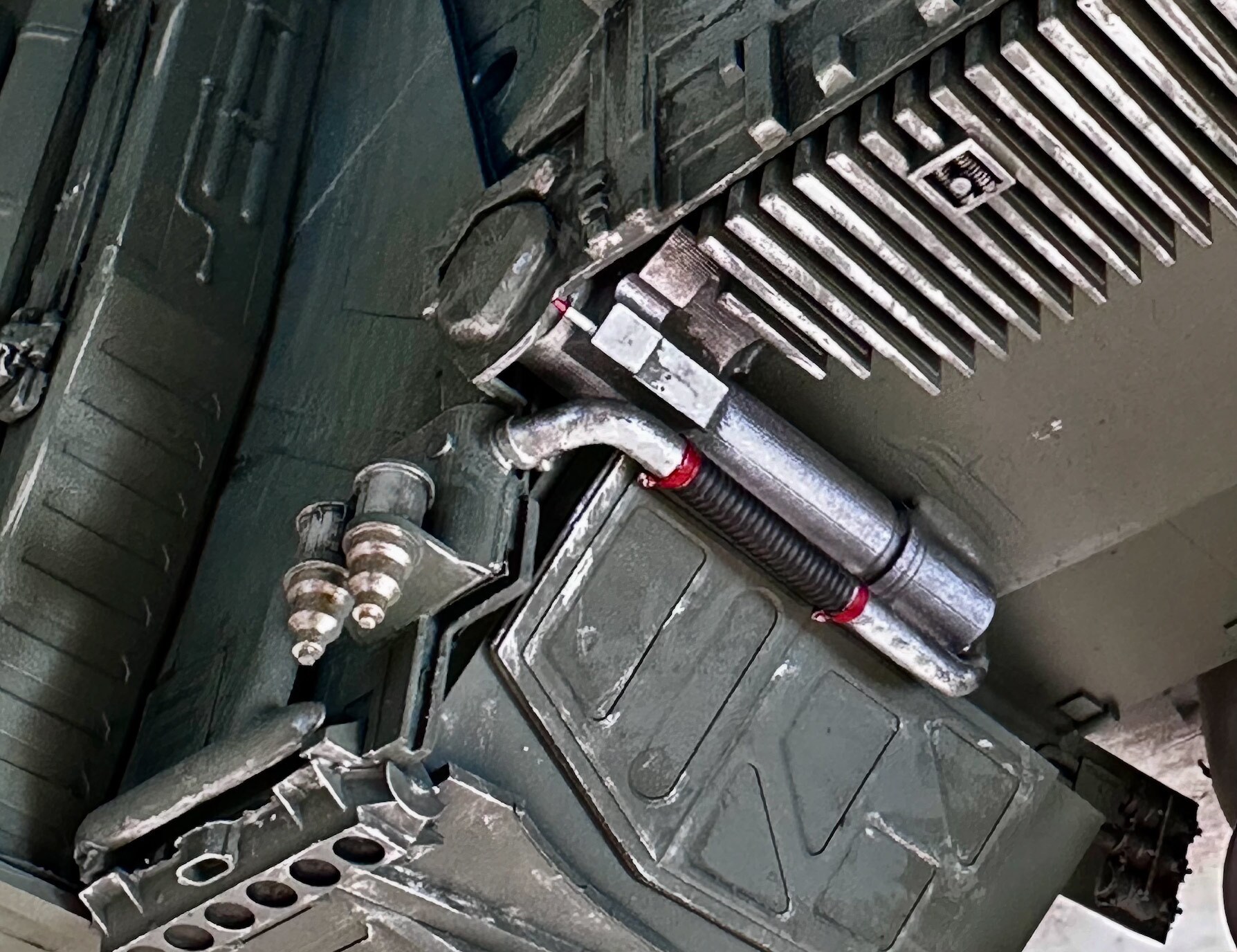
Aron also borrowed pieces from one of his favorite Star Wars Legends vehicles, Prince Xizor’s Virago, which appeared in 1996’s Shadows of the Empire and had its own model kit at the time. “Initially, I wanted to use the wings for this miniature,” Aron says. “I loved how they collapsed and thought they could become part of the underbelly of the ship. But as I started building, I realized that the wings didn’t curve enough. I did use a number of the body pieces as greeblies. Inadvertently, I ended up placing a large piece up against the snowspeeder component in the center. For some reason, it just fit. So I thanked the spaceship gods,” he adds with a laugh.
Adding Color and Light
Aron primed the entire ship with a soft grey acrylic paint, then he began detailing, adding weathering and using foil wraps to add rivets. “I used a trick that I learned from Bill George years ago,” he adds, “to use a graphite block and nick the surface to get little chips.”
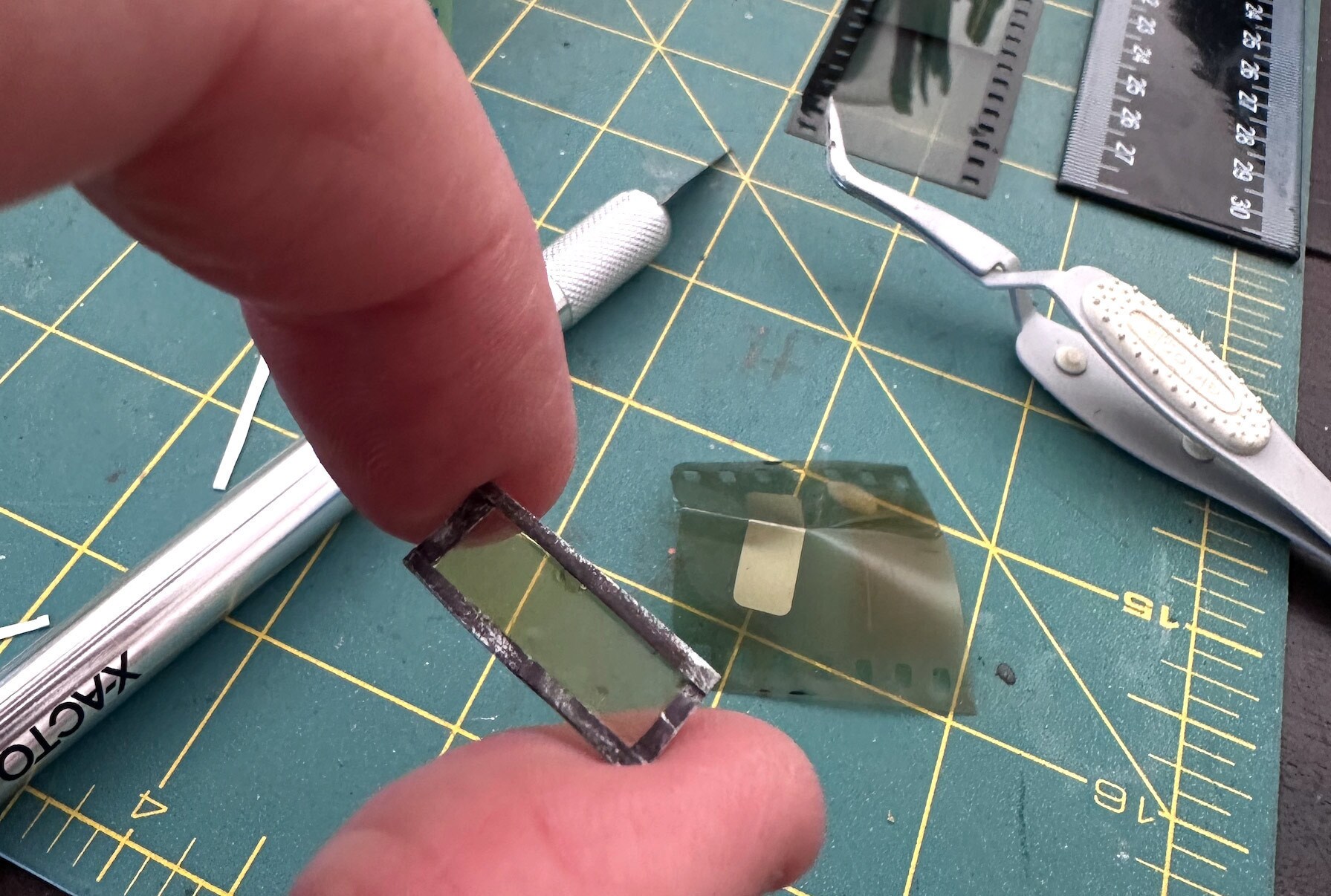
As a wash layer, Aron applied household floor cleaner to the surface, allowing him to make additional changes and revisions on top of his existing work as necessary. To create the impression of a lightly burned metal surface, he even applied faint streaks of eye shadow makeup near the rims of each engine.
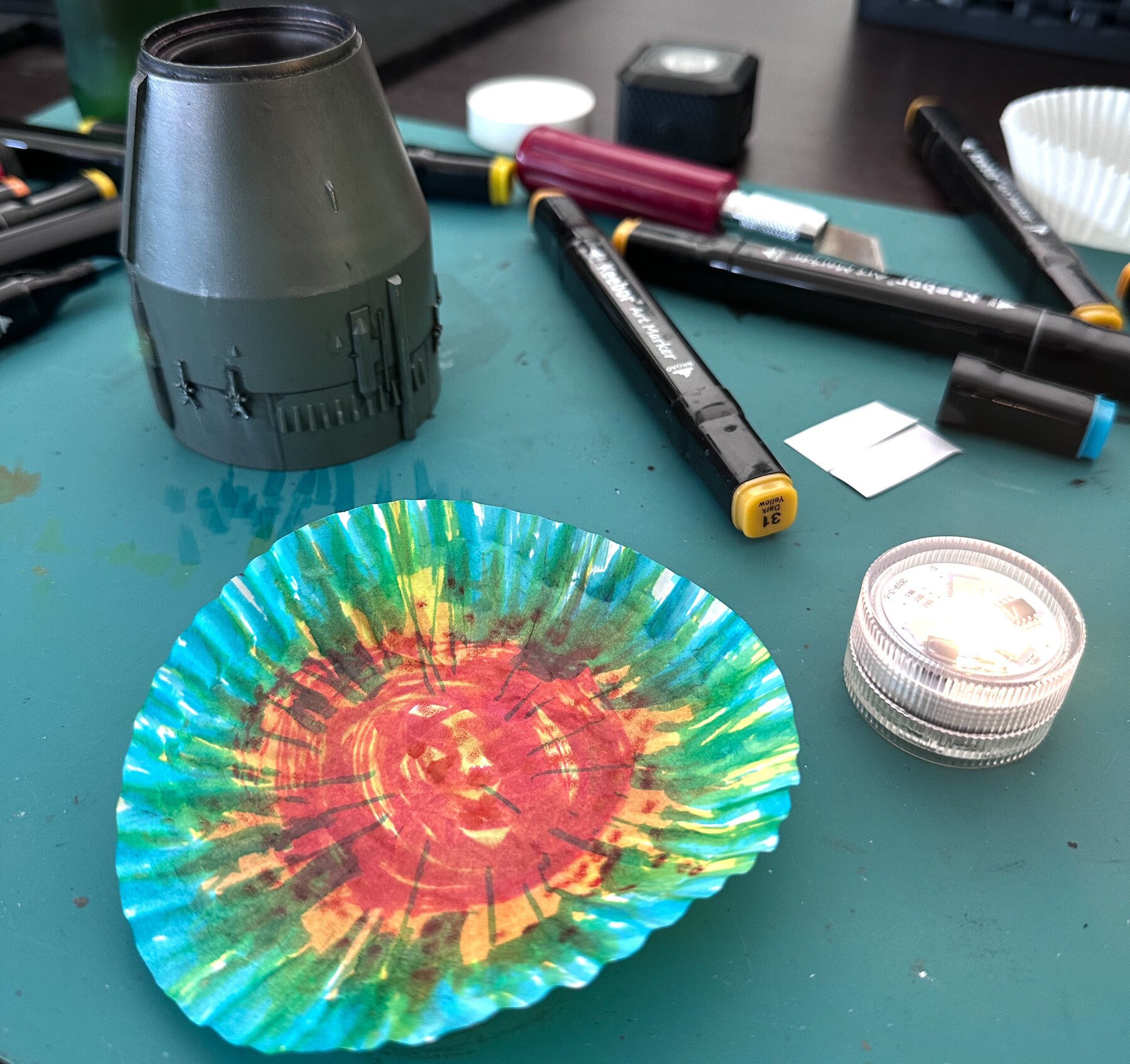
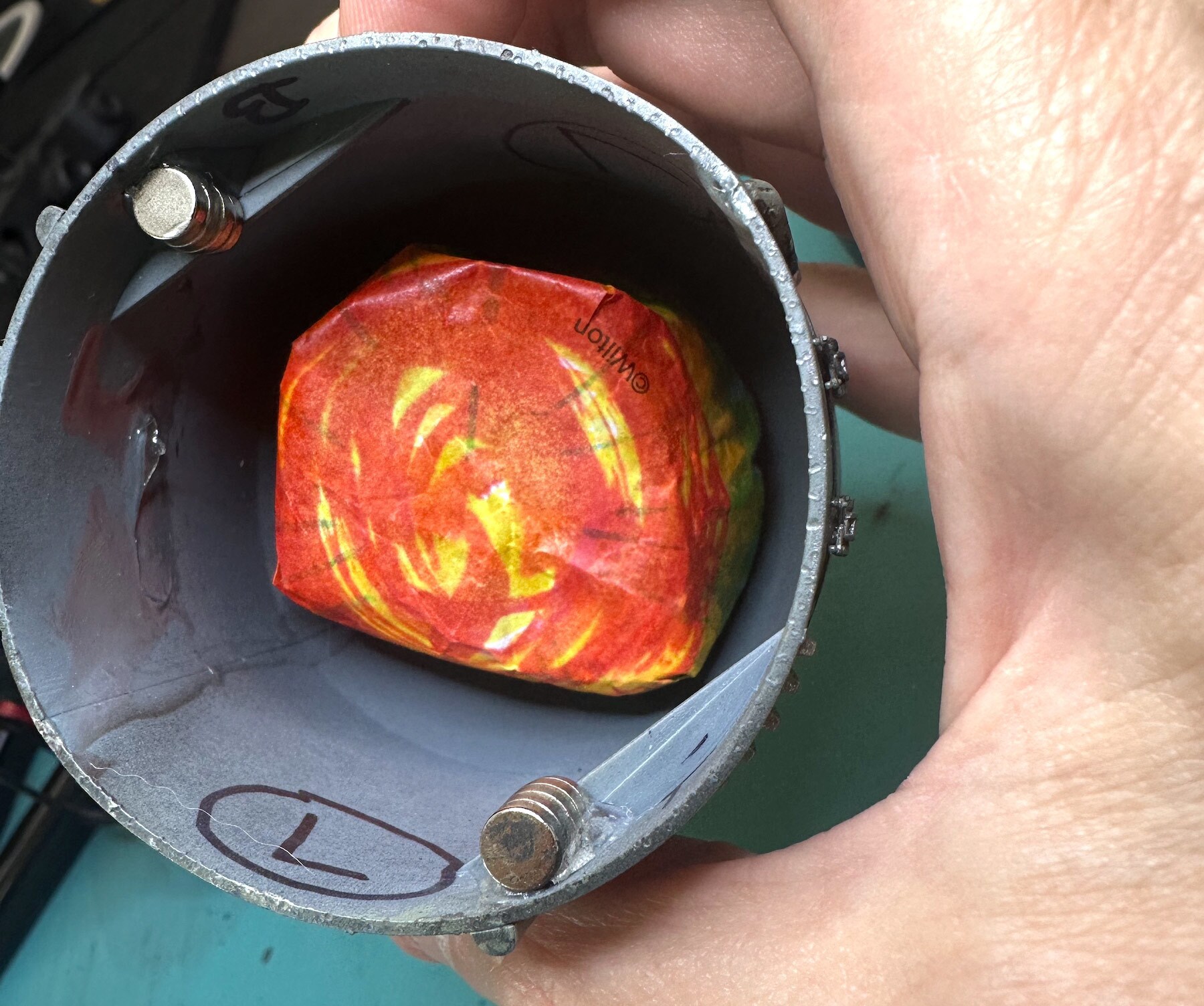
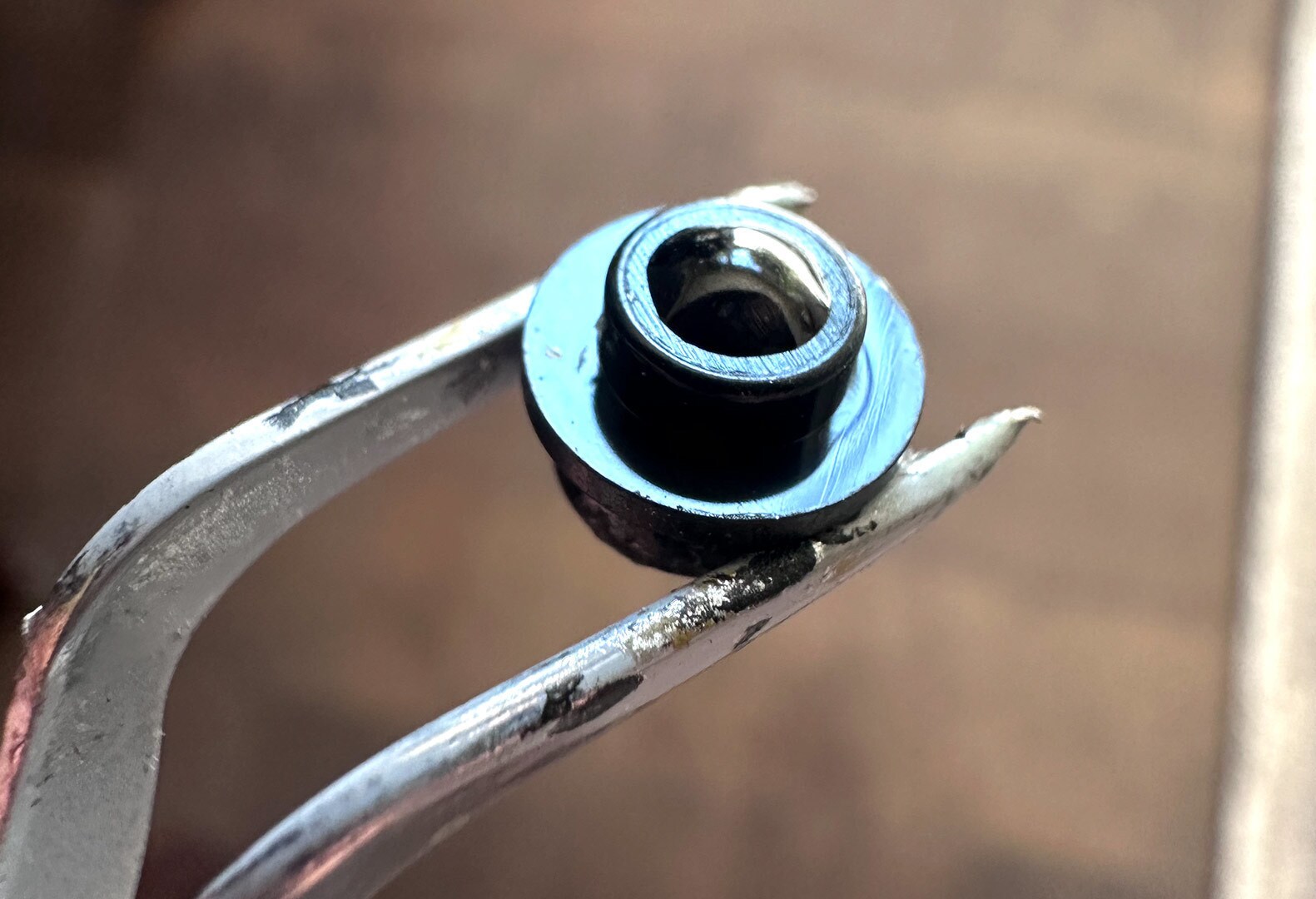
The glowing insides of the two engines utilized fiber optics with a homemade touch. Aron took small paper cups normally used for baking cupcakes, colored them in a rainbow of different hues, dipped them in resin, and then placed them inside. For small openings elsewhere on the ship, he applied small pieces of film to simulate tiny windows, then fashioned small lenses out of LEGO pieces and resin for the fiberoptic lights.
Building Towards the Future
With the completed model ready to shoot, Aron’s home-based miniature workshop became his soundstage. “I shot light passes just like we would at ILM,” he says. “I built a little soundstage on the table. I knew I didn’t want to shoot at night because I wanted to get the bounce light from my house. The windows in the room face west, so if I shot late in the day, the light would scatter everywhere and give me a great ambient falloff.
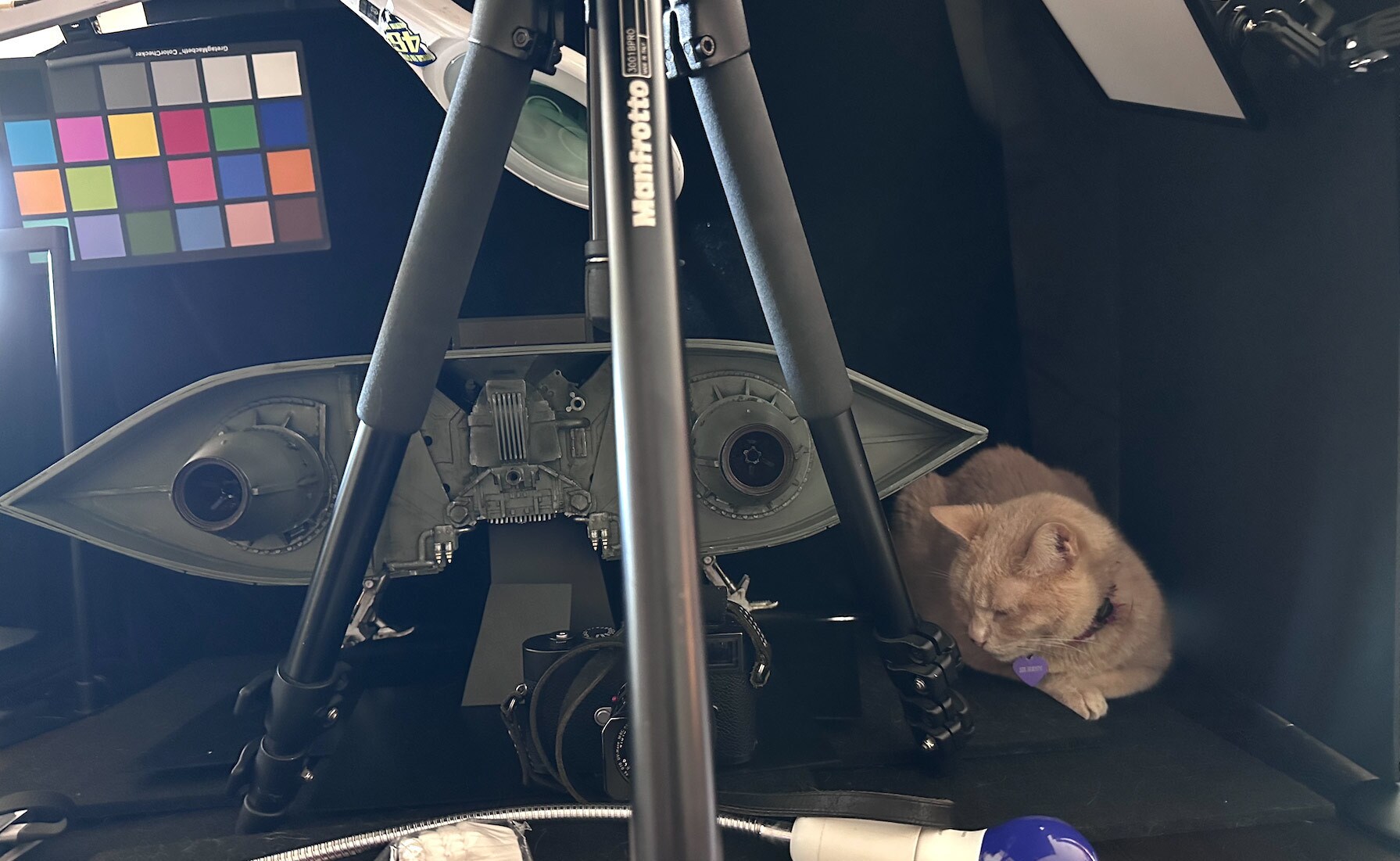
“There’s no camera move, thankfully,” Aron adds. “The small booth had light rigs, scrims, and color filters. I would do passes for each element, then I’d assemble it in Photoshop and hand it over to Andre, who did the final paintover and rendering.”
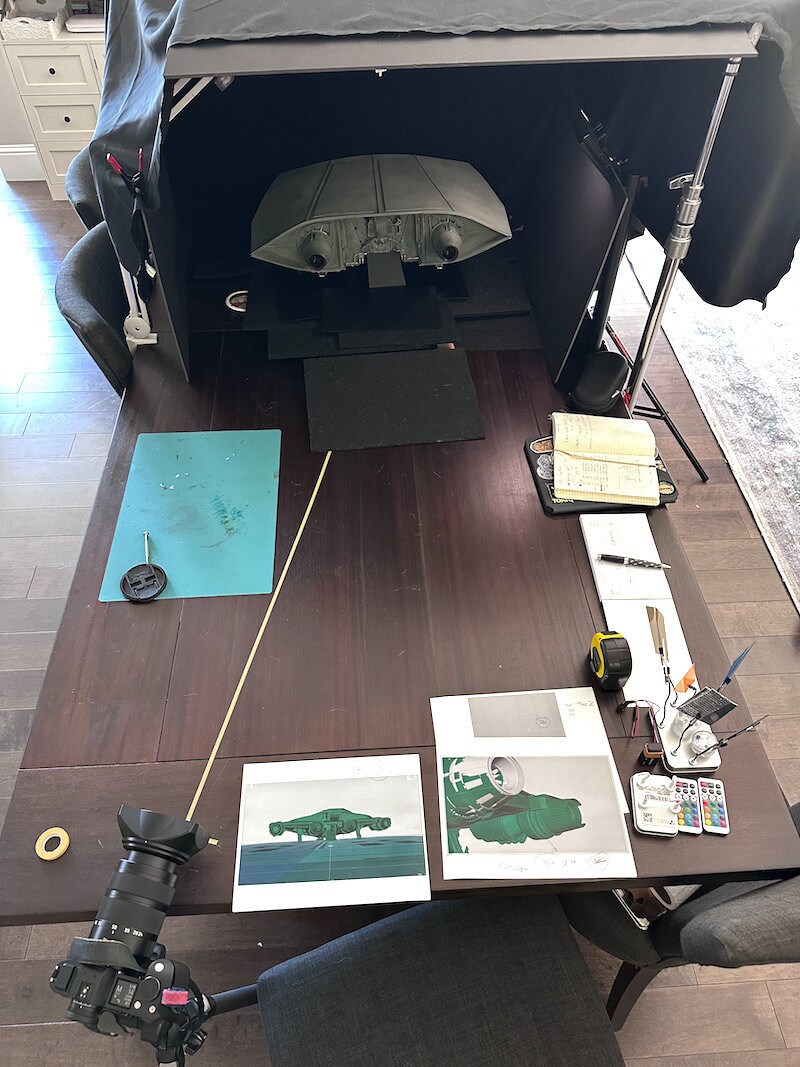
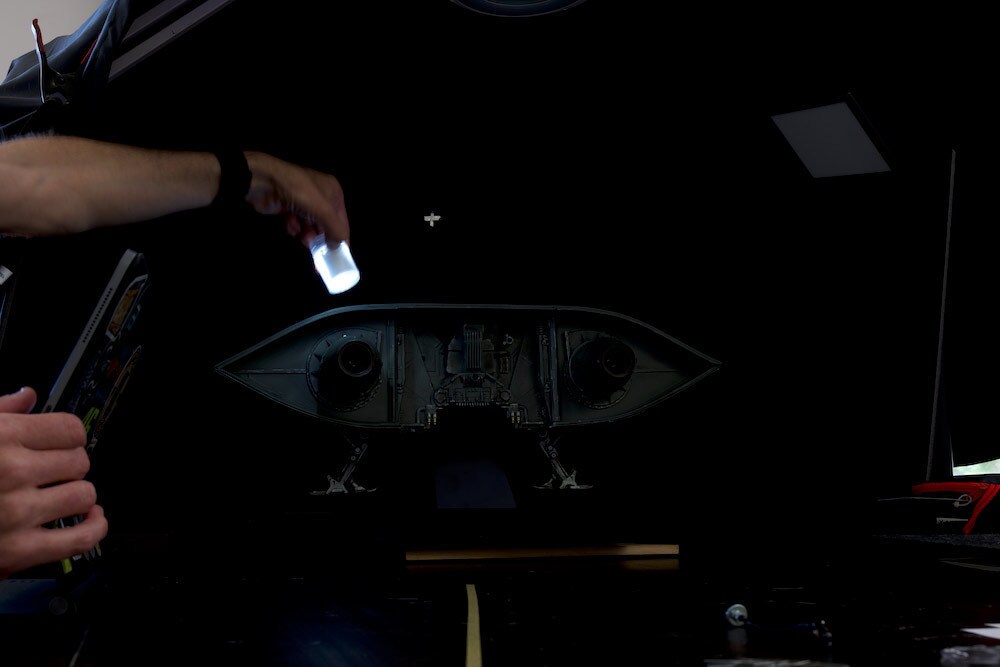
As many as a dozen individual passes were required for each shot, capturing the various stages of lighting and exposure on different aspects of the ship, from landing gear lights to engine flares. All of these elements were subsequently combined via digital compositing.
“One of my favorite things to do is to paint with light,” Aron explains. “I like to do really long exposures, from 20 or 30 seconds to a minute long. I could paint the ship with light while running the exposure.”
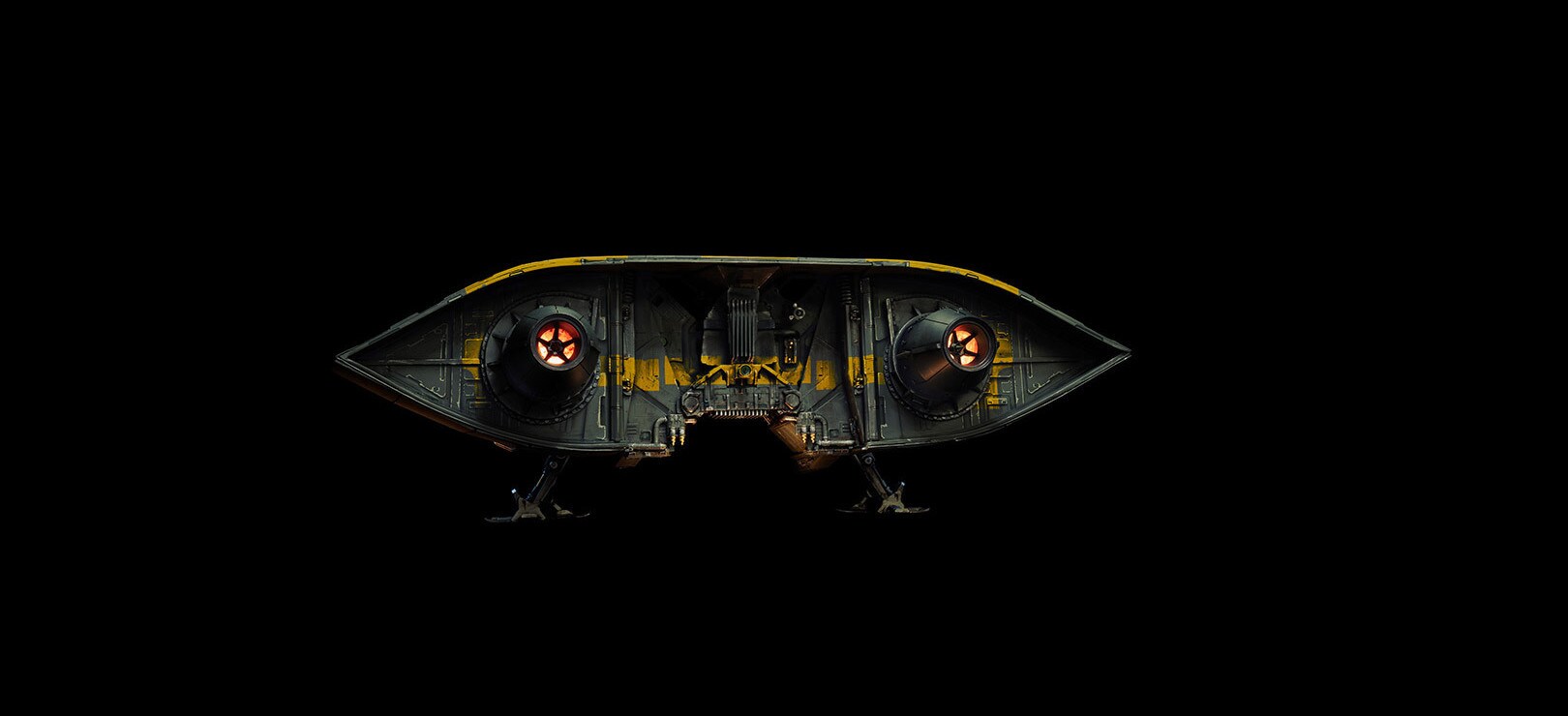
The final cargo ship appears only briefly on screen, and soon meets an explosive end in a final CG effect. But although its presence is short-lived, Aron sees the achievement as an example for the future. “We were starting work on the season finale around the time we decided to build the model,” he explains. “Things were really busy. I wanted everyone to have input, so I brought the designers in and they gave feedback. It was like a controlled crash landing down to the day when I needed to have it done.”
But in the end, the team pulled together to pull it off.
The age of Maul has begun. All episodes of Star Wars: Maul - Shadow Lord are now streaming only on Disney+.