





Star Wars: Maul – Shadow Lord begins not a galaxy-spanning story, but rather an intimate one set within the many diverse sections and levels of the planet Janix’s capital city. Mixing innovative techniques with handmade artistry, its creation by Lucasfilm Animation is driven by the need to set the stage for a dramatic narrative and simultaneously evoke its psychological undertones. Supervising Director Brad Rau describes it as “a pulpy noir vibe” that “permeates everything from script to screen.”
All
So just how do you create a Star Wars metropolis? More importantly, how do you create one that feels distinct in look and feel from the many others seen before? It all begins with the story. This backwater world presents a moody, bustling metropolis set within a meteor impact crater surrounded by thick jungle.
Janix is relatively free, where those like captain Brander Lawson and his son Rylee can eke out a peaceful existence. Much of Lawson’s work, however, does focus on a thriving crimeworld that dominates sections of the city. Yet Janix remains a mostly quiet place and, significantly, without close Imperial oversight. Perhaps this is what draws both exiled Jedi and a former Sith Lord to seek refuge there.

Setting Janix Apart
“Whenever you do a city, you're like, Blade Runner! Let's make it look like Blade Runner!” says Joel Aron, Lucasfilm Animation’s Director of Lighting, Cinematography, and Visual Effects. “But we also had the challenge that we don't want it to look like Coruscant. We don't want it to look like we're going to some place that everybody knows.”

For early inspiration, series creator and Lucasfilm President Dave Filoni encouraged Art Director Andre Kirk and the team to explore retro-futuristic designs of the mid-20th century. “We looked at images of the sci-fi future that kids in the ‘50s and ‘60s were promised,” Kirk notes. Those helped inform the team’s approach to color choice and shape language, elements that combine to give Janix a distinct silhouette on a basic level. The result is a city that feels quite different from Coruscant’s vast, overwhelming presence, and instead carries a more provincial tone.
“It’s smaller than Coruscant," says Kirk. “One level of the city is built over the previous one. Unlike Coruscant, where all the traffic is in the air, we wanted to try and bring it down to a ground level. There are streets, bridges, and trains that give it more of a terrestrial feel, which is something that we can relate to our daily life, but it’s still Star Wars.”
The designers also avoided Coruscant’s giant “megablocks” and explored how to make Janix feel uniquely grounded, including in the literal sense. “How does a building meet the ground?” Kirk explains. “Instead of just taking a building and jamming it into a flat surface, what kind of structure leads into the ground? A lot of thought went into how buildings integrate with the surface.”
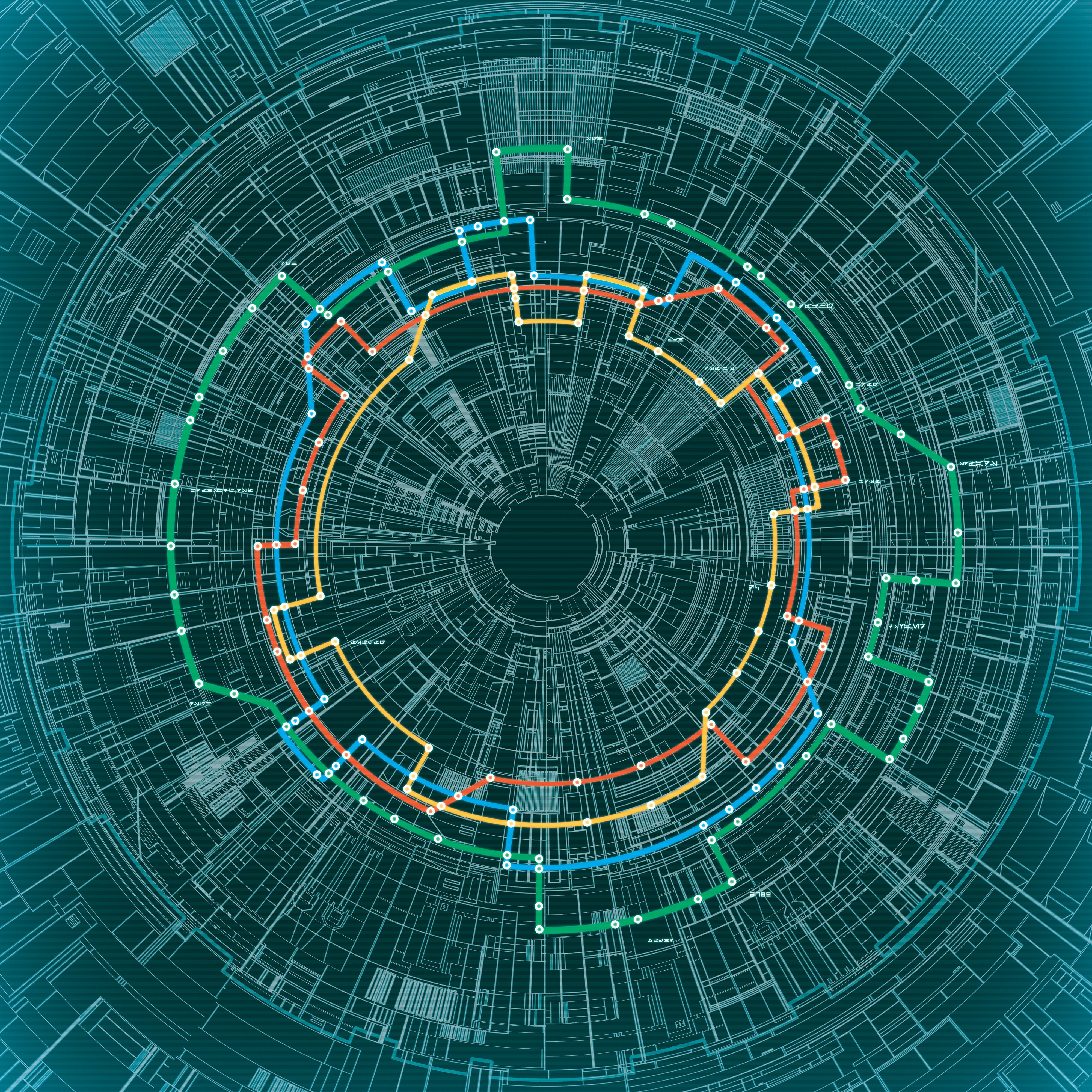
Janix Transit Map by Chris Madden
A Lonely Planet Guide
Because of Janix’s central role in Maul – Shadow Lord’s narrative, the city had to be carefully designed with the entire series in mind. “I would work closely with Brad Rau to map out the city,” says Kirk. “We would have a lot of chicken scratch drawings on whiteboards detailing the arc of the series. The logic has to work for where the characters travel throughout the story. A lot of that work never makes it on screen, but it’s really important and some of the stuff that I find most satisfying – when you make a plan and then it works. I imagine that, just like with lying, it’s easier if you tell the truth. Everything flows logically and our city does work.”
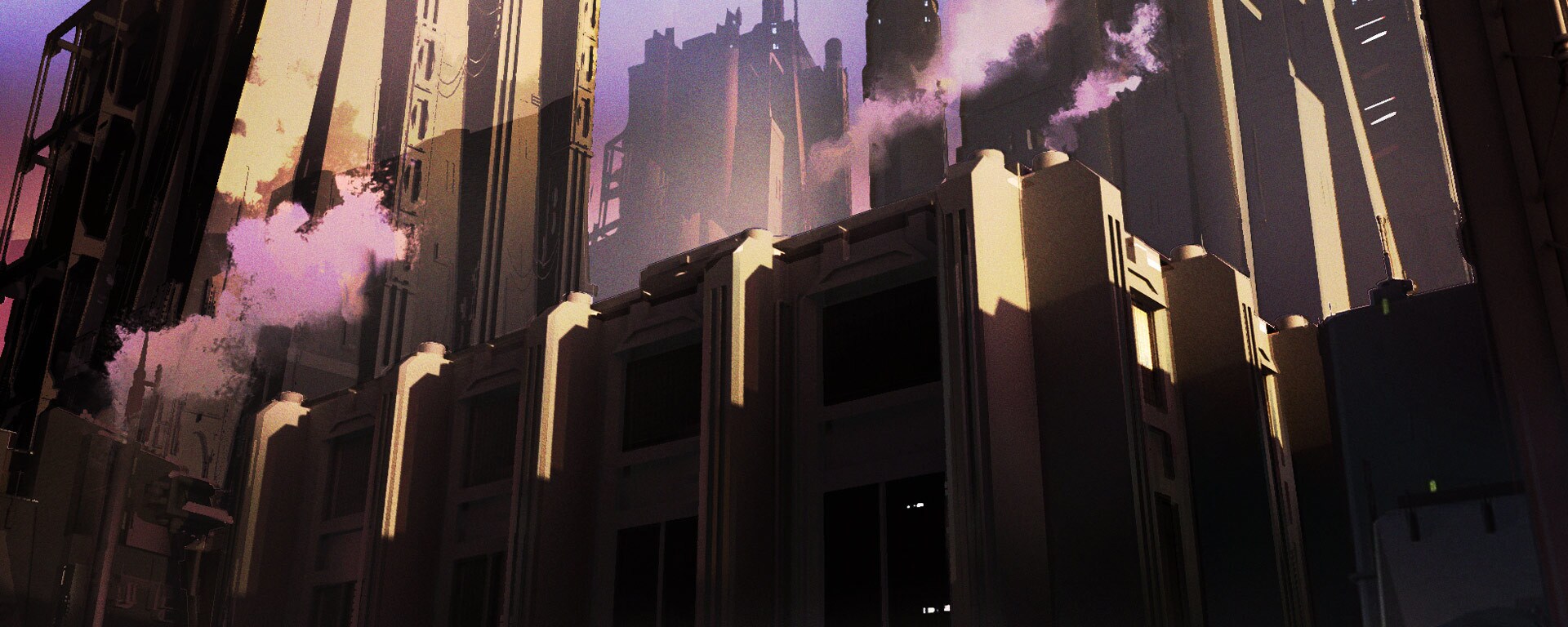
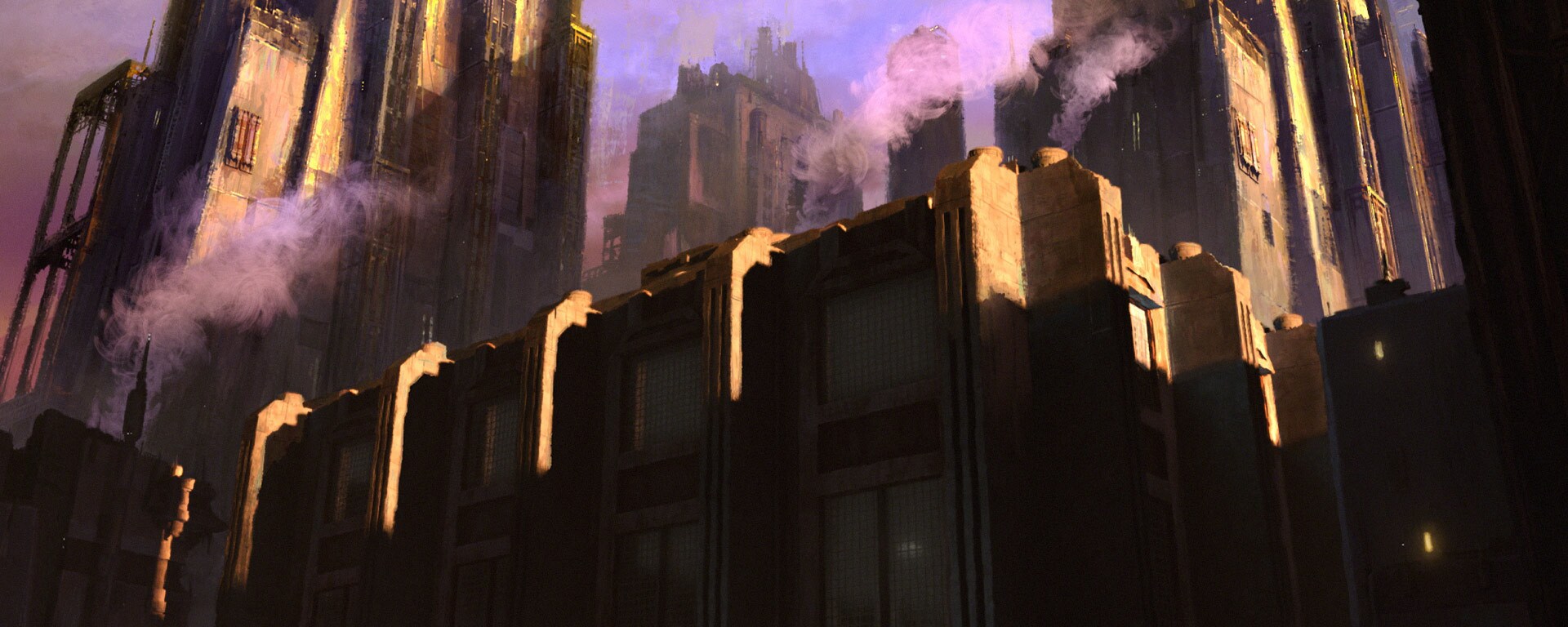
Concept art of a Janix warehouse by Molly Denmark compared to the final scene.
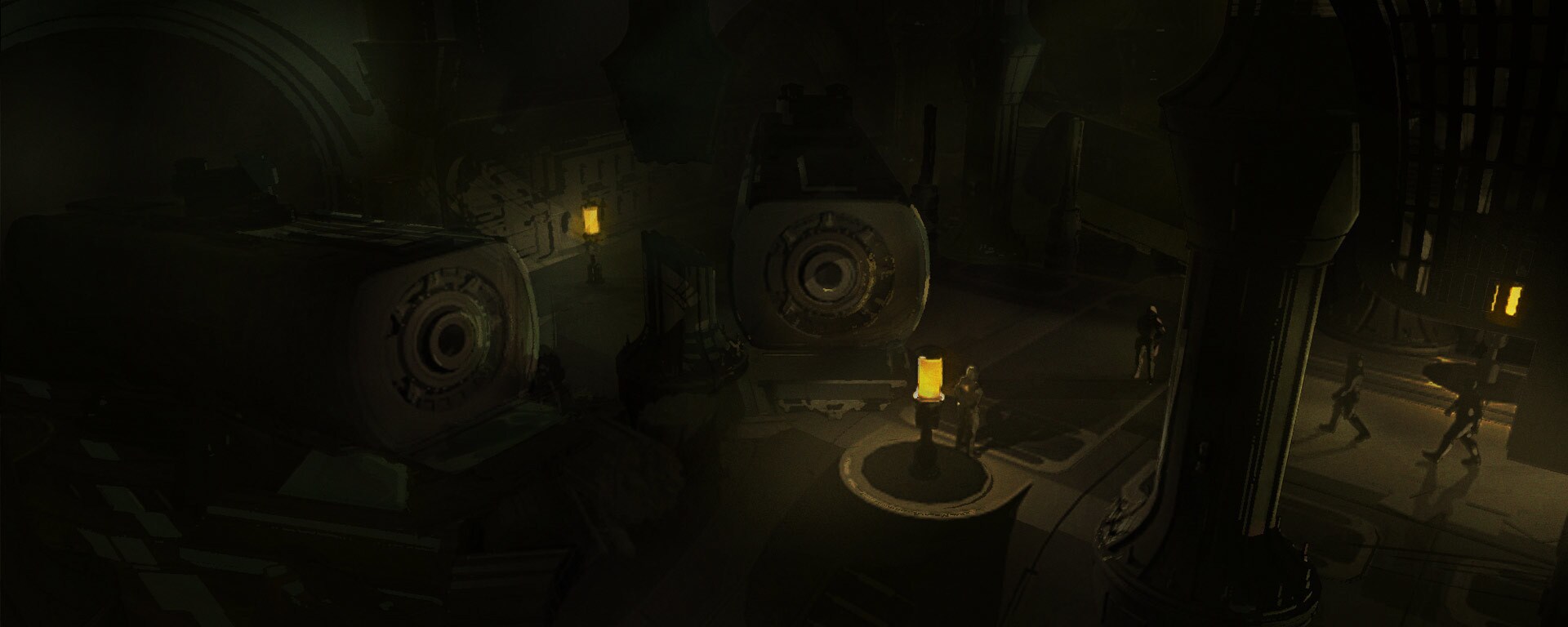
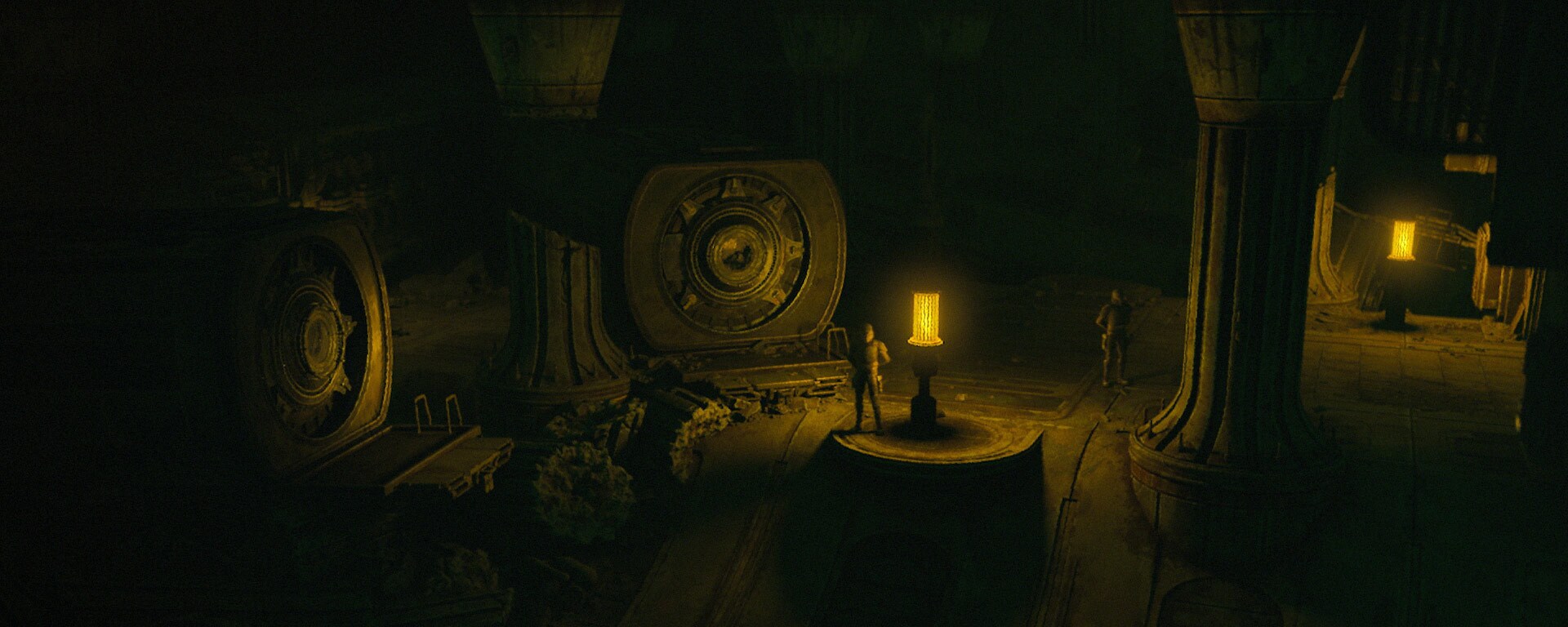
Concept art of Maul's safe house by Molly Denmark compared to the final scene.
Designers worked to make individual sections of Janix’s city distinct, from the mobster’s hideout to the Janix Civil Defense station. The inner sanctum of a crimelord will naturally feel different from the Lawson’s apartment home, but together they all need to feel like one Janix in a way that implies the logical flow of a city.
“It's kind of like preparing for a trip,” says Joel Aron. “If you plan a trip to Europe, you get the guidebook, right? We're going to Janix. So we had to buy that specific Lonely Planet guide, right? We had to think like that.”

From Def Leppard to John Singer Sargent
From the outset, the design brief for Janix, along with every aspect of Maul – Shadow Lord, was to convey a loose, impressionistic style. Series creator Dave Filoni wanted “to see the hand of the artist in every frame,” as Rau explains, “so there's a more painterly style in the assets and in the buildings and the ships and in the matte paintings. Even in the smoke and the fire, everything has a hand-painted look. It's still CG, but we wanted to push those bounds.”
For Joel Aron, Filoni’s design edict was very specific. As he details, the creator asked the team to pursue a look that mixed the feel of the band Def Leppard’s 1987 album, “Hysteria” with that of the cover art from the 2012 Dark Horse Comics release, Star Wars: The Clone Wars – The Sith Hunters, for which Filoni himself had painted Maul and his brother, Savage Opress. “If you think back to when Dave did those comics covers, they were on basic canvas and I would photograph them and he’d send them to Dark Horse,” Aron recalls. “It’s that hands-on mentality.”
That meant something entirely different from photo-realism, what Kirk describes as “a unique looking city that leverages a lot of traditional paintwork, gorgeous color blending, and the human touch. We had some really good examples of it in early Clone Wars in the texture work. We looked back at the beautiful, hand-created work that was done for that and recreated it in our show with all of the technological advances that have come along since then so that we can fully realize that hand-painted world.”
Crew members like Senior Digimatte Artist Kyra Kabler immersed themselves in traditional methods and source material. “We looked at J. M. W. Turner, Jeremy Mann, John Singer Sargent, all kinds of different artists, as well as city photography from places like Hong Kong. We needed to develop a style. For example, what do the city lights look like far away? Do we add rake marks, brushstrokes? Does it become less detailed in the distance? There was a lot of exploration before we went into production.”

Having painted actively since childhood, Kabler experimented in what she describes as “palette-knife-style cityscape paintings” by going out into her own neighborhood to create new art. “Normally, I paint more organic settings like cliffs and trees in nature,” she explains. “I hadn’t done as much with cityscapes. San Francisco has a beautiful skyline so I started going out and doing these paintings in gouache. I learned about perspective and what happens with window reflections, all these little details. We went with a brutalist, blocky design with lots of neon lights and things.”
Kabler would lead artists from Lucasfilm Animation’s partner studio, CGCG, Inc. in Taiwan, in an effort to bring this painterly approach to all of the show's environments. The key was the “abstraction of cityscapes,” as Kabler describes, from the largest buildings all the way down to the way light emits from a streetlamp.

Actual Brushstrokes on the Screen
The Lucasfilm Animation artists took precedent for Janix’s impressionistic feeling from the existing art that surrounds them at the company’s San Francisco headquarters, which include a number of traditional matte paintings from Industrial Light & Magic. “The stuff that's on the walls here in our hallway,” says Aron, “if you just walk up to it, you…realize that was just a little splatter [of] paint.” This helped fuel the team’s confidence to lean away from hyper-realistic detailing.
Aron worked closely with Senior Lighting and Visual Effects Artist Valerie Perez to develop software tools that allowed them to directly incorporate brushstroke accents into their CG paints and textures. Aron took that one step further by actually applying physical swatches of different paint colors onto clear glass (not unlike a traditional matte painting) and then photographing them as high-resolution elements to be utilized in CG. Soon Aron’s entire team was painting brushstrokes onto glass.

“We have dabs, curls, straights, thin streaks, and all of these were used to assemble the look of the show,” Aron says. “Then we can use that render of all the brushstrokes with all the tools that Valerie wrote to apply to our final composite, and then we started to apply all that brushstroke theory to…the cinematics of it, the out of focusness.
“[Senior technical director] Alex Shaulis came up with a really cool method of using brush strokes to distort even more of our visual effects,” Aron continues, “because that's one thing that takes me out too, is if I'm watching something and the visual effects all of a sudden look like computer simulation…that takes me out…. So we found ways to create and distort paint strokes….The practicality of it is the soul of everything.”

A Subjective World
Janix is a distinctly designed world, which itself informs Maul – Shadow Lord’s unique psychological makeup. The hours of work on the part of Lucasfilm Animation’s artists are all in service of telling a story, one with a particular emotional dynamic.
“A lot of this comes down to Maul’s mental state,” Kabler explains. “He’s really devolving. He’s traumatized. He’s doing terrible things. He’s not in his right mind. He’s so focused on revenge that sometimes some of the details fade away. I advocated for making the show more stylized, making it more grungy, more painterly and abstract. My favorite moments in the show are when it gets a little crazy-looking. We also talked about increasing that look when there are fights on screen or Maul is having an intense moment or something like that. It helps reflect his inner turmoil.
“I’m not sure if it’s a utopia or dystopia, probably a little bit of both,” Kabler adds about Janix. “There’s a lot of poverty, a lot of dirt and garbage on the streets. It’s not a well maintained city. Distorting the look of the place helps to make it feel like that. But also, the scale is really large, where there are different layers to it. The abstract qualities make it feel bigger. You don’t know where you are; you’re a little lost.”
The age of Maul has begun with two new episodes premiering weekly every Monday at 12 a.m. PT only on Disney+.
For more on Star Wars: Maul - Shadow Lord, explore StarWars.com features, including:
Scene Breakdown: Darth Vader Duels Maul in Star Wars: Maul – Shadow Lord
How Lucasfilm Animation Built a Practical Miniature for Star Wars: Maul – Shadow Lord
Star Wars: Maul – Shadow Lord's Gideon Adlon Breaks Down Devon Izara’s Biggest Moments
Booshkeedoo! Sounds, Style, and Spybot in Star Wars: Maul – Shadow Lord
We Absolutely Adore This Star Wars: Maul – Shadow Lord Duo
Inside Maul’s Mind with Star Wars: Maul - Shadow Lord Star Sam Witwer
Welcome to Janix: Building Lucasfilm Animation’s New World for Star Wars: Maul – Shadow Lord
Inside the Making of Star Wars: Maul – Shadow Lord
Maul’s Story Continues in Star Wars: Maul – Shadow Lord Season 2 - Announce
Meet the Cast of Star Wars: Maul – Shadow Lord - Update
Watch the Official Trailer for Star Wars: Maul – Shadow Lord - Updated
Star Wars: Maul – Shadow Lord Teaser Trailer and First Poster Arrive
Embrace your Inner Jedi with Devon Izara’s Legacy Lightsaber - Reveal

Related News + Features

April 20, 2026
April 20, 2026
Apr 20
 [object Object] [object Object]
Inside Maul’s Mind with Star Wars: Maul - Shadow Lord Star Sam Witwer
April 8, 2026
April 8, 2026
Apr 8

August 5, 2026
August 5, 2026
Aug 5
July 29, 2026
July 29, 2026
Jul 29

July 8, 2025
July 8, 2025
Jul 8
 [object Object] [object Object]
Andor’s Stellan Skarsgård and Elizabeth Dulau Break Down Luthen and Kleya
May 22, 2025
May 22, 2025
May 22