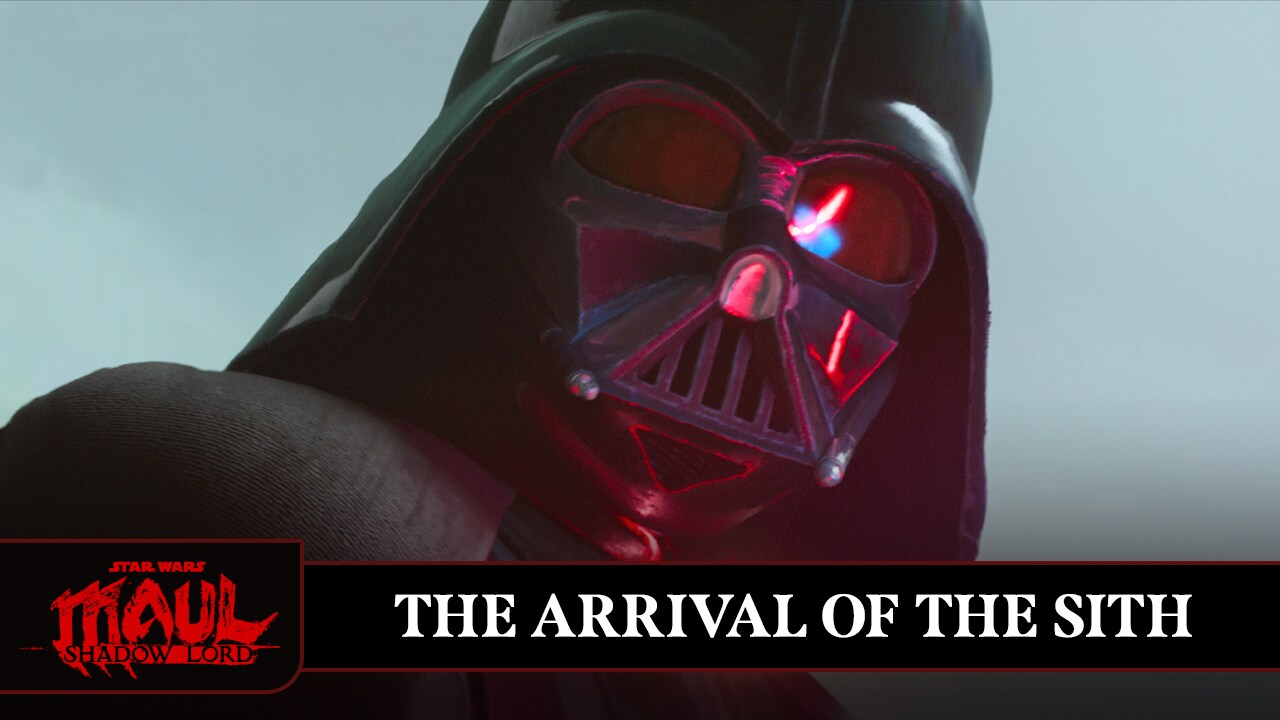

Creator Dave Filoni, Supervising Director Brad Rau, and Head Writer Matthew Michnovetz take us back to the drawing board on how the creative team crafted the season finale.
In the penultimate episode of Star Wars: Maul – Shadow Lord Season 1, a creature emerges from the mist and for the first time in a long time, Maul seems genuinely shaken.
In short order, the hulking brute proves that he’s neither Jedi nor Inquisitor, a masked menace disguising something far more terrifying to face.
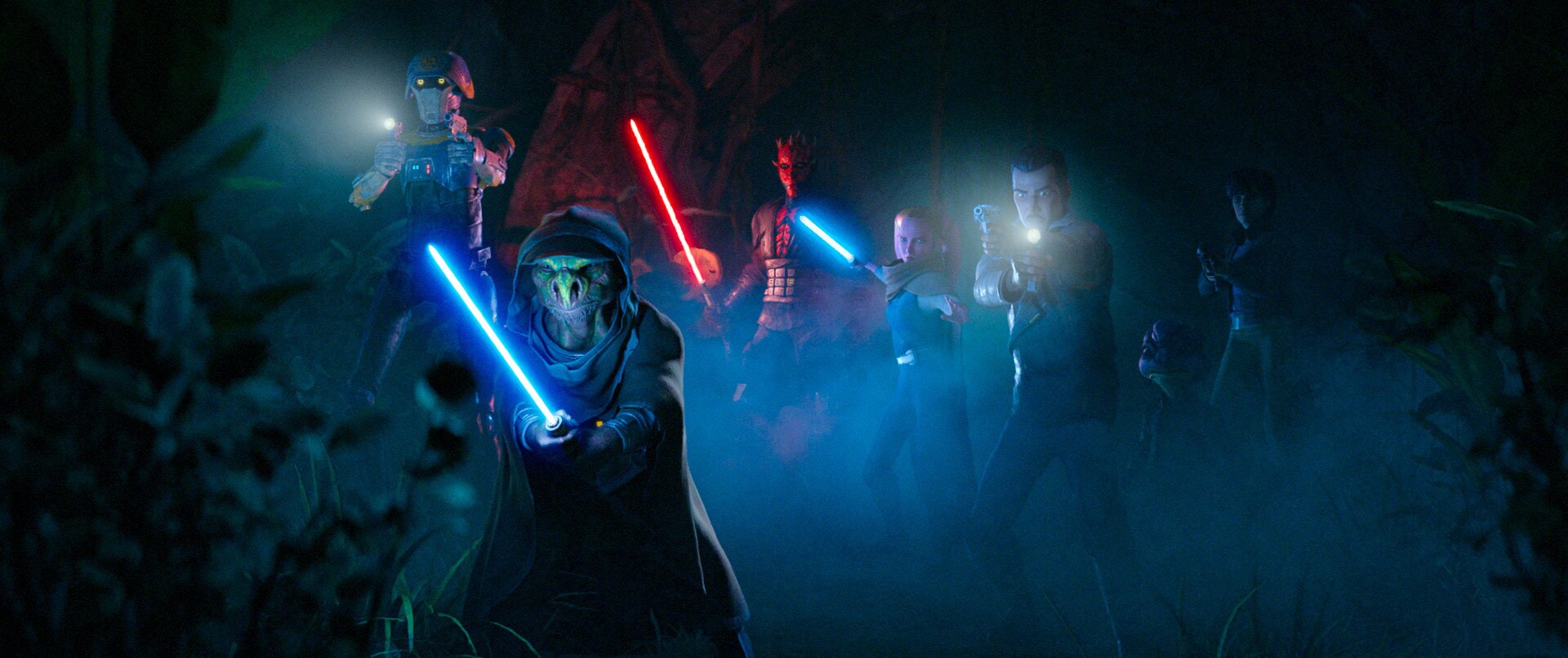
Spoiler warning: The article discusses details from the two-episode Season 1 finale of Star Wars: Maul – Shadow Lord. Turn back if you haven’t watched episodes 9 and 10!
Although the characters may not know their enemy by name, the audience certainly does.
From painstakingly crafting his frightening visage, to choreographing every saber strike, the arrival of the Dark Lord of the Sith, Darth Vader, finally brings two of Darth Sidious’s apprentices head-to-head for a long-awaited battle.
Series creator and Lucasfilm President and Chief Creative Officer Dave Filoni is no stranger to bringing Vader into animation, and he doesn’t take the opportunity lightly. Vader’s arrival in Star Wars Rebels in the two-part epic “Twilight of the Apprentice,” on which Maul’s Supervising Director Brad Rau worked alongside Filoni, remains a fan-favorite. “I was the episodic director,” Rau recalls. “Of course, Dave as the supervising director had very specific ideas for the silhouette and the movement of Vader back then. And I was thinking about that a lot when we had a chance to do this.”
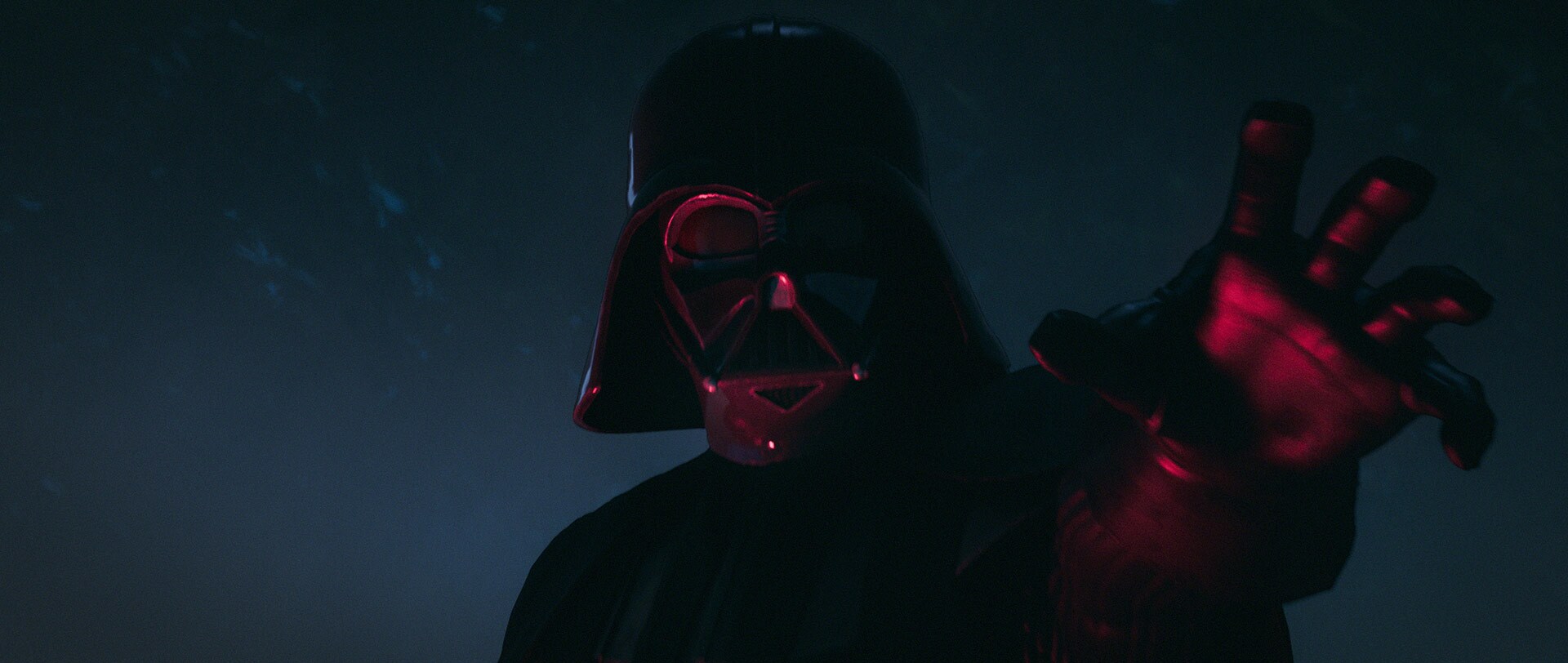
“The challenge with using Darth Vader here is to show Maul the horror of what you can become when you have power and evil come together in a more perfected version than what Maul is, which is a broken, scrambling version of evil,” Filoni says, noting there’s no question in his mind that Vader will always be able to best Maul. “Vader is better, more powerful, more destructive, more of a weapon for the Emperor, which is a problem.”
The Dark Lord’s inclusion in Rebels was specifically written to help further Ahsoka’s story as she grapples with what her former Master has become in the age of the Empire, Filoni says, which is echoed here with a new set of characters. “How does Vader help us tell Maul's story? Devon's story?”
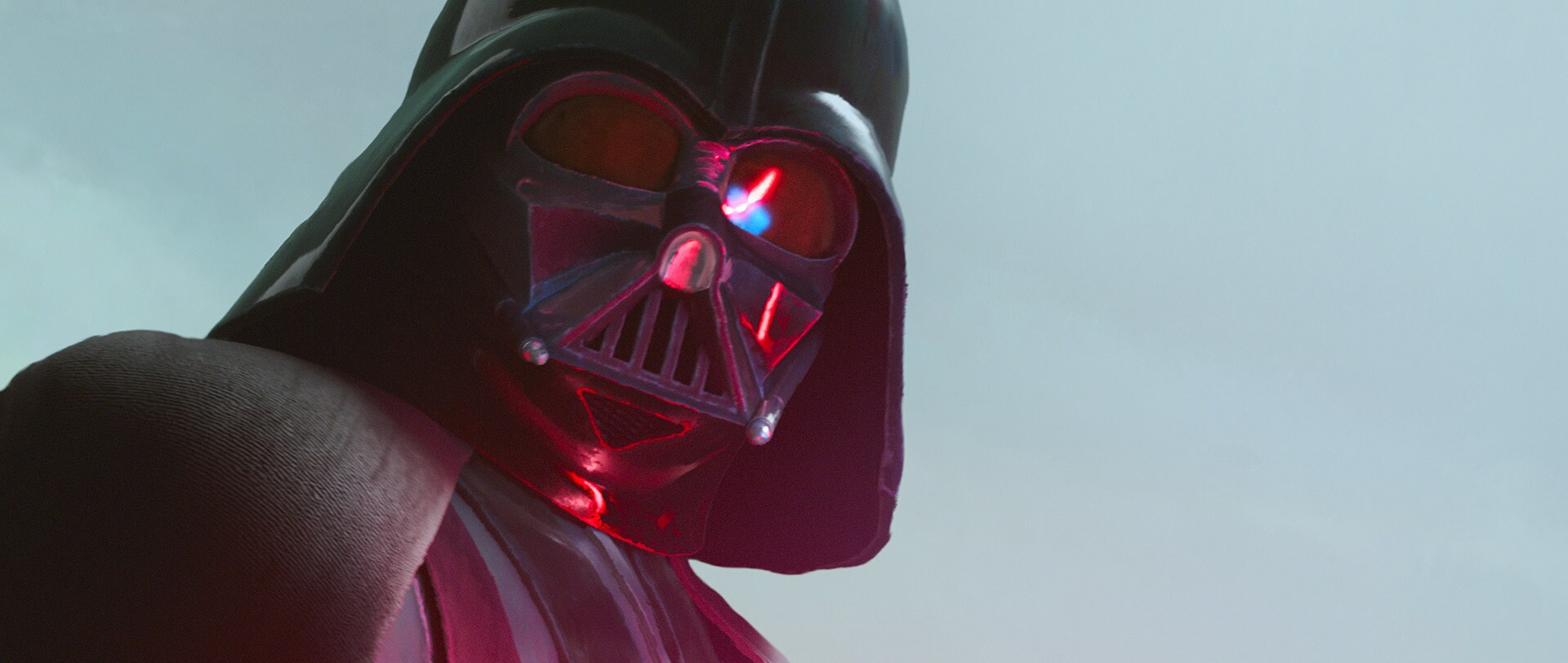
Mechanical breath
First and foremost, Filoni and the team agreed that Vader arriving in the final battle on Janix this season would add a new layer of terror by specifically omitting any dialogue. Vader simply has nothing to say to Maul and his unexpected allies. “There's no new information we need. He just needs to be a powerful, destructive force,” Filoni says. “Vader, through his presence, through his ability, through his terror, shows those aspects.”
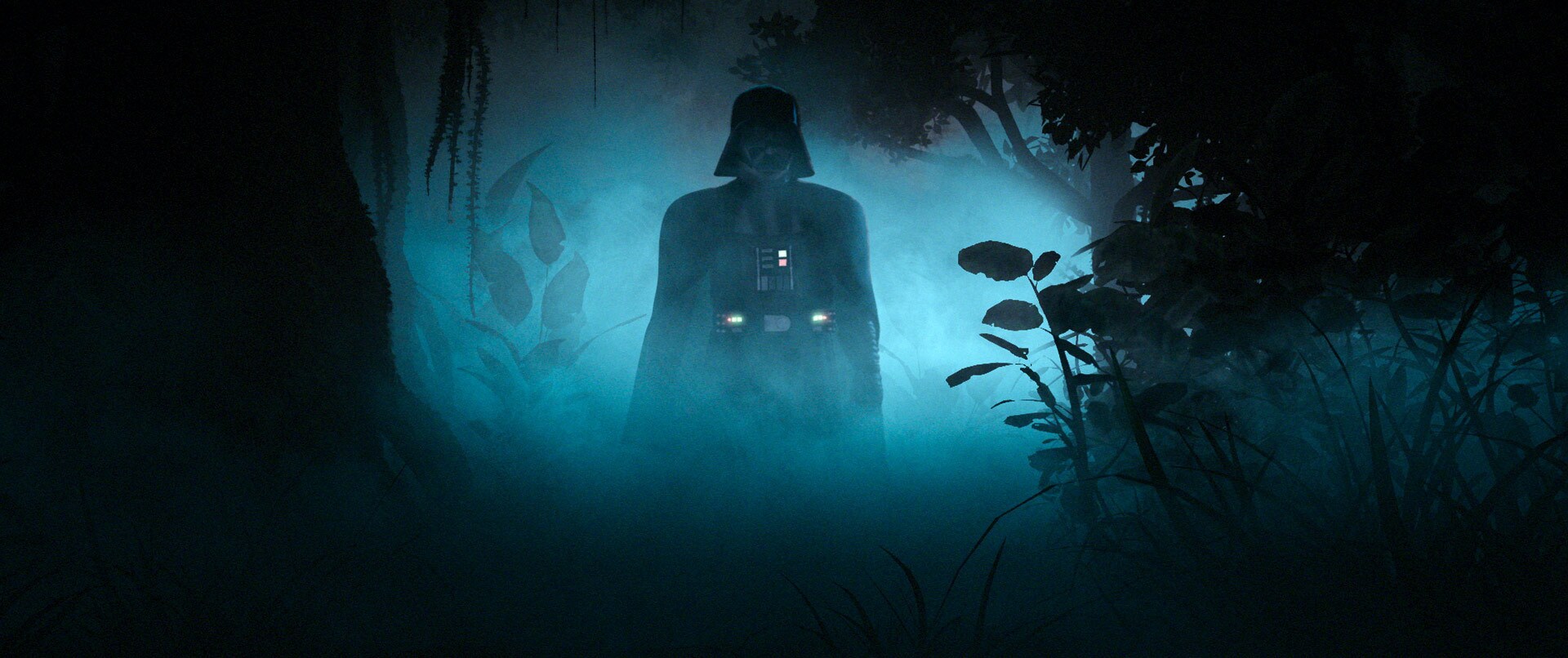
The breathing alone gives Vader’s entrance — in a scene inspired by Ralph McQuarrie’s cover art from Splinter of the Mind’s Eye — a horror quality on par with genre titans like Michael Myers in the Halloween franchise or Jason Voorhees from Friday the 13th. “As we went into the earliest phases of the scripts all the way through the entire production to the mix at the end, we wanted the audience to be as shocked and surprised as our main characters are,” says Rau. “There's been this long hunt through the night through episode nine, and then we get to the very end to see Vader. It was a great opportunity to have the fog and the morning light just starting to come in.”
“It's such a unique visual compared to the rest of the season,” adds Head Writer Matthew Michnovetz. “It's about the horror and this thing stalking them, this silent killer. We had long talks with Dave and Sam Witwer, the voice of Maul. This is obviously not an Inquisitor. It must be an apprentice. It certainly doesn't look like Anakin Skywalker. If it is what we think it is, it was a Jedi, but it has transformed into something much more dangerous. It knows how you think. It knows the Jedi and it knows the Sith.”
Designing Maul’s replacement
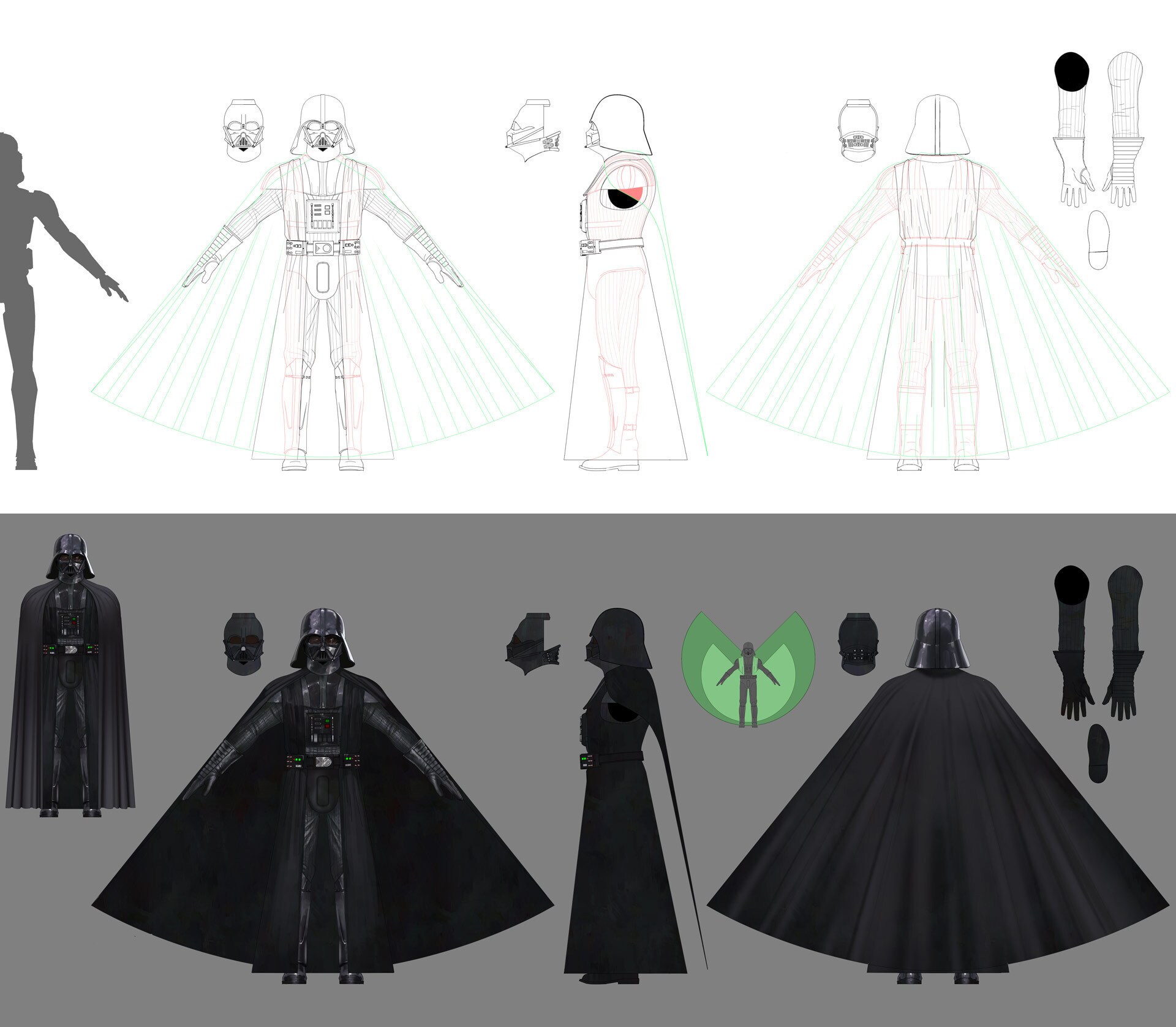
Long before Vader’s mechanized breathing heralded his arrival, Rau and Michnovetz — who co-wrote the script for the finale — immediately got to work on the design with Art Director Andre Kirk to remake the Sith Lord for the series’ new animation style. “There's a lot to this whole decision to bring this guy in, a lot of math and science and trigonometry,” Rau says of getting to play with his favorite character of all time. “We wanted his silhouette to be more horrific than we've seen in animation previously."
Kirk quickly began incorporating original Vader actor David Prowse’s body type into this new incarnation. Taking inspiration from Star Wars: The Empire Strikes Back, they began to choreograph his movements to match elements of Prowse’s performance. “We really use that as a point of reference. He's a horror in that movie,” Rau says. Kirk and designer Chris Madden also folded in elements found in images of Prowse out of Vader’s uniform, both in the wrestling ring or doing stunt work on other movies, to complete the physique. “We used that as our guide to how he would fit in this suit. The shoulder pads are even bigger than you think,” Rau adds.
Director of Lighting, Cinematography, and Visual Effects Joel Aron was brought in early to consult on the look of Vader’s helmet. “The way that the shine or scuffiness of his helmet is translated into our painterly style is something we talked about with Joel all the way through, even before it ever got to lighting,” Rau says.
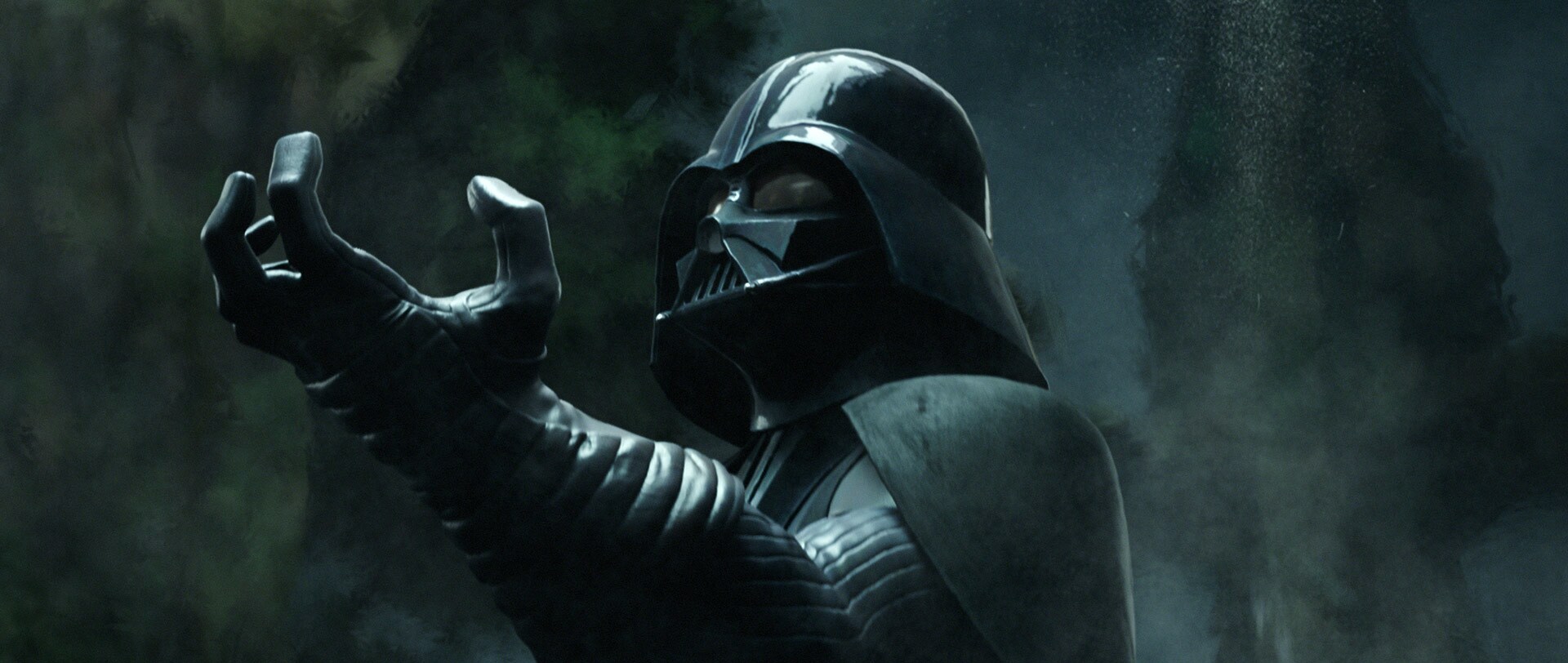
And previsualization helped everyone come together with a unified vision. “It's not just a theory; we literally have a proxy version of our sets, which helps define what is going to be a painting from Kyra Kabler and the matte team working with Joel. It's really astounding. But the sets and the characters, where the camera is, what lens we're using, all the kinks, all of the story, all of the motion as much as we can, we work out all of that in the previs phase.”
As Rau and Michnovetz finalized the script, Animation Director Keith Kellogg and his crew began early screen tests to define Vader’s motion while episodic director Nate Villanueva and his team grappled with precise movements. “We worked out every shot, every single step, every motion, everything along the way,” Rau says.
Shadow Lords
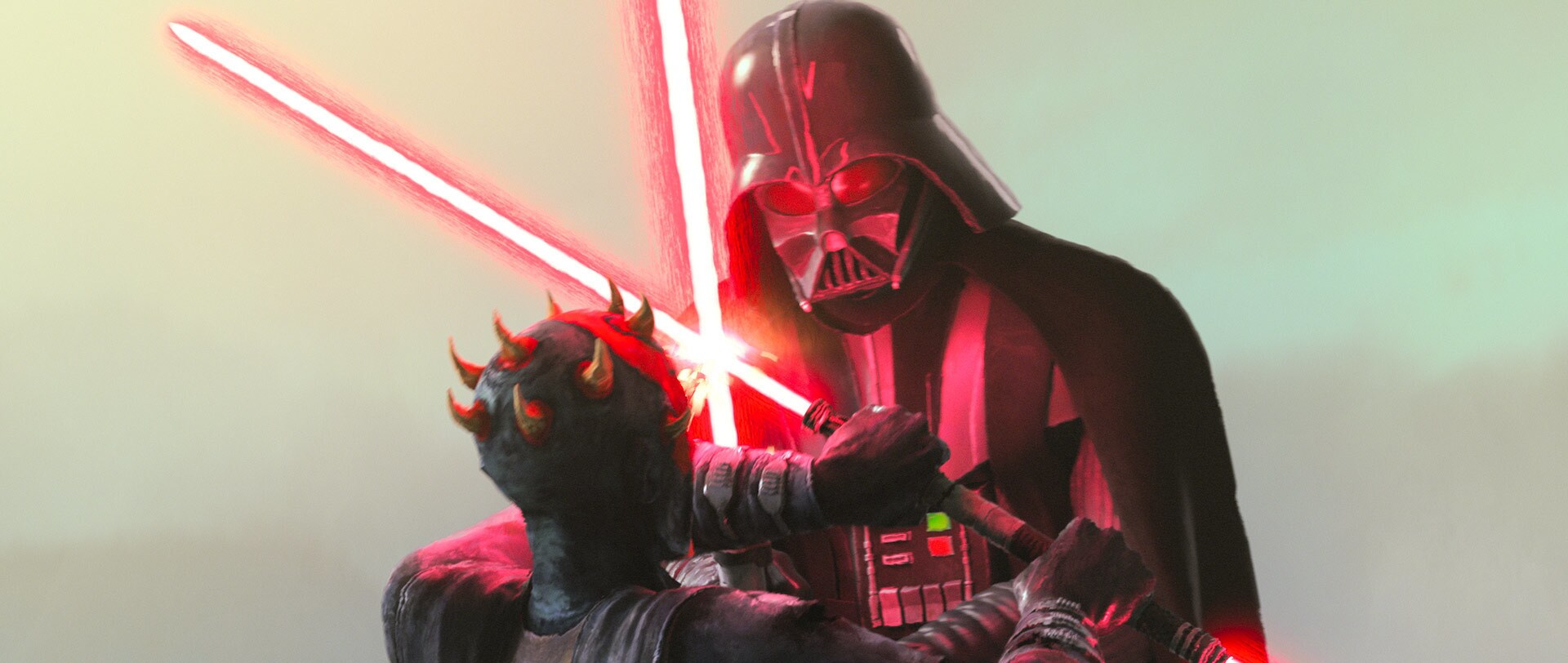
After rebuilding his crew and facing the Inquisitors, dueling Darth Vader is key to Maul’s arc this season. “It's something we talked about with Witwer a lot. You see Maul throughout this season as a nuanced manipulator. But we were really fascinated with his vulnerability, getting the audience to be one-on-one with him,” Rau says. “We've seen him injured and the fallout from that. All of those things add up to this moment. The fact is that the devil himself is being framed in several shots below us with Vader above us, and he has fear on his face. If we do it right, just seeing that guy scared after everything he's done up to this point is terrifying.”
“Vader is a force of nature, but their destinies are entwined,” Michnovetz notes. “This is the moment that those clash of civilizations come into contact. The tragedy of it all is that, at the end of the day, Maul has to be left undone. We watch him build his little empire, his syndicate, and then he's left with the consequences.”
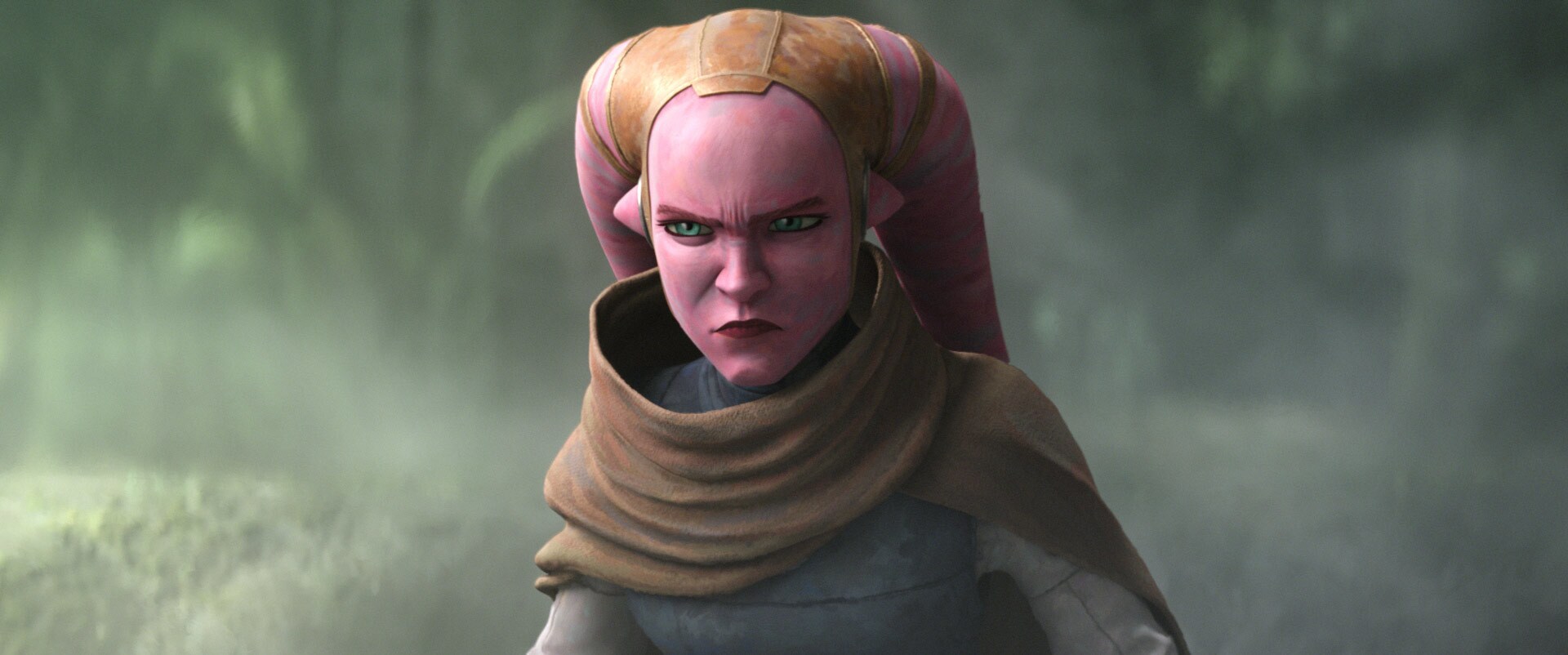
The ripple effect also has drastically changed the lives of Devon Izara and Rylee Lawson. Watching the montage of scenes from earlier this season closely, it becomes clear that Maul has been training the Jedi Padawan all along. “We talked about this early with Witwer and with Gideon Adlon,” Rau says. “From the very moment that the shadow of Maul crosses over Devon in her cell in the final shot of the first episode all the way to the final episode, Maul has been teaching her. It's not Sith training because he's not Sith. It's not Jedi training. It's some kind of training we've never seen before.”
But only Vader has the power to take on two Jedi and a former Sith and make it seem effortless, ultimately leaving Devon without a Master and stoking the rage Maul needs to bring her on as his new apprentice. “It worked organically with the story and the threat that we needed,” Michnovetz says. “We needed a force that would give them resistance and conflict so that Devon would be tested by both the devil on her shoulder and the angel — Maul and Daki. They’re her two dads and each of them present a path. Through this final episode, we see Devon switching between what she’s learned from the two skilled warriors, adapting to survive.”
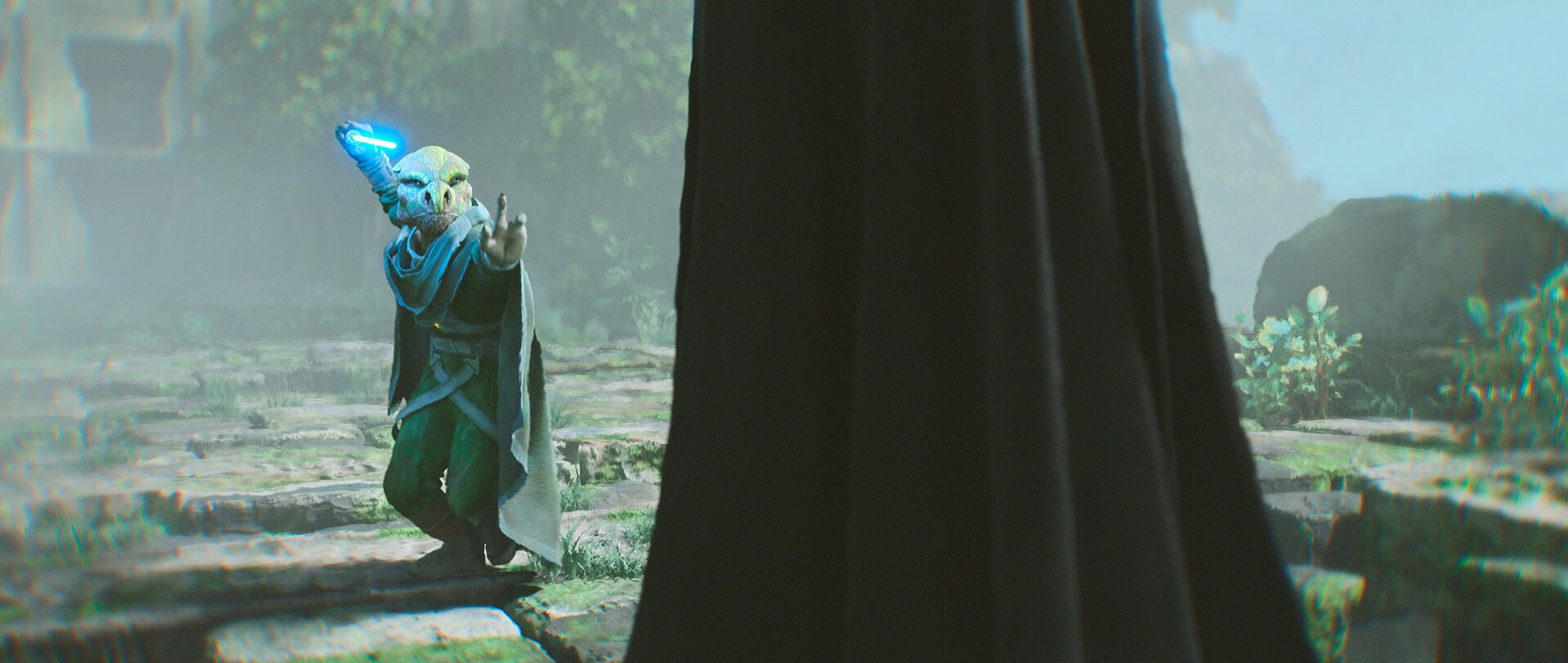
Make no mistake: Maul may be the series protagonist, but he’s still a villain. “We love Maul so much, but even though we are now cheering for him with our good guys, we needed to showcase that he is a very bad guy,” Rau says. “That was really important to me. And he does a move that leads to the tragic demise of Daki while he waits in the shadows, watching Devon. She unleashes her rage like never before. It is not the final lesson, but it is a very big, terrible lesson that he's teaching her.”
“They're all left in a completely different and vulnerable space than where we built them up to,” Michnovetz adds. “We watch Maul's whole syndicate get wiped out, so he's not left with much. But he's got his agenda still. By the end of it, Devon is facing a whole new reality.”
And it was important to the filmmakers that Devon Izara have the agency to make this decision.
“Even as we were discussing the script before we started writing it,” Rau says, “we knew we wanted to end on Devon making this decision to join the Shadow Lord on her own.”
Always Two (Directors) There Are
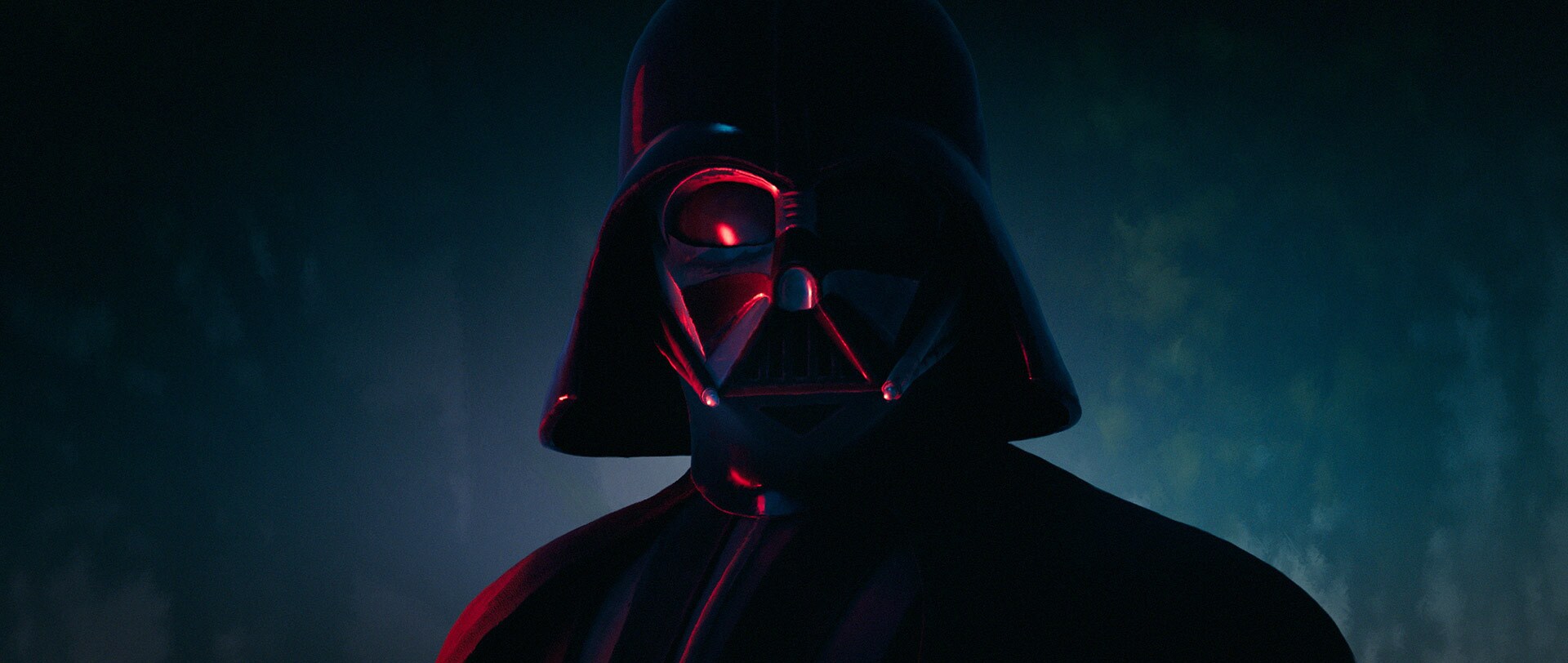
Behind the scenes, the team also had to navigate the complex handoff from episode 9 episodic director Steward Lee to episode 10’s director Nate Villanueva. “To get this all to line up is a combination of the scripts and the designs and the way it's shot and directed and the way that it's animated,” Rau says. “We had several meetings with all of our supervisors getting together to talk about the nuance of how the cloth was going to move on his cape, how the lights on his belt were going to shine or not shine, how we're going to frame him. Stew himself shot the final scene where Vader comes out of the fog and it turned out so good.
“With Nate Villanueva and his team, we used specific lenses to magnify the enormity of Vader in frame,” Rau continues. “He’s just relentless, a scourge that doesn't say anything. He hardly has any audible effort. His moves needed to be both heavy and quick, which is really hard to do both of those things. The way we try to set it up is that it's almost as though he knows where people are going to strike before they strike. So every movement is a quick bit of precision and it's astounding.”
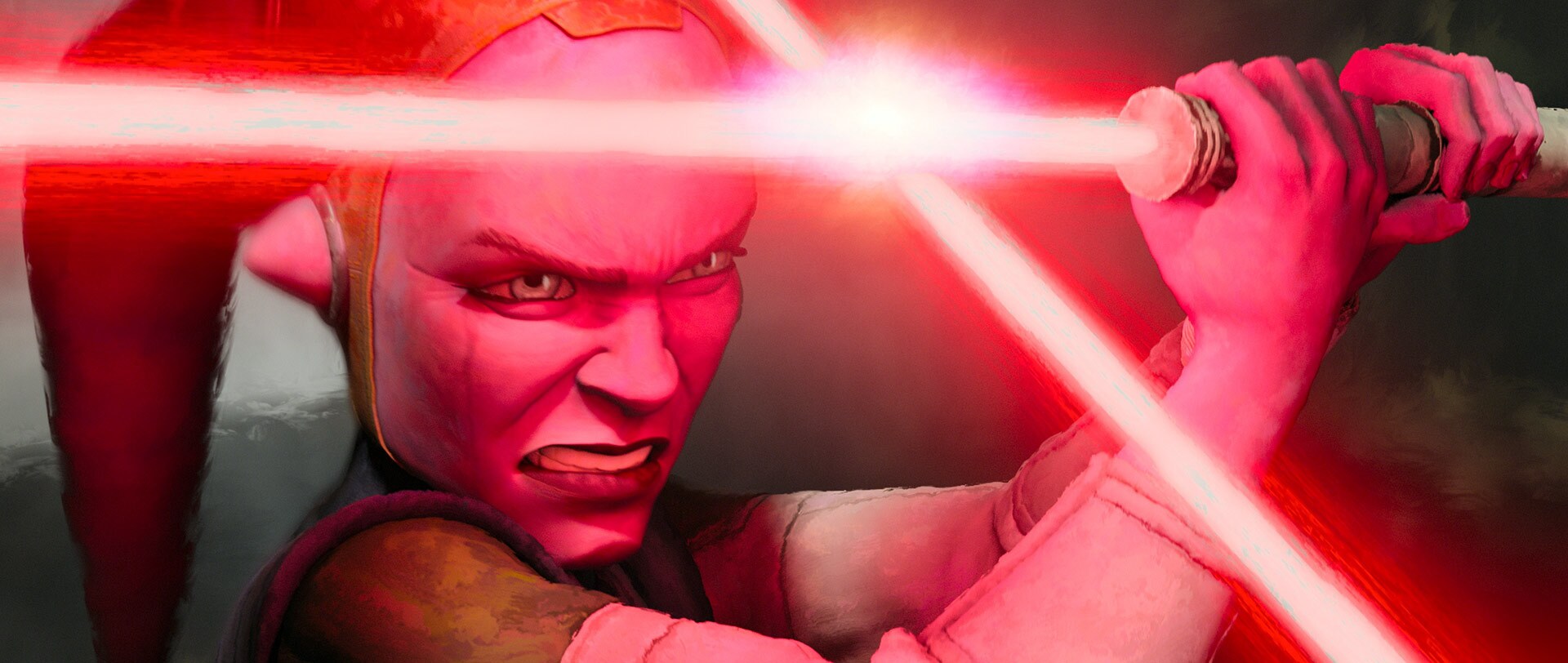
The brilliant fight choreography of Ang Lee’s Crouching Tiger, Hidden Dragon quickly became a touchstone, especially for finding Izara’s style. “Her style remains true throughout,” Rau says, even as Maul falters, giving in to his fear.
It’s akin to a child seeing her parents suddenly scared or sad, disrupting the usual feeling of safety. “If your parents are breaking down, how do you feel? That's Devon. Both of her dads are having a tough day,” Rau says. “We tried to keep them on the run for the whole episode. We only have four and a half scenes that aren’t fighting, and we knew we were going to be crosscutting between saber fights, gun battles, fog, ships, all of this crazy stuff. Nate and his team, with Stew helping out, really worked out the choreography. How they break apart and come back together down to every footfall was planned. It was really tricky, but really satisfying.”
As for what comes next with Season 2, we’ll have to wait and see, but Michnovetz shares a few clues.
“Devon is left with this horrible wicked truth that she's not aware of, the secret that her new Master betrayed her old Master,” Michnovetz teases. “That secret is lurking out there somewhere. And I think you’ll get a sense of how Maul is able to get his claws into Crimson Dawn.”
The age of Maul has begun. All episodes of Star Wars: Maul - Shadow Lord are now streaming only on Disney+.