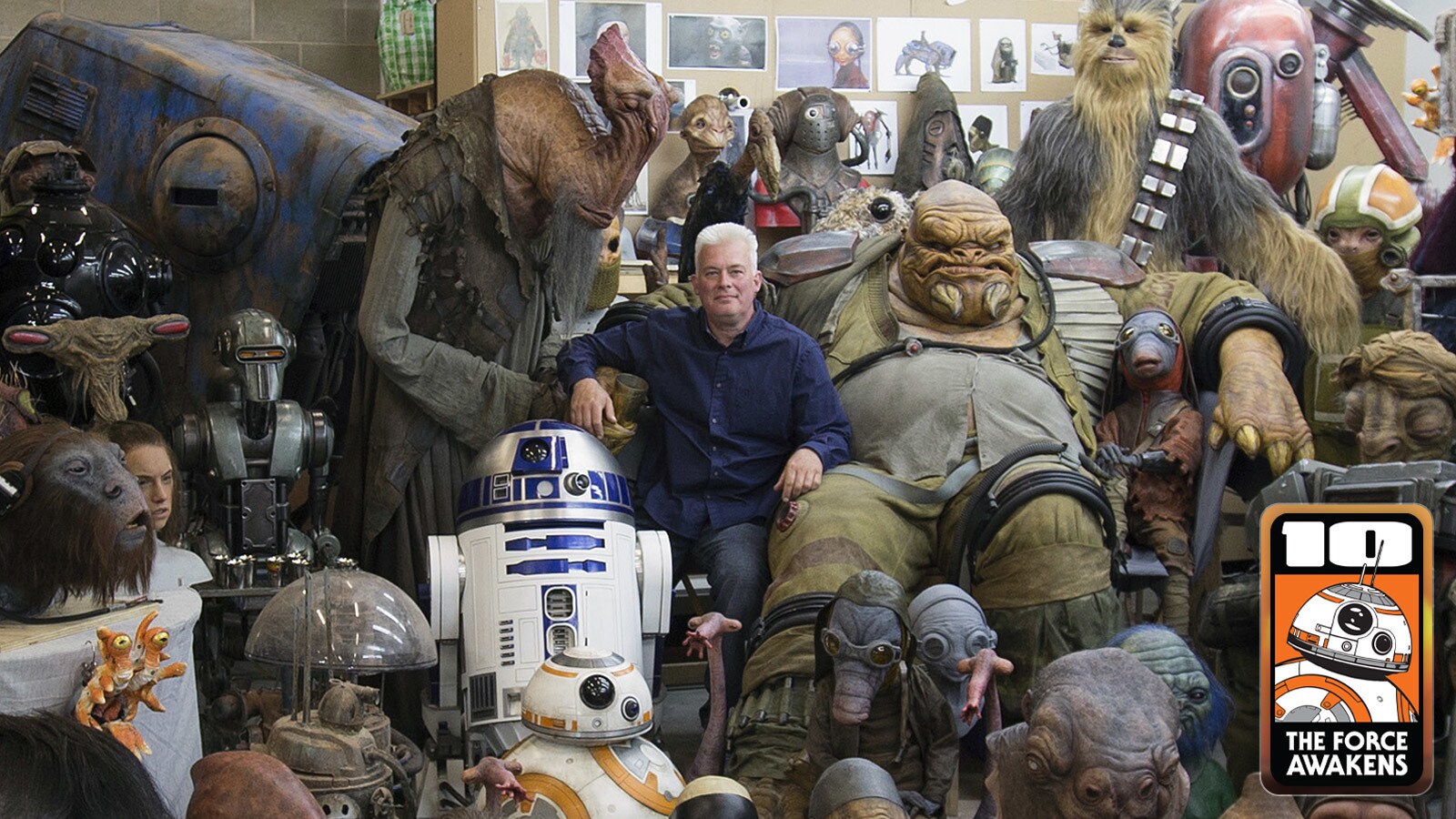
How do you make 100 new Star Wars aliens? In an exclusive interview with creature designer Neal Scanlan, dive into his Oscar-nominated work on Episode VII a decade later.
As we mark the 10th anniversary of Star Wars: The Force Awakens, which premiered in theaters December 18, 2015, StarWars.com looks back at the film that launched the sequel trilogy.
Who is your favorite creature or alien from Star Wars: The Force Awakens? Is it brave Resistance pilot Ello Asty (coyly named after a Beastie Boys’ song)? Is it the conniving Unkar Plutt, played by super fan Simon Pegg? Is it the lumbering luggabeast? Maz Kanata? The glowing-red-eyed nightwatcher worm that pops his head up for five seconds right before the 10-minute mark of the film?
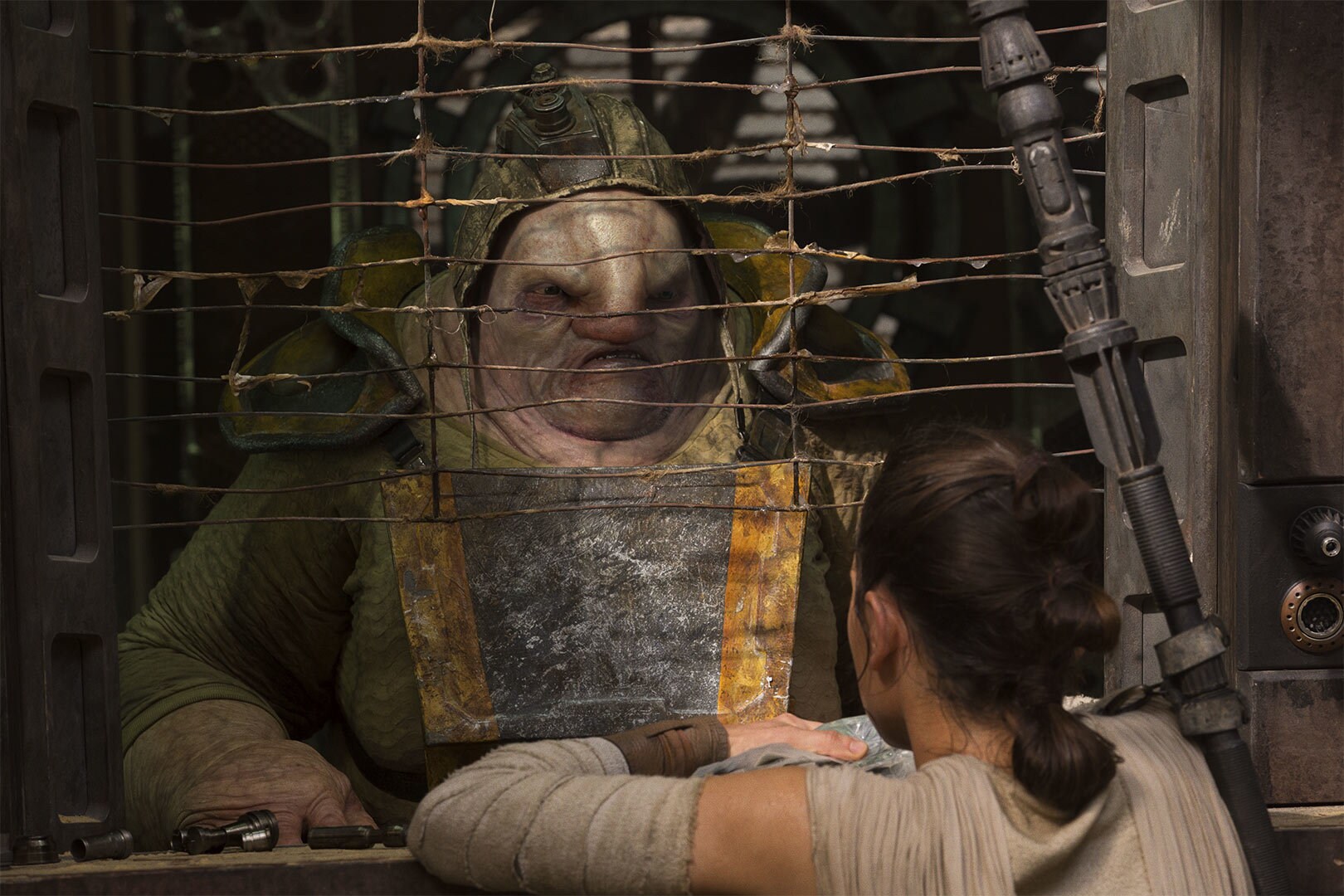
Regardless of who it may be (it’s the nightwatcher worm), chances are that Neal Scanlan, the 2015 film’s creature shop head, helped to bring them to life.
Scanlan has seemingly done it all. He started his career at 19 years old as a stop motion designer, then working as an animatronics designer and supervisor (including for the Jim Henson Creature Shop for nearly a decade). After scoring an Academy Award for his work on 1995’s Babe, Scanlan started his own studio in 1996. The Neal Scanlan Studio worked on a score of incredible films, including Tim Burton’s Charlie and the Chocolate Factory and Ridley Scott’s Prometheus. At one point, he retired.
But when he was personally asked to head the creature and makeup FX department for the much-anticipated return of the Star Wars saga, he returned to the world of carefully crafted cinematic critters for perhaps his most daunting challenge yet. For the mysterious Episode VII, Neal was responsible for new aliens (Constable Zuvio, anyone?) and returning favorites (like the Mon Calamari leader Admiral Ackbar). Each of these aliens and creatures would require vastly different techniques, ranging from the simplest hand puppetry to complex animatronic performance systems to enormous costumes that could fit multiple actors. And he was the perfect man for the job.
In the beginning
Like many, Scanlan’s first experience with the saga came in 1977. As he recounts to StarWars.com, “I was an absolute Ray Harryhausen fan — I just adored his work. At that time, the science fiction and fantasy genre always came across as being a bit ridiculous and a little silly, other than, of course, 2001: A Space Odyssey. But then we started to hear rumors of this amazing film that had been released in America called Star Wars. I read every newspaper article and every conceivable bit of information that I could glean as I waited weeks and weeks for the film to come to the UK. When I finally saw it for the first time, I couldn’t quite comprehend everything I was watching. It was a new beginning or, I know it sounds corny, a new hope for practical effects.”
From there his interest in the film (and film in general) was further stoked by the behind-the-scenes stories of the earliest Industrial Light & Magic magicians who worked on Star Wars. “In those days,” Scanlan says, “you couldn’t really get information any other way than by magazines. And so, bit by bit, I began to buy all the fanzines and sci-fi literature that I could find, which introduced me to things like the Dykstraflex motion control camera, the optical printers, and the people like Phil Tippett and Rick Baker. It really all felt like the next iteration of Harryhausen, in a sense. It was an incredible reinvention of this genre and it excited me beyond anything.”
That elation built into a larger effects-driven career, including work on unforgettable films like Return to Oz, Labyrinth, and Teenage Mutant Ninja Turtles. It was during this time that Scanlan was able to interact with one of the greatest storytellers of all time: Jim Henson “When I worked with the Henson group, he was, of course, an incredible mentor,” Scanlan said. “We were paid to make mistakes. We just kept getting it wrong, and Jim would always say ‘We do it this way because it hasn’t been done before.’ And some of that always stays with you.”
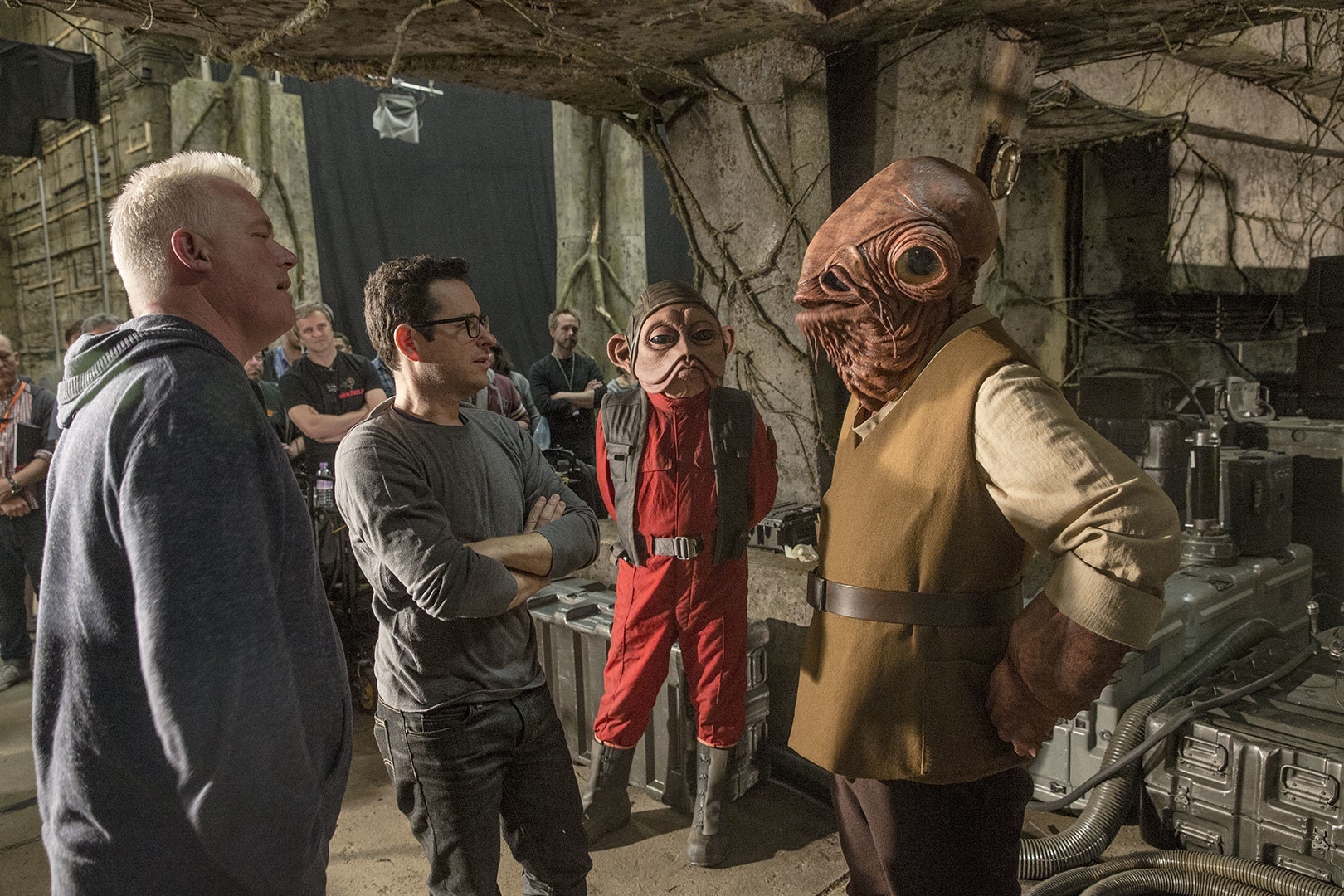
In May of 2013, when the newly hired J.J. Abrams and his production team came (rather discreetly) calling about an upcoming opportunity, Scanlan joined the fledgling Episode VII team. As he remembers: “There was this amazing three-or-four month period where I was hearing that everybody was doing the new Star Wars and I was just sitting there quietly. My name wasn’t even in the public's consideration, because I’ve retired, right? But, at last, I officially was announced, and I started to piece together my crew. There were some people that I had never worked with before, but there were many that I had. I likened it to The Magnificent Seven, going back and finding where all these people were, hauling them out of what they were doing, and getting them back together.”
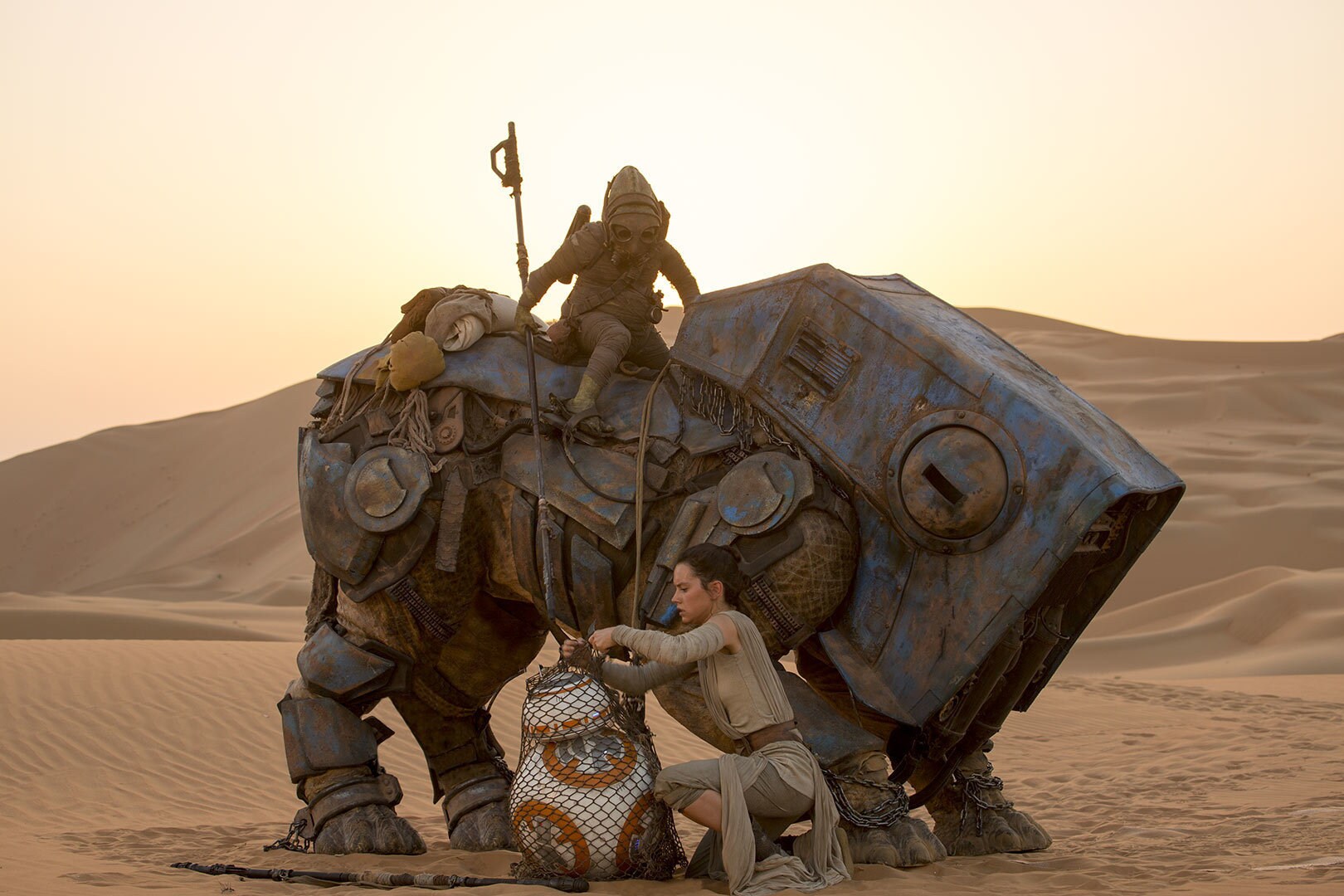
From pixels to puppets
Scanlan’s work began immediately. During pre-production of The Force Awakens, there needed to be a clear consensus about the type of movie they were making. Many on the larger crew were not necessarily familiar with what was possible with practical effects. “On my first day, literally, I sat with my team and said, ‘What can we do? What can we invent? What can we build cheaply but incredibly effectively to show what the range of possibilities are and what we’re able to do now?’”
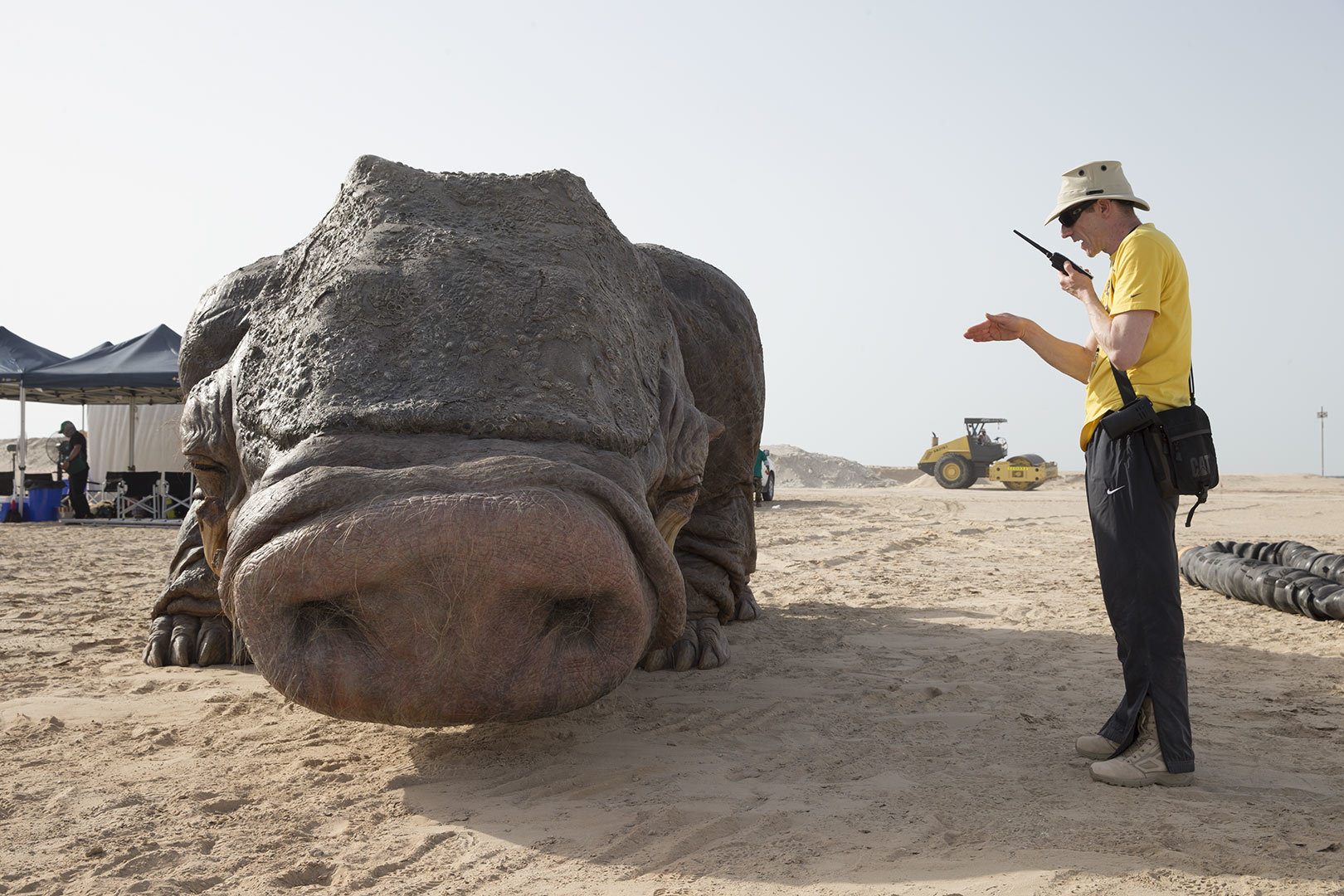
Because there was now significant overlap industry-wide between practical and computer-generated effects, their opportunities were rather infinite. “We didn’t have to hide so much,” Scanlan explains. “There could be rods on things, there could be a puppeteer attached to an exterior and the visual effects team would be able to remove that.” Because of this, Scanlan and his team were able to completely focus on naturalistic tendencies to bring droids and creatures to life. “We were really determined to explore the whole range of how to hide people inside things so that they weren’t obviously human. It was not about engineering or animatronics or sophisticated performance systems, it was about human beings. Nothing is better than a person who has their hands and their heart and their soul coming directly from their brains to their fingertips. And that’s how we set off.”
But how do you create something from the minds of the talented concept artists and see it through from fabrication to the actual day of filming on set? “It’s a methodology that I can’t take credit for inventing, but it’s one that has evolved from the very early beginnings of filmmaking,” explains Scanlan. “It’s just an experience of being on many, many film sets with many, many different directors under many, many different constraints. You get an intuitive, almost industrial feeling of how best to approach something.”

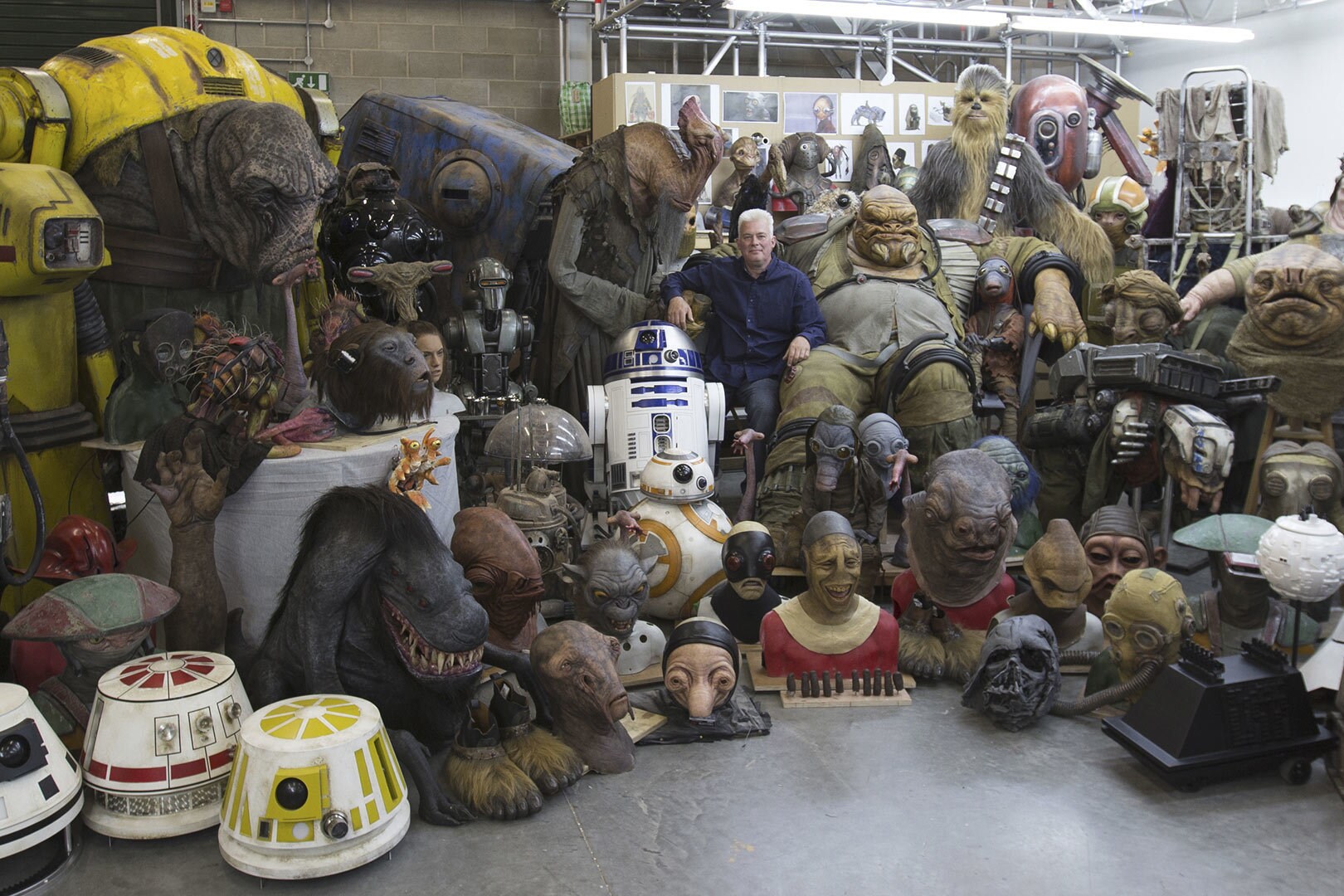
All told, Scanlan’s crew crafted over 100 aliens, droids (including breakout star BB-8), and creatures for the film, and each needed to be inherently Star Wars. Scanlan once explained that there was a particular feel, a charisma that came with these designs. And it all started in 1977. “To me, that is what Star Wars did better than any other film,” he says. “It doesn’t matter how clever or talented you may be. As an artist of the imaginary, there is nothing more incredible than what exists around us in this real world. If you mine into the insect world or into the sub-levels of creatures that exist fathoms down in the sea, they are all marvelous and wonderful in their own way. In the DNA of every character you had to feel like you had seen it somewhere before. It wasn’t so extrapolated or so extraordinary or so ridiculous because it had arms coming out the top of its head or had fifteen tails that didn’t make any anatomical sense.
“That’s the soul of it. It can’t feel too far gone. It may be in a galaxy far, far away, but we have to relate to it. Otherwise we’ve lost the audience. It’s all just make believe, and make believe can be amazing and incredible, but you have to connect to it with your heart.”
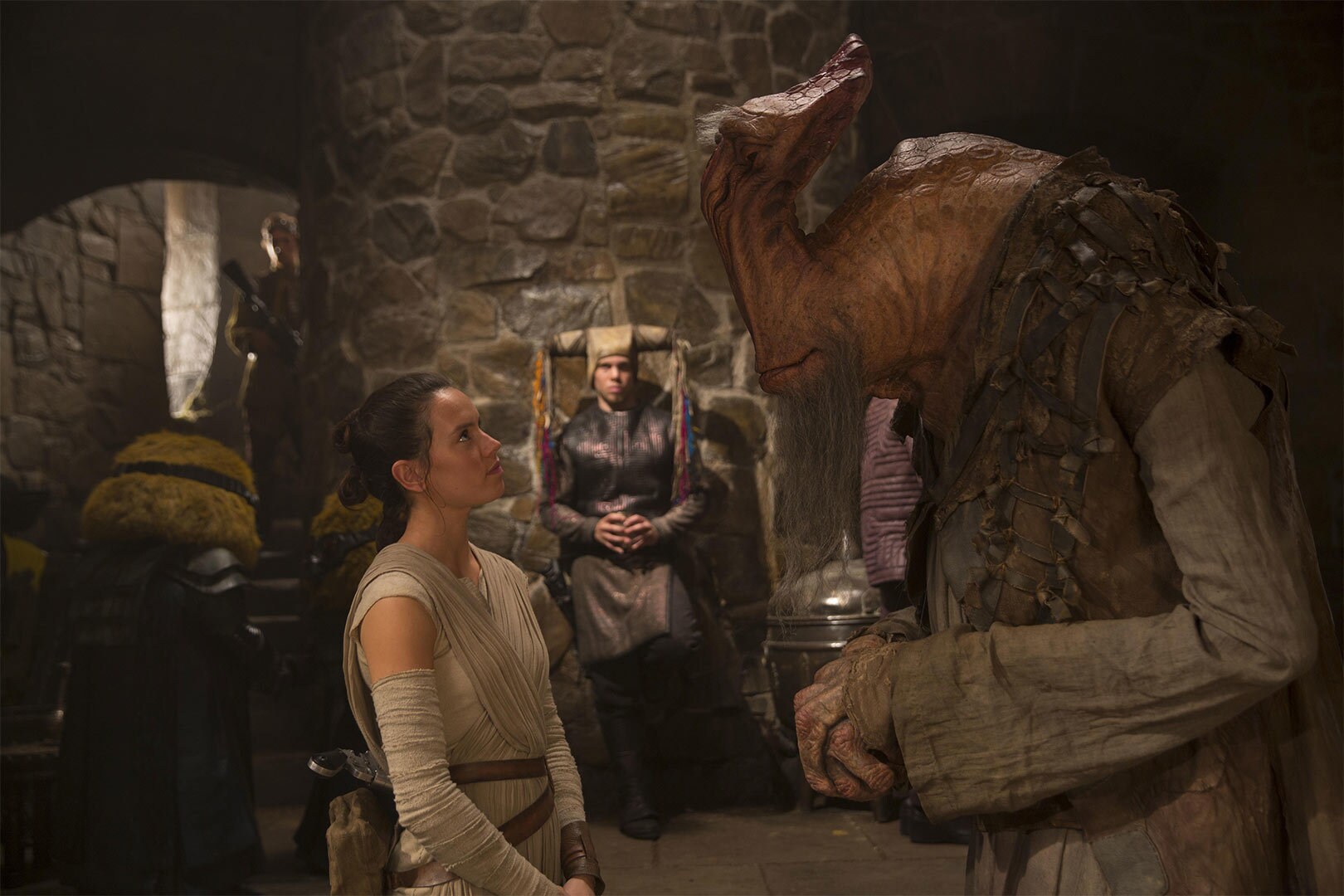
An even more wretched hive of scum and villainy
Perhaps one of the greatest tests of this ethos came when populating the dense menagerie of Maz Kanata’s castle. It was to be the sequel’s answer to the cantina scene, a moment in the original Star Wars film that had remained a fan favorite for decades. Where do you even begin? According to Scanlan, the journey starts at your nearest dive bar. “I think you just have to look around yourself. There’s probably a local pub that one might go to for a drink — you don’t need to look too far to see that there are as many strange people in there as in, say, Maz’s castle or a Canto Bight casino. It’s all about human observation.”

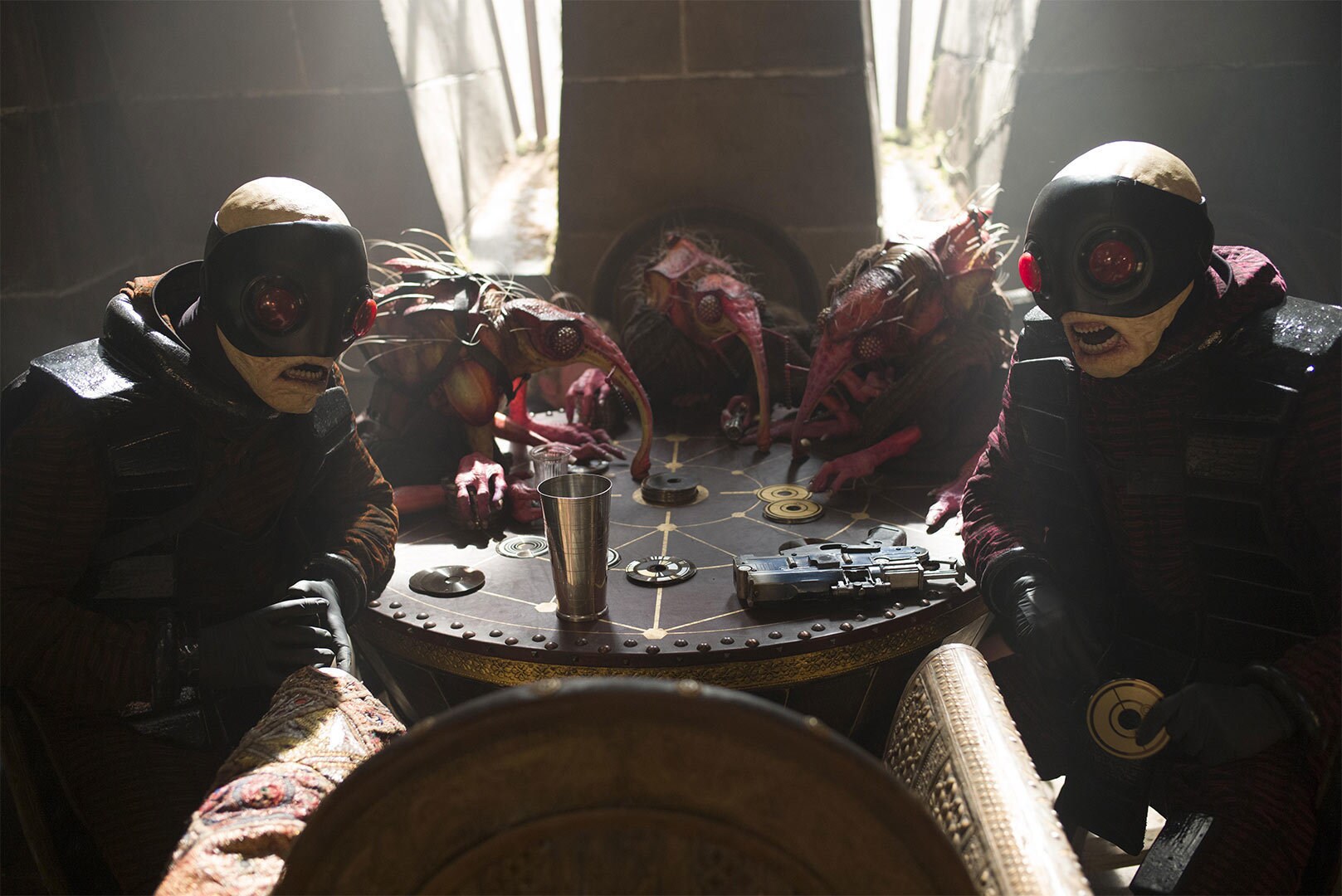
The castle scene provided an opportunity to tell a miniature story in itself. The team was able to plan far ahead, a luxury that the first creature teams did not have in 1976. “The original cantina scene is incredible, but it was filmed very rushed and then spliced together,” Scanlan says. “We had the advantage of being a little more forewarned. We could build for the cinematic moment, because J.J. could see the directorial value of what each creature did.” This pre-planning turned Scanlan’s methodology into real results: “There was a story behind each of these creatures. Some were quite off the wall, some were more grounded. If there was something not quite right about the way it looked or moved, there was a story reason for it.”
Oldies but goodies
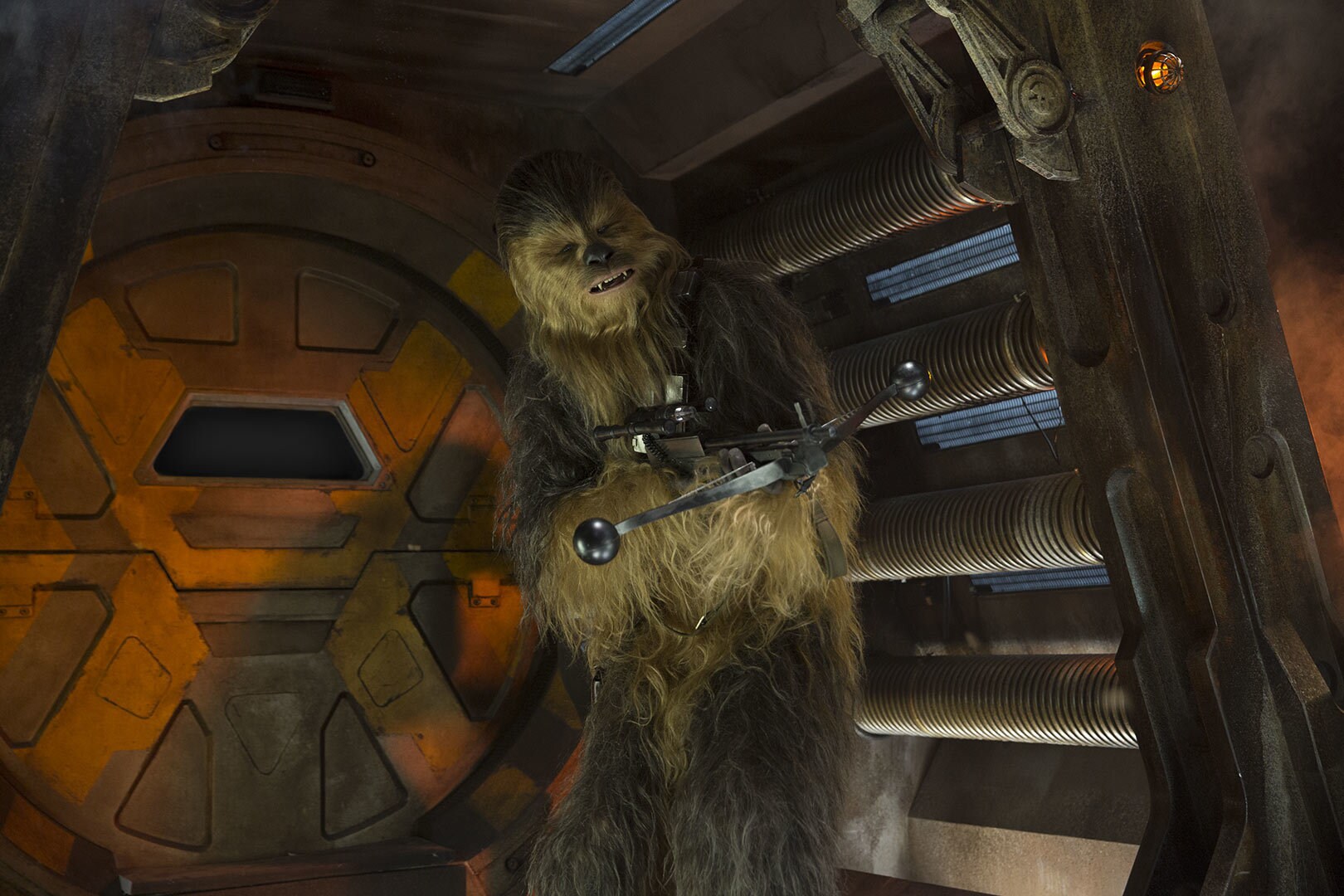
As for familiar alien friends and foes, like Nien Nunb, Admiral Ackbar, and, of course, Chewbacca, it was important to Scanlan that new versions of those legacy characters aim to replicate the first feeling of seeing them on screen.
“It came very much from my heart,” Scanlan says. “It was a dream to find myself in a place where I could replicate or emulate the work of my peers. If I had any ego, it disappeared completely at that point, because now I was just paying homage. I was paying my respects as a service to those people. Some may not have been alive to acknowledge it, but I hope that they know that I had been as sincere and as faithful as I could to try and recreate some of their characters.”

There was perhaps no better example of this than with the fabrication of the loyal Wookiee co-pilot Chewbacca. “It was all down to reverse-engineering what Stuart Freeborn had done [for the original Star Wars],” Scanlan says. “We initially thought we could maybe improve on the way it was made, now 40 years later. No, we couldn’t. There were these old stories about how Kay Freeborn had knitted Chewie’s body suit out of wool. Do you still need to do that? Actually, yes. Because there was something so clever about the weight and stretch of that knitted fabric. Things like that just humbled you every time.”
Ever since The Force Awakens, as well as the conclusion of the sequel trilogy, Scanlan and his team’s work has grown exponentially from those first years on the then-untitled sequel. They’ve remained in the galaxy far, far away, staying busy on projects like The Acolyte, both seasons of Andor, the upcoming second season of Ahsoka, as well as 2027’s Star Wars: Starfighter. The Scanlan approach to creature design is now present across nearly every era of the saga, and we are all the better for it.
“When we were first making The Force Awakens, we had no real idea whether there would be any other films,” Scanlan remembered. “Nobody thought that we could be doing this for many, many years.” And here’s to many, many more.