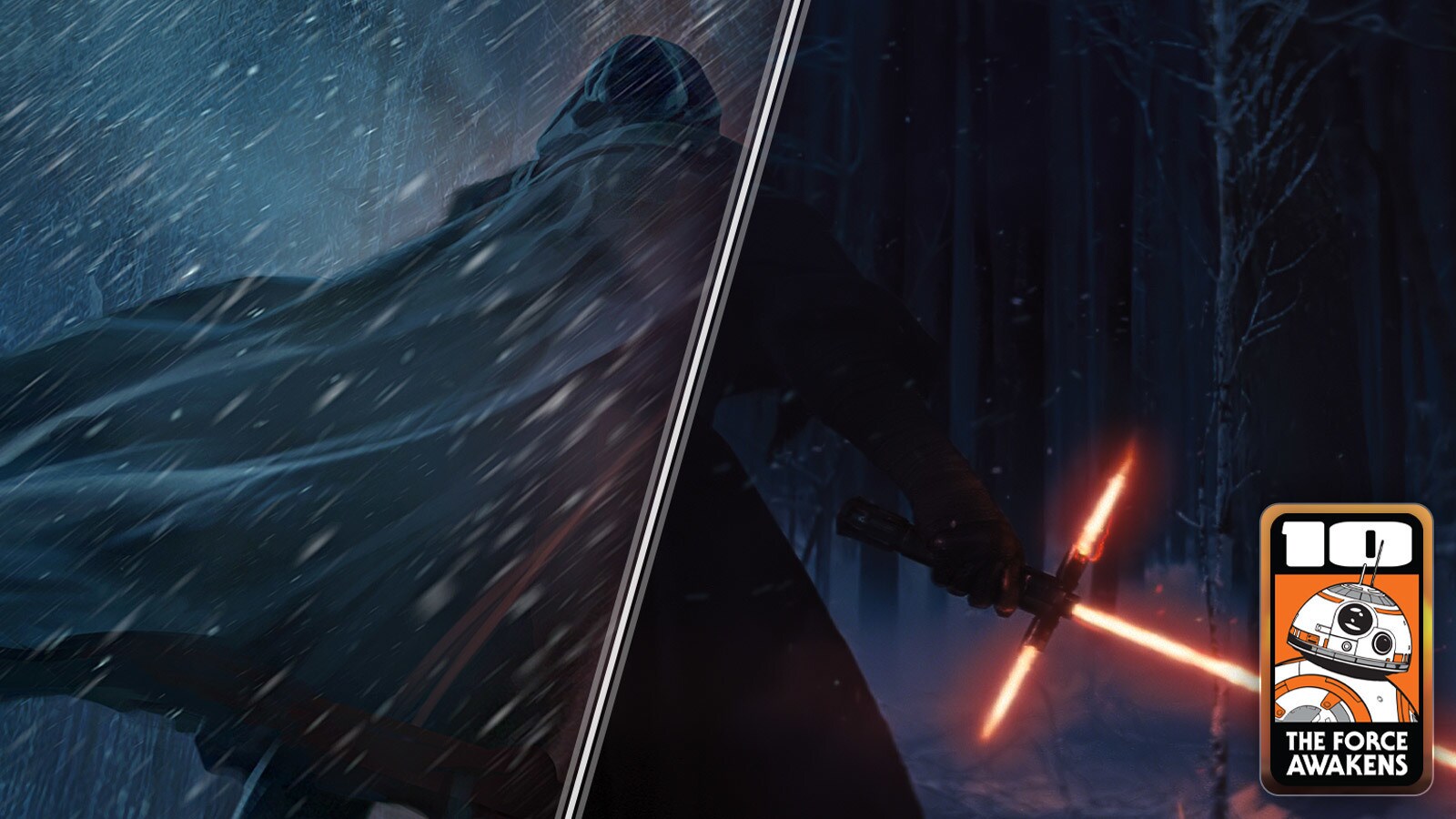

To mark 10 years since the release of the first sequel trilogy film, go back to the literal drawing board to uncover how concept art helped define a new era of Star Wars storytelling.
As we mark the 10th anniversary of Star Wars: The Force Awakens, which premiered in theaters December 18, 2015, StarWars.com looks back at the film that launched the sequel trilogy.
On December 12, 2012, production designers Rick Carter and Doug Chiang, along with David Nakabayashi, creative director of the Industrial Light & Magic (ILM) art department, gathered at Lucasfilm headquarters in San Francisco to handpick a “dream team” of concept designers for the first film in the nascent Star Wars sequel trilogy, later titled Star Wars: The Force Awakens.
That team, nicknamed the “Visualists” by Carter, included concept supervisors Ryan Church and Erik Tiemens, who, along with Chiang, were directly mentored by Star Wars creator George Lucas during their time leading the JAK Films art department for the Star Wars prequel trilogy. It also included ILM concept supervisor Christian Alzmann, the four of whom would go on to form the core design team of Chiang’s Lucasfilm art department for projects ranging from Rogue One: A Star Wars Story to the 2026 theatrical release The Mandalorian and Grogu, as well as future Star Wars production designers James Clyne and Kevin Jenkins, to name but a few.
This year, we celebrate the 10th anniversary of the release of both The Force Awakens on film and The Art of The Force Awakens, my first book in the long-running Art of Star Wars series, on bookshelves. The latter charts the full visual development of the film from concept to screen from within the art department, and the selections below demonstrate how vital that work was in bringing co-writer and director JJ Abrams’s vision for the first chapter in a new era of Star Wars storytelling to life.