
Ever wonder what it would be like to see
Yoda fly by your head or hear
Chewbacca buzz instead of roar? Now you can find out thanks to entomologists Arnold Menke and David Vincent. These bug experts named new wasp species discovered in 1983 after their favorite
Star Wars characters:
Polemistus chewbacca,
Polemistus vaderi, and
Polemistus yoda.
"For a recent paper we chose to review the New World species of the poorly-known wasp genus Polemistus," Menke explains. "After borrowing material for this study, we found several new species which we then named after Star Wars characters. Naming a new species is usually done by a scientist working on a particular group of organisms. Sometimes such a person will name a new species after the discoverer, as a tribute or as an acknowledgement."
This isn't the first time a scientist has named an insect after his favorite Star Wars character. The Head of the Department of Entomology at the Natural History Museum of London, Dr. Quentin D. Wheeler, honored the Dark Lord of the Sith by naming his discovered beetle Agathidium vaderi after Darth Vader himself, which you can read more about in Dark Beetle of the Sith.
While some entomologists pay tribute to
Star Wars characters by naming newly-discovered species, often times the
Star Wars artists themselves are influenced by the insect world. For example, as artists sketched out ideas for the wide array of characters and background creatures for
Attack of the Clones, filmmaker
George Lucas specifically requested a centipede-like insect capable of injecting poison into its victims -- namely the young
Senator Amidala as she slept. These creepy critters were later called
kouhuns.
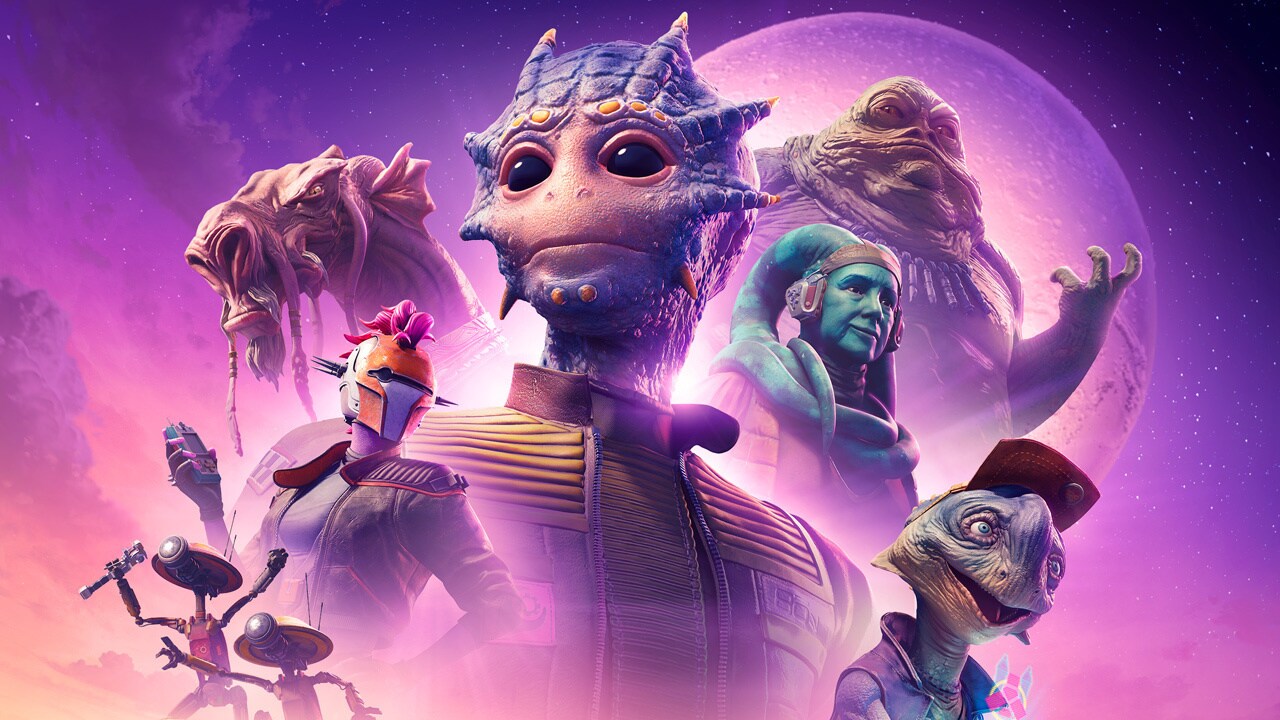
Another Star Wars species heavily influenced by the insect world, and in this case resemble Polemistus wasps the most, are the Geonosians. These buggy creatures were originally inspired by African termites, but eventually evolved into something a bit more regal. According to the book The Art of Star Wars: Episode II Attack of the Clones, "As sentient beings of the Star Wars universe, culture and clothes were key to the [Geonosian] species design, with costume concepts ranging from tribal gowns and diaphanous dress to armor and heavy fabrics. The final design emphasized their organic connection to the environment, with a less functional, more ornamental look to Geonosian dress."
In the
Star Wars galaxy there are two kinds of Geonosians who live in the busy hive -- wingless drones who do most of the work and winged aristocrats and royal warriors who maintain safety. In the real world, social wasps like paper wasps, hornets and yellow jackets also live in paper nest colonies. Like the Geonosians, many of the wasps in a colony are workers who build the nest and gather food for their larvae. While all Geonosians have hard exoskeletons (skeletons on the
outside of their bodies), long faces, multi-jointed limbs, and speak in a strange clicking language, wasps have a somewhat different appearance. While wasps also have wings and multi-jointed limbs, most female wasps have something the Geonosians are lacking -- a stinger.
Even though the Polemistus wasp species may somewhat resemble and share primitive behaviors of the insect-like race of Geonosians (without wearing clothes, of course) more than their namesakes of Yoda, Chewbacca and Darth Vader, Menke felt that his favorite characters deserved the honorary bug titles more.
"Darth Vader, Yoda and Chewbacca were an integral part of why the Star Wars films had such appeal when they first debuted," Menke recalls. "The movies were exciting and fun. And even though the new species of wasps don't look like the characters, I wanted to add a little humor in the otherwise rather dry subject of taxonomy. Our use of Star Wars characters for new species names simply reflected our great enjoyment of the movies and their characters. They provided us with names that were out of the ordinary and memorable."
If you would like to learn more about wasps and other insects, please visit your local or school library for more detailed books.