
Now, the stories can be told... and compiled and examined in the context of a chronology.
The introduction to this chapter describes the growing imbalance of the Force and Yoda's detection of the increasing darkness. Though it is built on dialogue spoken in the prequel trilogy, the more specific tracking of these events in time can be found in reflective chapters of Labyrinth of Evil (2005, Del Rey Books). The Potentium were discussed in the novel Rogue Planet (2000, Del Rey Books). Yoda's role in their outcast is new information.
Omo Bouri was taken from Saesee Tiin's backstory that first appeared in the databanks at starwars.com (2001, Lucas Online). The Treaty of Trammis is from The New Essential Guide to Characters (2002, Del Rey Books).
The events of The Making of Dooku are told in the generation-spanning young reader novel, Legacy of the Jedi (2003, Scholastic Inc.). Qui-Gon's struggles with Xanatos form the back-story to several early books in the Jedi Apprentice series, most notably The Dark Rival and The Hidden Past (both 1999, Scholastic Inc.).
Though the circumstances of Falling Republic, Thriving Sith weren't revealed until recently, much of the trappings of this era were actually described in the prologue very first novel, Star Wars: From the Adventures of Luke Skywalker (1976, Del Rey Books), a novelization of the script of Episode IV. The early years of Palpatine, Plagueis and Maul are derived from dialogue spoken in the films, though Star Wars Journal: Darth Maul (2000, Scholastic Inc.) deserves special mention for first delving into the tattoo-faced Sith Lord's background. The fact that Sidious was secretly training Maul while under Plagueis' tutelage is from Vader: The Ultimate Guide (2005, IDG Entertainment).
The Arkanian Revolution and Mace Windu's tangling with Gorm the Dissolver was revealed in The Essential Guide to Droids (1999, Del Rey Books). The vanishing of Sharad Hett was the background history of Outlander, a story-arc in Star Wars #7-12 (1999, Dark Horse Comics). The Katana fleet fiasco is also back-story, this time for the novel Dark Force Rising (1992, Bantam Books).

The Fateful Apprentice section recounts full narratives told in the earliest chronological point of the prequel era. These events can be found in the Jedi Apprentice series of young reader novels. Qui-Gon Jinn meets Obi-Wan Kenobi and decides to take him as his apprentice through the course of The Rising Force and The Dark Rival (both 1999, Scholastic Inc.). The attempt to destroy the Jedi Temple and the final confrontation with Xanatos occur in The Captive Temple and The Day of Reckoning (both 2000, Scholastic Inc.), books seven and eight of the series.





The Stark Hyperspace Conflict has a bit of a twisted history. The Star Wars: Episode I The Phantom Menace Movie Scrapbook (1999, Random House) vaguely listed Hyperspace Wars as part of Plo Koon's backstory, which is confusing because at the time, the only known "Hyperspace Wars" were the ones that took place thousands of years in the past.


This was clarified to be the Stark Hyperspace Conflict in subsequent sources, notably Cloak of Deception (2001, Del Rey Books). The event was told as a story in Star Wars #36-39 (2001-2002, Dark Horse Comics), in an arc entitled The Stark Hyperspace War. This was gathered as a trade paperback in 2003 from Dark Horse Comics.

Kol Huro is from Rogue Planet (2000, Del Rey Books), though the "Kol Huro Unrest" was given a formal name in The New Essential Guide to Characters (2002, Del Rey Books).
The Battle of Galidraan describes expanded universe back-story developed specifically for the Episode II character Jango Fett. Though some of this material was collected and expanded upon in "The History of Mandalorians" article in Star Wars Insider #80 (2004, IDG Entertainment), it was originally written for both Star Wars: Bounty Hunter (2002, LucasArts) and Jango Fett: Open Seasons #1-4 (2002, Dark Horse Comics), the latter source telling it as an unfolding story.


In Moving into Alignment, events from later Jedi Apprentice books are described. These include Book #9, The Fight For Truth (2000, Scholastic Inc.) , which introduced Siri Tachi; Book #14, The Ties That Bind (2001, Scholastic Inc.), which included the capture of Tahl; and Book #15, The Death of Hope, (2001, Scholastic Inc.) that chronicles Tahl's ultimate fate. Qui-Gon and Obi-Wan's assistance to the Wookiee colony of Alaris Prime is from the Star Wars: Galactic Battlegrounds game (2001, LucasArts).


The Yinchorri Uprising storyline was told in monthly installments of Jedi Council: Acts of War #1-4 (2000, Dark Horse Comics), and collected into a trade paperback in 2001. The tale of Ki-Adi-Mundi and his homeworld of Cerea was the very first story arc of the ongoing Star Wars comics series from Dark Horse, entitled Prelude to Rebellion. It was told in monthly issues of Star Wars #1-6 (1999, Dark Horse Comics) and collected in a trade paperback in 2000.





To read more about The Eriadu Summit section, first turn to the virtual pages of Darth Maul: Saboteur (2001, Del Rey Books). This short story, which featured Darth Maul's mission to Dorvalla, was first published as an ebook, and later included in the paperback edition of Darth Maul -- Shadow Hunter. The details of the Nebula Front activity that sparked the taxation of trade routes, which of course leads into the events of Episode I, were told in the novel Cloak of Deception (2001, Del Rey Books). For those curious about King Veruna, he has yet to be the subject of a story, but the abdication of his throne was back-story revealed in the Star Wars: Episode I The Visual Dictionary (1999, DK Publishing).




In Final Preparations, readers approach ever closer to the events of Episode I. Darth Maul's beheading of the Black Sun criminal organization in monthly issues of Star Wars: Darth Maul #1-4 (2000, Dark Horse Comics) was compiled into trade paperback format in 2001. The series was noteworthy for having the Episode I Concept Art Department contribute to it by illustrating what
The Beginning of the End Dooku's descent into darkness has been told in flashback or retrospection, most notably in Labyrinth of Evil (2005, Del Rey Books), which revealed the order of events behind the creation of the clone army, the death of Sifo-Dyas, and the disappearance of Kamino from the Jedi Archives. This section-header, The Lost Twenty, takes its name from dialogue cut from Episode II. The events of The Prime Clone can mostly be found in two sources. Jango Fett: Open Seasons #1-4 (2002, Dark Horse Comics), a monthly comics mini-series described Jango's return to the galactic playing field as a bounty hunter and the death of Vizsla, as well as Dooku's poison-laced negotiations with Fett. The hunt for Komari Vosa appears in the video game Star Wars: Bounty Hunter (2002, LucasArts). The development of the clone army, including the unthinkable contingency plan of Order 66, was back-story to Episodes II and III. The ongoing Star Wars monthly comic series -- which had yet to take on the subtitle Star Wars: Republic, is the source of the stories in the Duties of the Jedi Council segment. Ki-Adi-Mundi's mission to Tatooine was the basis of Outlander, a six-part arc told in Star Wars #7-12 (1999, Dark Horse Comics) which was collected as a trade paperback in 2001. The negotiations with the Lannik were part of Emissaries to Malastare, a story arc told in Star Wars #13-18 (1999-2000, Dark Horse Comics), which was compiled as a trade paperback in 2001. Aurra Sing's killing spree on Coruscant and the resulting mission to track her down is told in The Hunt for Aurra Sing, Star Wars #28-31 (2001, Dark Horse Comics), which was compiled into a trade paperback in 2002.

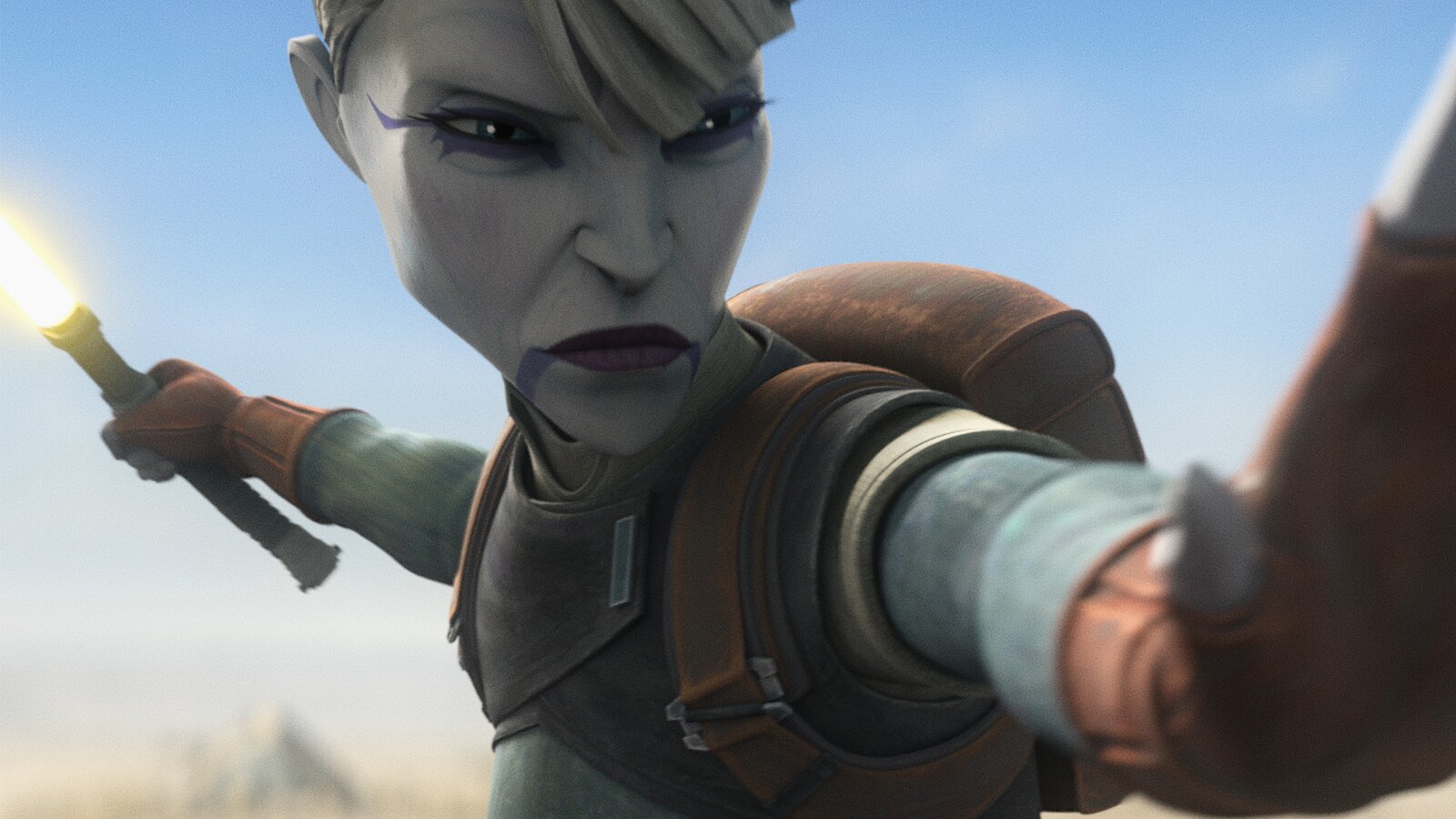

The saga of Quinlan Vos, as summarized in Quinlan Vos's Road Back began in Twilight, Star Wars #19-22 (2000, Dark Horse Comics), which introduced Vos as an amnesiac Jedi. The arc was compiled as a trade paperback in 2001. The mission to Dathomir appears in Infinity's End, Star Wars #23-26 (2000-2001, Dark Horse Comics). The vampire-infested tale of Volfe Karkko is told in the aptly titled Darkness arc in Star Wars #32-35 (2001, Dark Horse Comics). It was collected as a trade paperback in 2002. This series is noteworthy since the cover to issue #34 inspired George Lucas to include Aayla Secura in Attack of the Clones. The showdown on Kintan against the Morgukai warriors appears in Rite of Passage, an arc in Star Wars #42-45 (2002, Dark Horse Comics), which was compiled into a trade paperback in 2004. The novel Star Wars: Rogue Planet (2000, Del Rey Books) contains the Mission to Zonama Sekot and, chronologically, begins the first step of the rather convoluted path to the Death Star's construction. That Tarkin was somehow was involved in the Death Star's genesis dates back to the original 1977 Star Wars, but the number of parties involved has grown in years of storytelling. Bevel Lemelisk was first introduced and credited with the design of both Death Stars in Galaxy Guide 5: Return of the Jedi (1990). But there's more to that story... The Education of the Chosen One covers material introduced in the Jedi Quest series of young reader novels. To kick-off the series, there was a standalone hardcover book Jedi Quest (2001, Scholastic, Inc.) and a monthly comics mini-series, Jedi Quest #1-4 (2001, Dark Horse Comics) which both told the story of Anakin's tangle with Krayn. Ferus Olin and Tru Veld would both appear in the Jedi Quest series, starting with Book One, The Way of the Apprentice (2002, Scholastic, Inc.) The Outbound Flight Project has a long and storied history. It was first revealed as part of a distant back-story to Heir to the Empire (1991, Bantam Books), but details surrounding this expedition remained few for over a decade. Readers were given a much more detailed look at the mission when its remains were discovered in Survivor's Quest (2004, Del Rey Books), a book set in the New Republic era. The full story of the doomed expedition will be told in the forthcoming hardcover novel, Outbound Flight (2006, Del Rey Books), though the Chronology gives some tantalizing glimpses into this much anticipated release. When it became clear the roster of the Jedi Council was going to change in Episode II, the storytellers of the expanded universe disposed of the two disappearing councilors, Yarael Poof and Yaddle. As described in Deaths of the Jedi Council, both venerated Jedi Masters met their end. The graphic novel Star Wars: Zam Wesell (2002, Dark Horse Comics) told Poof's last tale, while Yaddle died in the pages of The Shadow Trap (2003, Scholastic Inc.) which was Book Six of the Jedi Quest series. The building of The Separatist Movement was mostly told in flashback retrospection, after the fact. The movement itself was created for Episode II, but a few sources telegraphed it before the film's release. Most notably, HoloNet News (2002, Lucas Online) told of Dooku's reemergence at Raxus Prime as part of a profile of the charismatic leader. Dooku's henchmen come from a variety of sources. Asajj Ventress and Durge were both created as part of a unified licensing effort that would fill the years between Episodes II and III. Ventress' recruitment is told in Star Wars: Clone Wars, Volume One (2003, Lucasfilm Ltd.), while her back-story is fleshed out in Star Wars: Republic #60 (2004, Dark Horse Comics). That issue can also be found in Star Wars: Clone Wars, Volume 5: The Best Blades, a 2004 trade paperback release. Sev'rance Taan appears in the Clone Campaigns expansion to Star Wars: Galactic Battlegrounds (2002, LucasArts), while Saato is from Star Wars: New Droid Army (2002, THQ). Cydon Prax is from Star Wars: Clone Wars (2002, LucasArts), while Grievous was of course developed for Episode III. Grievous' backstory was revealed in Labyrinth of Evil (2005, Del Rey Books), with another version of it told in the graphic novel Star Wars: Visionaries (2005, Dark Horse Comics). The climax of the Jedi Quest series is The Death of Granta Omega, as told in book 10 of the series, The Final Showdown (2004, Scholastic, Inc.). Nym's battle against the Trade Federation on Maramere is the subject of Starfighter: Crossbones #1-3 (2002, Dark Horse Comics). The Confederacy Takes Shape describes the inevitable growth of the Separatist movement, derived from the situation presented in Episode II. The Battle of Antar 4 is specifically taken from background material found on the HoloNet News website (2002, Lucas Online), which would repeatedly describe the event as a debacle that turned public opinion against the Jedi. More material from HoloNet News can be found throughout Splintering of the Republic -- specifically, the secession of Ando, Sy Myrth, and Yag'Dhul, and the sectors Elrood, Danja, Lahara, Tantra and Sluis; the conflict on Andoan Free Colonies; the Scarlet Thranta vigilantism; and the Corellian isolation movement. The website was meant as a primer to the Separatist movement, a real-time countdown to the events of Episode II. It is actually still up and running, frozen in time at the start of the Clone Wars, here. The Mission to Ansion, borne out of a single line of dialogue spoken by Mace Windu in Episode II, was the basis of the novel The Approaching Storm (2002, Del Rey Books).
The Clone Wars The Shape of War recounts some of the earliest tales of the Clone Wars, including "Elusion Illusion," a short story featuring Aayla Secura and Ylenic It'kla first published in Star Wars Insider #66 (2003, Paizo Publishing) and reprinted online on starwars.com Hyperspace in 2005. The battle of Atraken made headline news in the print incarnation of HoloNet News, found in Star Wars Insider #67 (2003, Paizo Publishing), though Atraken as a battleground actually dates back to an earlier source. Planets of the Galaxy, Volume 1 (1991, West End Games) was the first place to list it as a Clone Wars battle site. The mission to Kashyyyk was part of Star Wars: Republic Commando (2005, LucasArts). Star Wars: Republic #49 (2002, Dark Horse Comics) describes the formalization of the role of The Jedi as Generals (collected in Star Wars: Clone Wars, Volume 1: The Defense of Kamino and Other Tales in 2003) while the Hunt for the Decimator was the central plotline of the Clone Campaigns expansion to Star Wars: Galactic Battlegrounds (2002, LucasArts). The Dark Reaper Project is likewise a tale told in video game format, this time Star Wars: Clone Wars (2002, LucasArts). This story is noteworthy for dipping back into the ancient past and including the Ulic Qel-Droma legacy as a major story-point. When Lucas Books announced in 2002 that it would pursue a unified publishing program where books adding to the Clone Wars saga would bear a distinctive label, the first publication out of the gate was Star Wars: Republic #50 (2003, Dark Horse Comics). The double-sized comic recounted The Battle of Kamino. This issue, along with several others, was collected in the trade paperback Star Wars: Clone Wars, Volume 1: The Defense of Kamino and Other Tales in 2003. The brief mention of a traitorous Kaminoan saboteur in this section is in reference to "Tides of Terror," a short story in Star Wars Tales #14 (2002, Dark Horse Comics).
The Defense of Naboo was first told in Star Wars: Republic #51-52 (2003, Dark Horse Comics), stories that were compiled in the trade paperback Star Wars: Clone Wars, Volume 2: Victories and Sacrifices later that year. The Battles of Lianna and Teyr and Jedi Schism are from the same source: Star Wars Jedi: Mace Windu (2003, Dark Horse Comics), though they are told as flash-backs in that story. The Raid on Pengalan IV is from the short story, "The Pengalan Tradeoff," told in Star Wars Insider #65 (2003, Paizo Publishing). The mission to Qiilura, also described in this segment, was the plot of the novel Star Wars Republic Commando: Hard Contact (2004, Del Rey Books). Mission to Queyta describes the events of Star Wars: Republic #53 (2003, Dark Horse Comics), which was reprinted in the trade paperback Star Wars: Clone Wars, Volume 2: Victories and Sacrifices also in 2003. The Gahenna storypoint, though, is new information found only in the Chronology. The Storm Fleet Destroyers and The Fortress of Axion both appear as part of the Star Wars: Short Story Collection (various, 2003), which is available for
The Battle of Brentaal is chronicled in Star Wars Jedi: Shaak Ti (2003, Dark Horse Comics), which was compiled with several other stories in Star Wars: Clone Wars, Volume 2: Victories and Sacrifices, also in 2003. The fallout on Esseles is newly revealed information. Defection on Nar Shaddaa describes the events of Star Wars: Republic #53 (2003, Dark Horse Comics), which was compiled in Star Wars: Clone Wars, Volume 4: Light and Dark in 2004. The Haruun Kal Crisis is the subject of Star Wars: Shatterpoint (2003, Del Rey Books), the first hardcover novel set during the Clone Wars. Novelist Matthew Stover took a dark and moralistically murky look at jungle warfare in a powerful novel. His reputation for showing the shadowy side of things earned him the role as novelist for Episode III. Assassination on Null is the centerpiece of the generation-spanning novel Legacy of the Jedi (2003, Scholastic Inc.) The Devaron Ruse covers a mission to Devaron undertaken by Aayla Secura in Star Wars Jedi: Aayla Secura (2003, Dark Horse Comics), which was compiled in Star Wars: Clone Wars, Volume 4: Light and Dark in 2004. Also compiled in that trade paperback is Star Wars Jedi: Count Dooku (2003, Dark Horse Comics), which covers the event The Descent of Quinlan Vos. Quinlan's descent would be a continuing thread in the Star Wars: Republic comics series at the time. The Bassadro Massacre became the subject of conflicting views of the truth in the HoloNet News column of Star Wars Insider #65 and 66 (2003, Paizo Publishing). One issue had the Republic's version of the story, while the subsequent issue told the Separatist side. The loss of Ord Canfre and the Battle of Balamak is from issue #65, though Balamak deserves a special note. It was taken from a single-line aside on the back cover of Tatooine Manhunt (1988, West End Games). The battles among the Aqualish were reported in Star Wars Insider #67 (2003, Paizo Publishing). The GameBoy Advance game Star Wars: New Droid Army (2002, THQ) has the story of the Rise of the Cortosis Battle Droids, including the rather strange notion that Anakin killed a clone of Dooku. The game itself allows the player, as Anakin, to defeat Dooku... so there must clearly be some chicanery involved. The notion that it was a clone or some other simulacrum was first posited in an issue of Star Wars Fact Files (deAgostini, 2004) and repeated in the novel Yoda: Dark Rendezvous (2004, Del Rey Books). The HoloNet News column in Star Wars Insider #67 (2003, Paizo Publishing) described The Death of Atraken and the rescue of Wat Tambor. The Spaarti Incident is told in a two-part short story, "Hero's Call" and "Hero's Rise" in Star Wars Insider #68-69 (2003, Paizo Publishing). The Bio-Droid Threat was chronicled in Star Wars: The Cestus Deception (2004, Del Rey Books) and the accompanying e-book short story, Star Wars: The Hive (2004, Del Rey Books). The section entitled Massing Thunderheads covers material in the HoloNet News column that ran in Star Wars Insider #68 and 69 (2003, Paizo Publishing). When The Battle of Jabiim erupted, it was a major story arc told in Star Wars: Republic #55-58 (2003, Dark Horse Comics) and compiled in Star Wars: Clone Wars, Volume 3: Last Stand on Jabiim in 2004. This compilation also includes Star Wars: Republic #59 (2003, Dark Horse Comics), which contains the story that covers The Dragon of Aargonar segment. Escape from Rattatak contains two comics tales that were gathered into the trade paperback Star Wars: Clone Wars, Volume 5: The Best Blades in 2004. Star Wars: Republic #60 (2004, Dark Hose Comics) and Star Wars: Republic #62 (2004, Dark Horse Comics) track Obi-Wan and Alpha's escape from Asajj Ventress. The bounties posted by Asajj Ventress were listed in the HoloNet News column in Star Wars Insider #73 (2004, Paizo Publishing). That column also had a retrospective on the recently deceased Chancellor Valorum. The shocking explosion that caused the Death of a Chancellor was told in Star Wars: Republic #61 (2004, Dark Horse Comics). The segment also mentions the Reflex Amendment, which was brought to light in the HoloNet News column in Star Wars Insider #71 (2003, Paizo Publishing). The Nam Chorios and Seti Ashgad material is background for Planet of Twilight (1997, Bantam Books). The specifics of events on Agora and Cerea are newly revealed information. Star Wars: Republic #63 (2004, Dark Horse Comics) is the source for Quinlan Vos' misguided Coruscant Assassination mission. This issue was reprinted as part of the Clone Wars, Volume 4: Light and Dark trade paperback in 2004. The moniker The Hero With No Fear comes from the Episode III script, but it was introduced to readers in the HoloNet News column of Star Wars Insider #72 (2003, Paizo Publishing), which told of the incident on Virujansi. General Bridger and the events on Togoria are new information. The Battle of Dreighton is from a pre-prequel source, making it rare amongst the other entries in this publishing timeframe. The Empire's use of cloaking technology in the Dreighton nebula formed the plot of Rebel Assault II: The Hidden Empire (1995, LucasArts). The details of this Clone Wars battle are new, but build off some previously published sources. The Pendarran Warriors, for example, were originally referenced in Wanted by Cracken (1993, West End Games), but only in vague terms. The push into Duro by General Grievous was told in the HoloNet News column in Star Wars Insider #74 and 75 (2004, Paizo Publishing). Breaking the Foerost Siege is mostly new material first revealed in the Chronology. The set-up, of Foerost being part of the Techno Union, appeared in the HoloNet News website (2002, Lucas Online). The Victory Star Destroyers date back to Han Solo's Revenge (1979, Del Rey Books), but their formal introduction to the battlefield have never been told. While the bulk of this is new information, the Bulwark cruisers mentioned are inspired from the video game Star Wars: Rebellion (1998, LucasArts). The gripping tales of war-weary field surgeons under fire, collected here under the section header The Casualties of Drongar, are told in the Medstar Duology of novels, Battle Surgeons and Jedi Healer (both 2004, Del Rey Books). The Disaster of Honoghr has a storied past. It was first revealed in Dark Force Rising (1992, Bantam Books), as distant back-story to the Noghri species featured in that novel. It was presented as a story in Star Wars: Republic #68 (2004, Dark Horse Comics), which was collected in Star Wars: Clone Wars, Volume 6: On the Fields of Battle in 2005. The identity of the ship and its origins, though, is new information. Target: Grievous mostly describes events from the monthly series General Grievous #1-4 (2005, Dark Horse Comics), which will be compiled into a trade paperback this year. The incident on Nadiem is from the Free Comic Book Day title, Clone Wars Adventures: Hide in Plain Sight (2005, Dark Horse Comics). The Stone Mites of Orleon have a long history. They were first revealed in Star Wars #28(1979, Marvel Comics) as a threat to Han Solo and Chewbacca dating back to the Clone Wars. They were cleverly brought back into modern continuity during the build-up to Episode II. The Star Wars Episode II Visual Dictionary had photos of actually fabricated stone mite props as an example of life-forms found on Coruscant. The online incarnation of HoloNet News (2002, Lucas Online) began spreading the little critters to other worlds in a series of recurring stories. This section of the Chronology, though, is mostly new information that actually gets the stone mites to Orleon. The Bpfassh Uprising is another Clone Wars legend that has kicked around for years. It was first told as back-story to Heir to the Empire (1991, Bantam Books), where Luke Skywalker is advised to stay away from Bpfassh, since some of that world's Jedi "went bad" during the Clone Wars, and the natives haven't forgotten. The Chronology finally firmly ties the Bpfassh insurrection with the Jedi dissident movement from other sources. The Attack of Azure describes events in Secrets of the Jedi (2005, Scholastic, Inc.), while The Praesitlyn Conquest can be found in the novel Jedi Trial (2004, Del Rey Books). The final fate of Nejaa Halcyon on Susevfi is from the novel I, Jedi (1998, Bantam Books). The Lure at Vjun is told in the novel Yoda: Dark Rendezvous (2004, Del Rey Books), while the Jedi ceremony that saw Anakin promoted to Jedi Master was seen in Clone Wars, Volume Two (2005, Lucasfilm Ltd.). The Dreadnaughts of Rendili is covered in Star Wars: Republic #69-71 (2004, Dark Horse Comics), which are part of the trade paperback release, Star Wars: Clone Wars, Volume 6: On the Fields of Battle in 2005. The Outer Rim Sieges were events mentioned in passing in Episode III, and some of the protracted battle were presented in story form. The siege at Saleucami can be found in Star Wars: Republic #74-77 (2005, Dark Horse Comics). The astrographical tracking of the Sieges and the worlds they touched is mostly new information. The events of Betrayal at Boz Pity occur in Star Wars: Obsession #1-5 (2004-2005, Dark Horse Comics), a lead-in mini-series that was gathered into Star Wars: Clone Wars, Volume 7: When They Were Brothers in 2005. The Xagobah Citadel section begins by recounting events from a previous book in the Boba Fett series. His run-in with Durge occurred in Book #4 Hunted (2003, Scholastic, Inc.). His hunting of Wat Tambor and his defeat by Grievous occur in Book #5 A New Threat (2004, Scholastic, Inc.) while the fall-out from that bounty and his encounter with Anakin Skywalker can be found in the last book of the series, Book #6 Pursuit (2004, Scholastic, Inc.). The mention of the rogue clone Alpha-02 is from "The History of the Mandalorians" article that appeared in Star Wars Insider #80 (IDG Entertainment, 2005) The Hunt for Darth Sidious spans several sources, mostly the novel Labyrinth of Evil (2005, Del Rey Books). The reference to Felucia is from the daily webstrip Evasive Action: Reversal of Fortune (2004-2005, Lucas Online), while the mission to Nelvaan is from Star Wars, Clone Wars Volume Two (2005, Lucasfilm Ltd.)
Finally, the events of Anakin Turns to the Dark Side bring the Clone Wars to a close. The initial set-up -- Grievous' attack on Coruscant -- can be found in Labyrinth of Evil (2005, Del Rey Books) and Star Wars: Clone Wars, Volume Two (2005, Lucasfilm Ltd.). What follows, of course, can all be found in Star Wars: Episode III Revenge of the Sith. The poisoned water supply mentioned in reference to Aayla Secura's mission to Felucia is from Evasive Action: Reversal of Fortune (2004-2005, Lucas Online).

Star Wars: Episode I The Phantom Menace (1999, Lucasfilm Ltd.) covers The Battle of Naboo. The immediate fallout with Nute Gunray and his quartet of meaningless trials would be revealed in dialogue in Episode II.

After Episode II, the Clone Wars moved from speculation into hard-edged reality, exploding into being with The Battle of Geonosis. The core of this conflict's introduction is told in Star Wars: Episode II Attack of the Clones (2002, Lucasfilm, Ltd.). Battleground embellishments came from the video games Star Wars: Jedi Starfighter (2002, LucasArts), which described the Jedi landing on Geonosis, and Star Wars: Clone Wars (2002, LucasArts), which described Mace's tank battle against Dooku's acolytes. Also, Star Wars: Republic Commando (2005, LucasArts) had missions set concurrently with Episode II, including the assassination of Sun Fac.