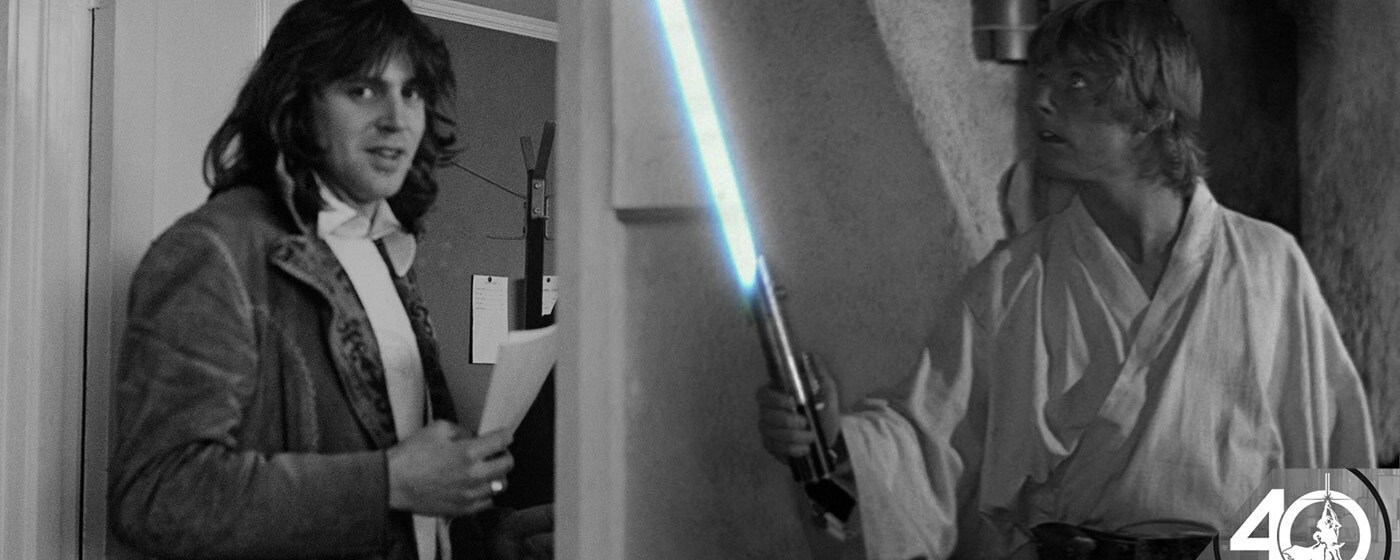
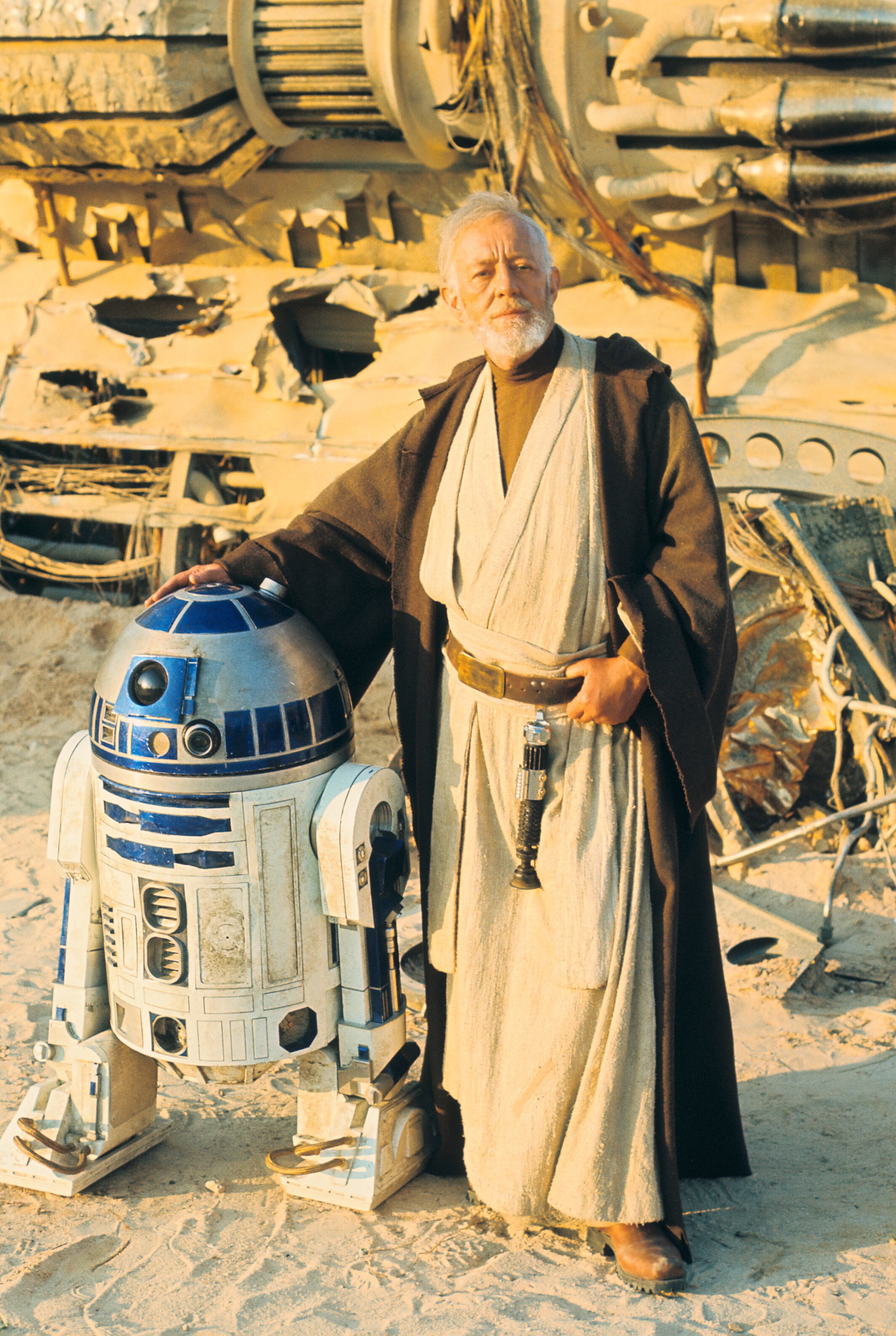
That evening, Ed Summer dropped by my apartment (it was now "my" apartment, Jeanie having moved out the previous summer) with an associate of his, a tall, genial, mustachioed gent named Charley Lippincott, who carried a sizable briefcase -- and who may or may not have been at that earlier dinner I'd shared with George and Ed.
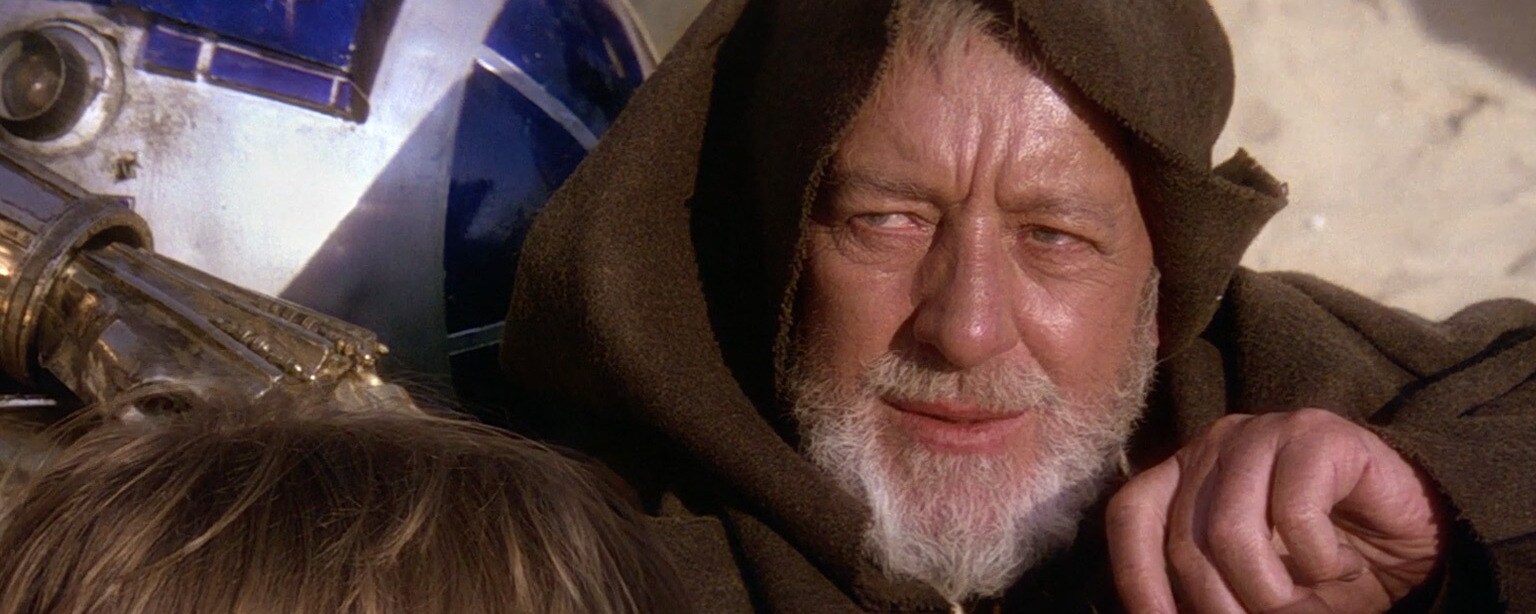
Charley, Ed informed me, was George's right-hand man on Star Wars (the "The" was by now a thing of the past). He was in charge of merchandising, publicity, and like that, and he and George wanted Marvel Comics to produce a comic book adaptation of the movie, which had commenced shooting in Algeria and was scheduled to be released in spring of 1977. It would star Alec Guinness and would be 20th Century-Fox's biggest picture for 1977, I was told, costing a then-whopping $10 million. You could still get a lot of movie for $10 million in 1977.
George and Charley thought Star Wars might appeal to the same people who read Marvel comics, and they naturally wanted every bit of possible insurance they could get. As I shall say more than once in the course of this piece -- who knew?
I reminded Charley and Ed that I had resigned as Marvel's editor-in-chief in August of '74, and was now merely the contractual writer/editor of a handful of titles, including all the Robert E. Howard material (Conan, Kull, Red Sonja, et al.) that I had arranged for the company to license, The Invaders (Captain America and company in World War II action), and a smattering of other scripting. That was keeping me quite busy, as Conan, after a slow start, had become one of Marvel's biggest moneymakers, especially with the success of the black-&-white Savage Sword, which turned a sizable profit with its higher cover price and no need for the added expense of color.
The success and quality of the Conan titles, Charley responded, were the double reason I was being approached. Conan, too, was an adaptation property (even though many issues of Conan the Barbarian were composed of original stories), and thus evidence of my skills as an adapter. I accepted the compliment graciously, as is my wont.
Flattered? Sure I was. Besides, I liked science-fiction, even if I wasn't a hardcore devotee. And I liked George. But the proper person to contact about adapting this forthcoming film into a Marvel comic, I insisted to Charley, was Stan Lee, who was the company's publisher.
Well, matter of fact, Charley and Ed informed me, they had already talked to Stan about it. And Stan, primarily interested in company-owned concepts, not adaptations (Conan to the contrary), had turned them down flat.
A bit ego-deflating, huh? I only got 'em on the rebound! I wasn't a first choice, only a last resort.
More importantly, as far as I was concerned, that meant the subject was closed. What could I do if The Man himself had turned thumbs down on the project? Besides, I wasn't exactly looking for an excuse to write and edit a comic book with a movie studio looking over my shoulder, thank you very much -- one Planet of the Apes fiasco (that had also been a 20th picture) and a raucous meeting on Broadway with the producers of Blacula that I had actually walked out of in disgust had long since cured me of that!
Charley was persistent, though. From his briefcase, he brought forth full-color reproductions of a bunch of paintings ("production drawings," they called them in Hollywood, but that was an inadequate description) by someone named Ralph McQuarrie.
And that's when Charley went into his spiel.
As he turned over painting after painting in sequence, he started telling me the plot of Star Wars.
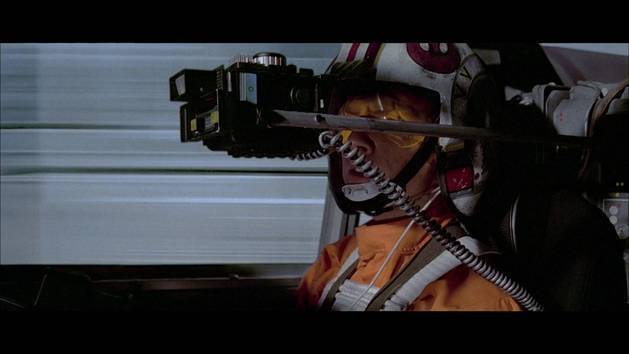
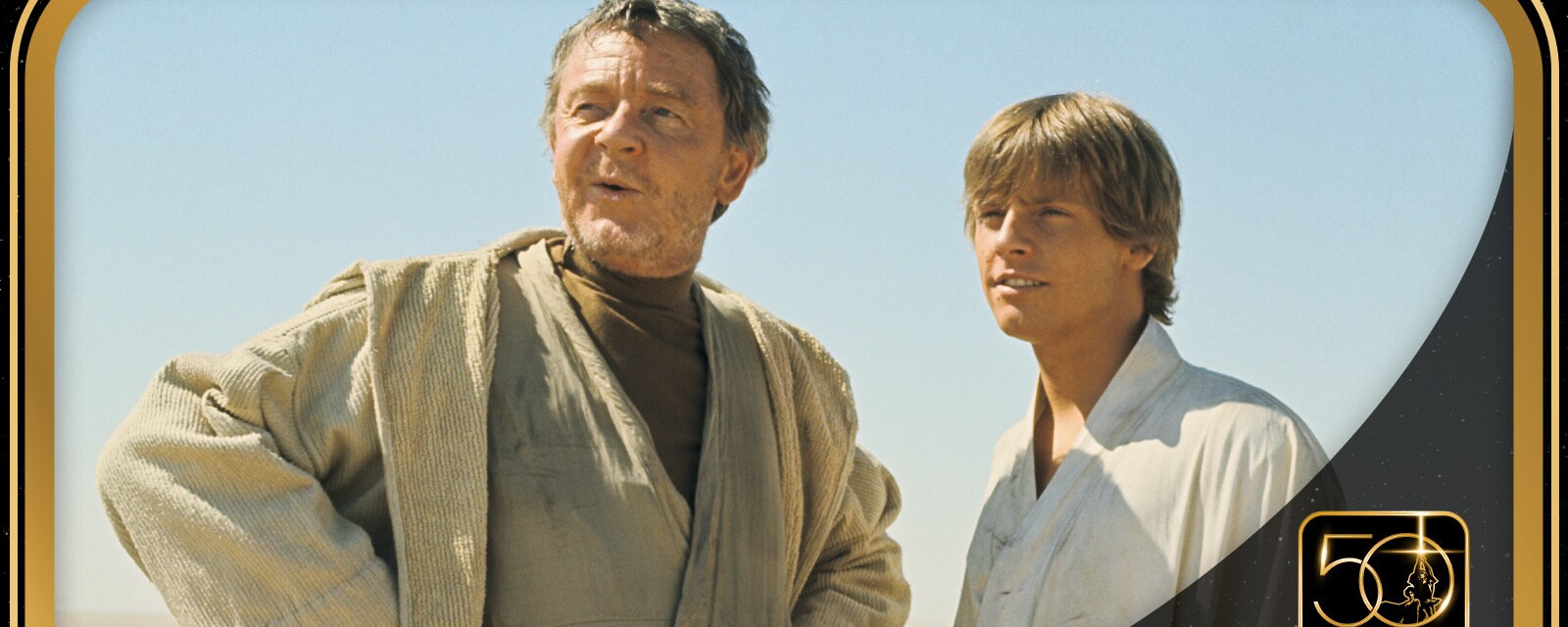
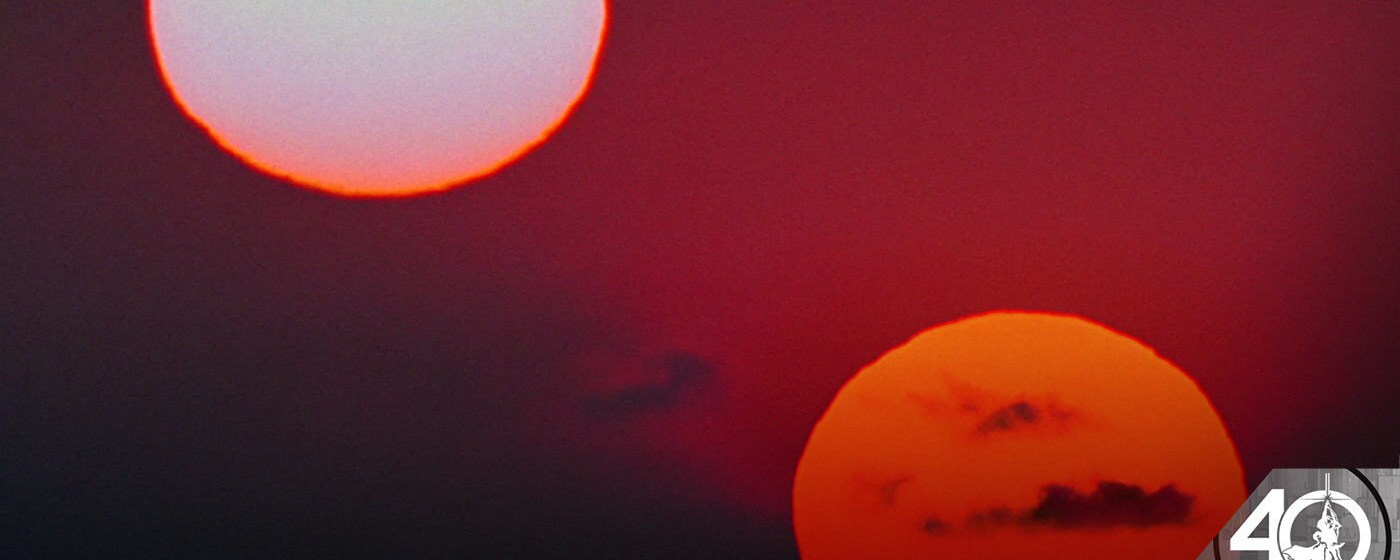
So I'm hearing for the first time about this two-mooned planet named Tatooine where this teenager named Luke Starkiller lives -- or maybe he'll be called Luke Skywalker, it isn't decided yet -- and he gets involved in this adventure with two robots named R2-D2 and C-3PO (names usually spelled out nowadays, but this was a verbal spiel, remember), and the next thing you know the robots and this Princess Leia are captured by the villain, Darth Vader, and then Obi-Wan Kenobi shows up, and --
"What?" I asked. "Obi-Wan Kenobi? Is he Japanese?"
Charley just ploughed ahead. By this time, my head was spinning with the weirdest combination of proper names this side of a Russian novel, but I had followed the story just well enough to figure out already that the heroes were all off to see the sf equivalent of the Wizard of Oz. Sounded vaguely interesting, but if Charley had paused for breath and asked me to repeat what he'd told me so far, I doubt I'd have been able to render a coherent recounting. One of the few proper nouns I'd have remembered at that point was "Stormtroopers" -- for obvious reasons. I was mostly just trying to pay attention out of politeness.
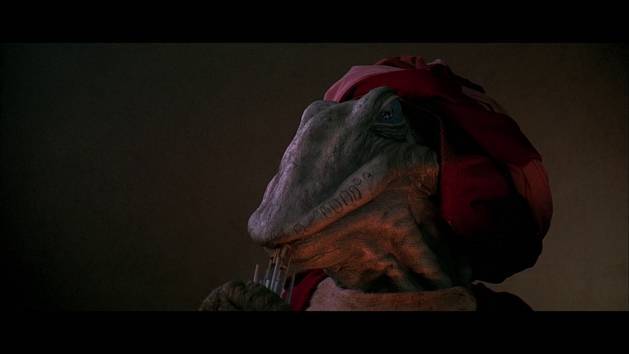
Then Charley flipped over the next McQuarrie pic -- we were several in by now -- and there before my eyes was a dramatic image of a new character, a space smuggler named Han Solo, facing off against a bunch of aliens, about to slap leather in an other-worldly version of the saloon in a Western movie, in what Charley referred to as "the Cantina Sequence."
"I'll do it," I said.
Charley reacted with surprise. I explained that, whatever the precise plot from this point on, I knew Star Wars was going to be -- not a science-fiction film of the type familiar from the disparate likes of 2001, The Day the Earth Stood Still, and even The Forbidden Planet, but a modern rendition of the so-called "space operas" I used to relish in Fiction House's Planet Comics and its pulp magazine Planet Stories. This would be an action movie, in which Luke Whatshisface and his buddies, a mix of human and non-, would find adventure and romance and eventually triumph over Darth Whoever, and that's all I really needed to know. I said I'd try to get Stan to reverse his decision, and if he did, I'd write and edit the comic -- as long, I explained, as I didn't have a lot of interference from anybody associated with the film.
Charley seemed to accept this, but he still related the rest of the movie's storyline to me, flipping over the rest of the McQuarrie pictures one by one. I remember that, when he mentioned Chewbacca the Wookiee, I wondered if that name was derived from "Chew-tobacco." I paid only cursory attention. My decision had been made. He and Ed left in a hopeful mood.
Oh, and Charley also told me that George would really like the artist of the series to be Howard Chaykin, who had recently done nice work on a science-fiction hero called Ironwolf for DC, and was probably already at work on a Monark Starstalker one-shot for Marvel. That sounded like a perfect choice to me, both because I liked Howard (or "Howie," as he then was) personally and because I had worked with him on a story or two. It seemed to me that Howard's style would be a good fit with the energy implicit in the McQuarrie art -- and, in fact, the figure of a weapon-wielding sf swashbuckler on the cover of Charley's copy of the screenplay (which may or may not have been by McQuarrie) resembled a figure by Chaykin -- or maybe by Chaykin's own mentor, Gil Kane.
I could hardly promise Charley anything on this second shot, but I'd do what I could. It's not that I had any precognition of the phenomenon that Star Wars would become roughly a year later. I merely saw such a comic book adaptation, done in advance of the movie's release, as an assignment which might be fun, and a way to reintroduce something a bit closer to science-fiction into the comics, which in recent years had mostly avoided it as a dependable non-seller. (Love super-heroes though I did and do, I wanted to continue my editor-in-chief policy of bringing other forms of fantasy into comic books, as I had with Conan the Barbarian and the non-smash-hit Unknown Worlds of Science Fiction.)