All Films
- Star Wars: The Mandalorian and Grogu
- Star Wars: The Rise of Skywalker (Episode IX)
- Solo: A Star Wars Story
- Star Wars: The Last Jedi (Episode VIII)
- Rogue One: A Star Wars Story
- Star Wars: The Force Awakens (Episode VII)
- Star Wars: Return of the Jedi (Episode VI)
- Star Wars: The Empire Strikes Back (Episode V)
- Star Wars: A New Hope (Episode IV)
- Star Wars: Revenge of the Sith (Episode III)
- Star Wars: Attack of the Clones (Episode II)
- Star Wars: The Phantom Menace (Episode I)

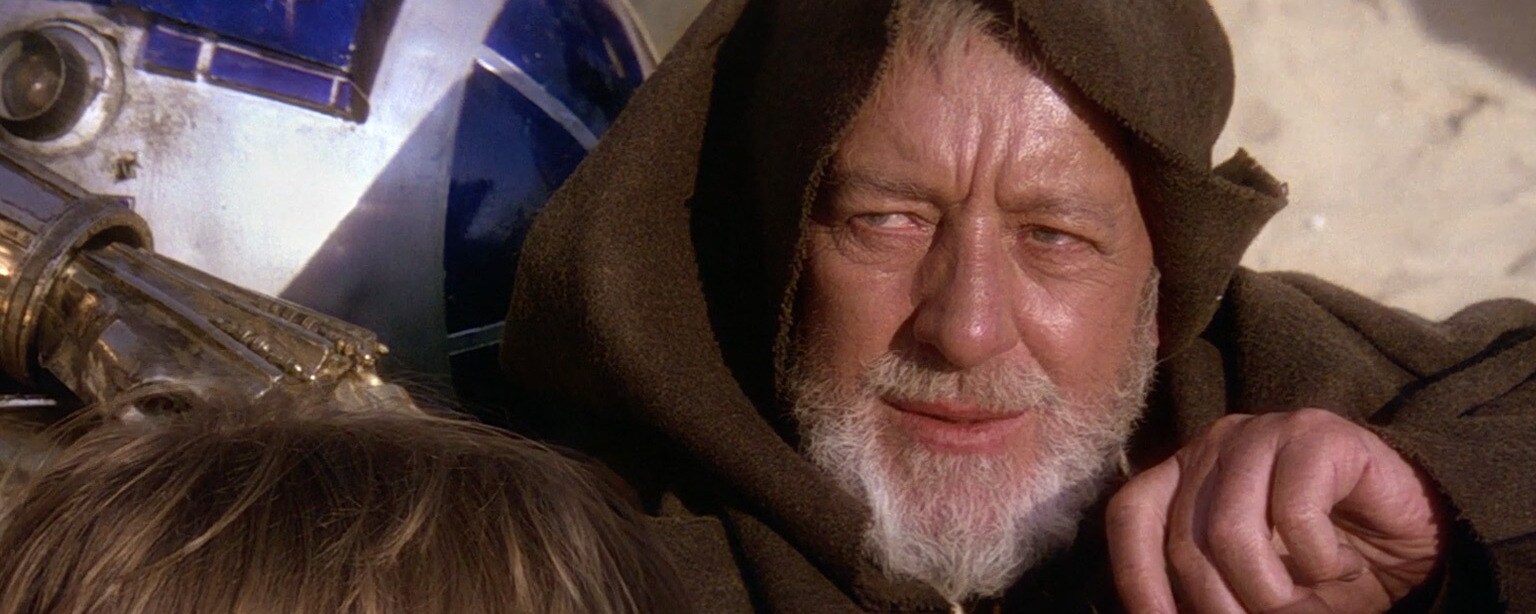
Star Wars: A New Hope (Episode IV)
Luke Skywalker begins a journey that will change the galaxy in Star Wars: Episode IV - A New Hope. Nineteen years after the formation of the Empire, Luke is thrust into the struggle of the Rebel Alliance when he meets Obi-Wan Kenobi, who has lived for years in seclusion on the desert planet of Tatooine. Obi-Wan begins Luke’s Jedi training as Luke joins him on a daring mission to rescue the beautiful Rebel leader Princess Leia from the clutches of Darth Vader and the evil Empire.