[ Welcome ] [ What's New ] [ The Movies ] [ Beyond the Movies ] [ Gaming ] [ Community ] [ Kids ] [ Shop ] [ Hyperspace ] [ Starwars.com ]
[ Starwars.com ]

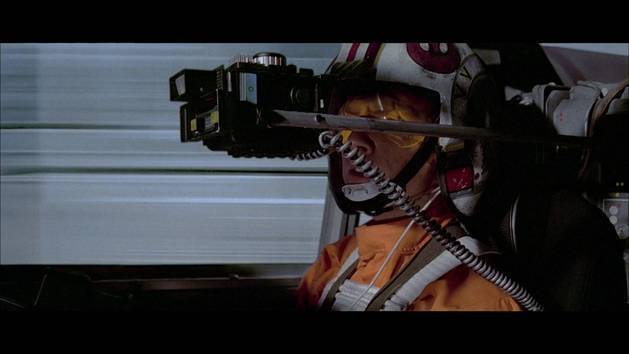
[ X-wing starfighter ]
X-wing starfighter
A symbol of the Rebellion's starfighter corps...
[ Read More ]
News: The Art of Star Wars exhibit tours Japan
Feature: Holographic Artist: Philip Metschan
Feature: Star Wars: The Magic of Myth at the Smithsonian
News: Comic-Con 2003 Star Wars Guide
 
[ Episode IV ]

Introduction
Transition Effects
The Missing Negative
Concept Art
The Lucasfilm Archives
Pre-Visualizing the Scene
Continuity Report
Plate Shots and Other Ancient Traditions
The Virtual Model Shop
The People Behind the Pixels
Anatomy of a Dewback
August 11, 1997

Plate Shots and Other Ancient Traditions

[ landspeeder ]Film terms often have roots in very early technology, and remain meaningful long after the original method of achieving them has changed.

When the production team went to the desert to film the new live-action scenes of the stormtroopers, they were "shooting plates," as you will hear several people call the shots in the documentary. This term dates back to the earliest days of cinema, when actors in studios were sometimes filmed in front of projected slides of landscapes or other backgrounds. This was done to give scenes greater apparent scope without the expense of sending crews and casts out on location. The background stills, shot with large-format cameras, were called "plates," because the traditional photographic technique involved large plates of glass on which the emulsion was laid for the negative.

The term "plate" came to refer to other background or scenery shots as well, even when these were cut into a film without any additions and used as establishing or atmosphere shots. A team might be instructed to go get some plates of mountains and some plates of sky to give a scene shot in the studio a greater sense of setting and atmosphere.

Front-projected background "plates" were even used in such cinematically advanced films such as 2001: A Space Odyssey, in scenes such as the Dawn of Man. Plates of African scenery were front-projected on screens behind the foreground sets of rocks and man-apes to make it look like the film was actually shot on an African location.

Special effects techniques combine plates with foreground elements, most often using optical compositing rather than front-projection. In the original Star Wars, an example of this is the shot where the landspeeder zooms overhead on its way into Mos Eisley - a static background "plate" was composited with a model shot of the landspeeder, as well as a shadow to go with it.

The term "plate" survives today, even when the plate shot involves camera movement and includes foreground actors like stormtroopers searching the Tatooine Dunes for missing droids. All this live action is called a plate, because it will later be combined with additional elements like Dewbacks and an Imperial lander. The computer-animated elements must be painstakingly "tracked" to the movement of the real camera, to look like they were shot at the same time - a process of "fixing" the virtual, invisible computer background to the real one that has been filmed. The technology has advanced miraculously since the days of King Kong standing in front of a projected slide, but the basic aims of creating entertainment and cinema magic remain the same.


[ Archives ] [ Discuss This ] [ Email This ]

© Lucasfilm . All rights reserved. | Terms of Use | Privacy Policy | Business inquiries