Episode I Virtual Paradox

Email Archives
October 24, 1999

Balancing Technology & Continuity

Episode I exists in a technological paradox. It is a chapter of the Star Wars story that takes place decades before the classic trilogy, and yet it was created two decades after the original movie. While some visual effects techniques have changed very little over the years, today's effects specialists use many tools that didn't even exist when audiences first sat down in darkened theaters to watch the adventures of Luke Skywalker and the Rebellion go up against the Empire. Many effects are being done far differently at the turn of the century, and onscreen results are better than they ever were. But that usually means that today's effects also look different than their aging counterparts. Through their work on The Phantom Menace, Industrial Light & Magic had to achieve a delicate balance between superior technology and movie continuity.
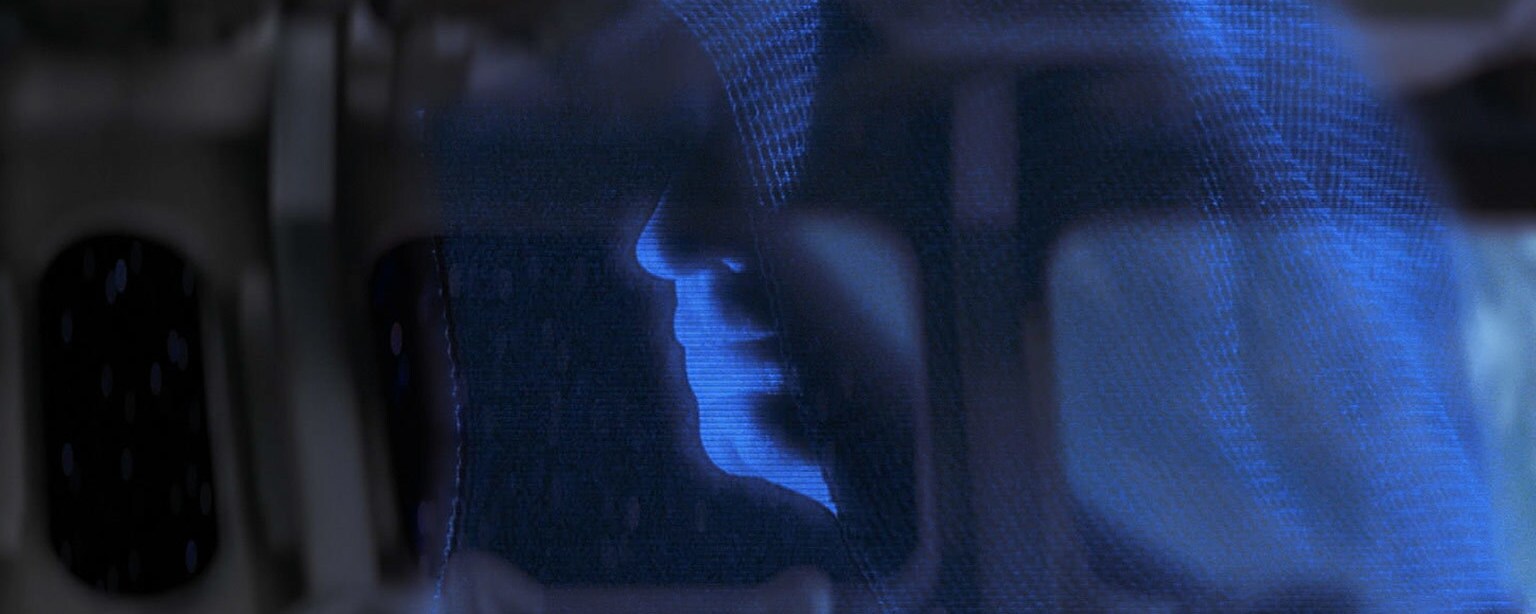
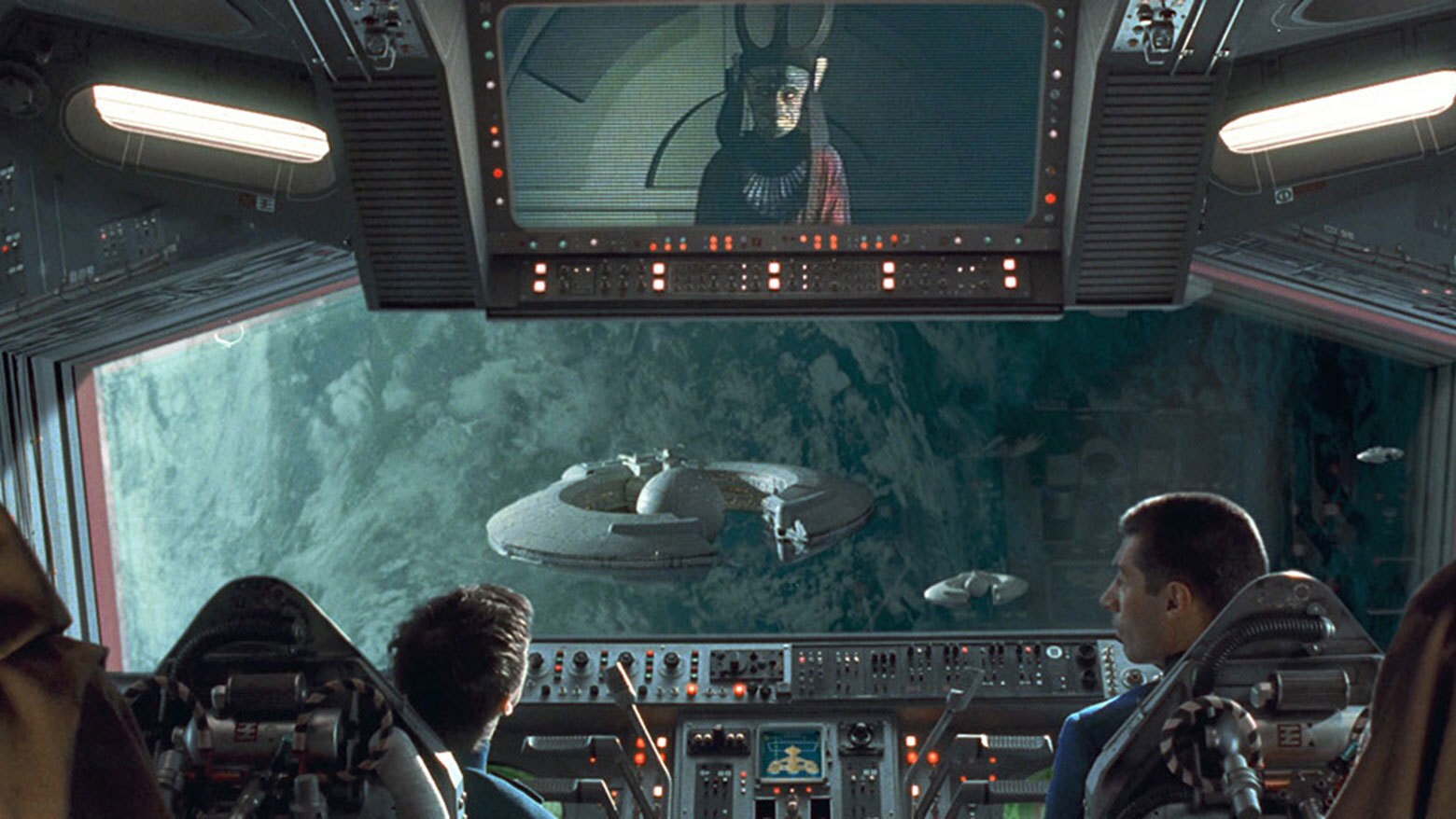
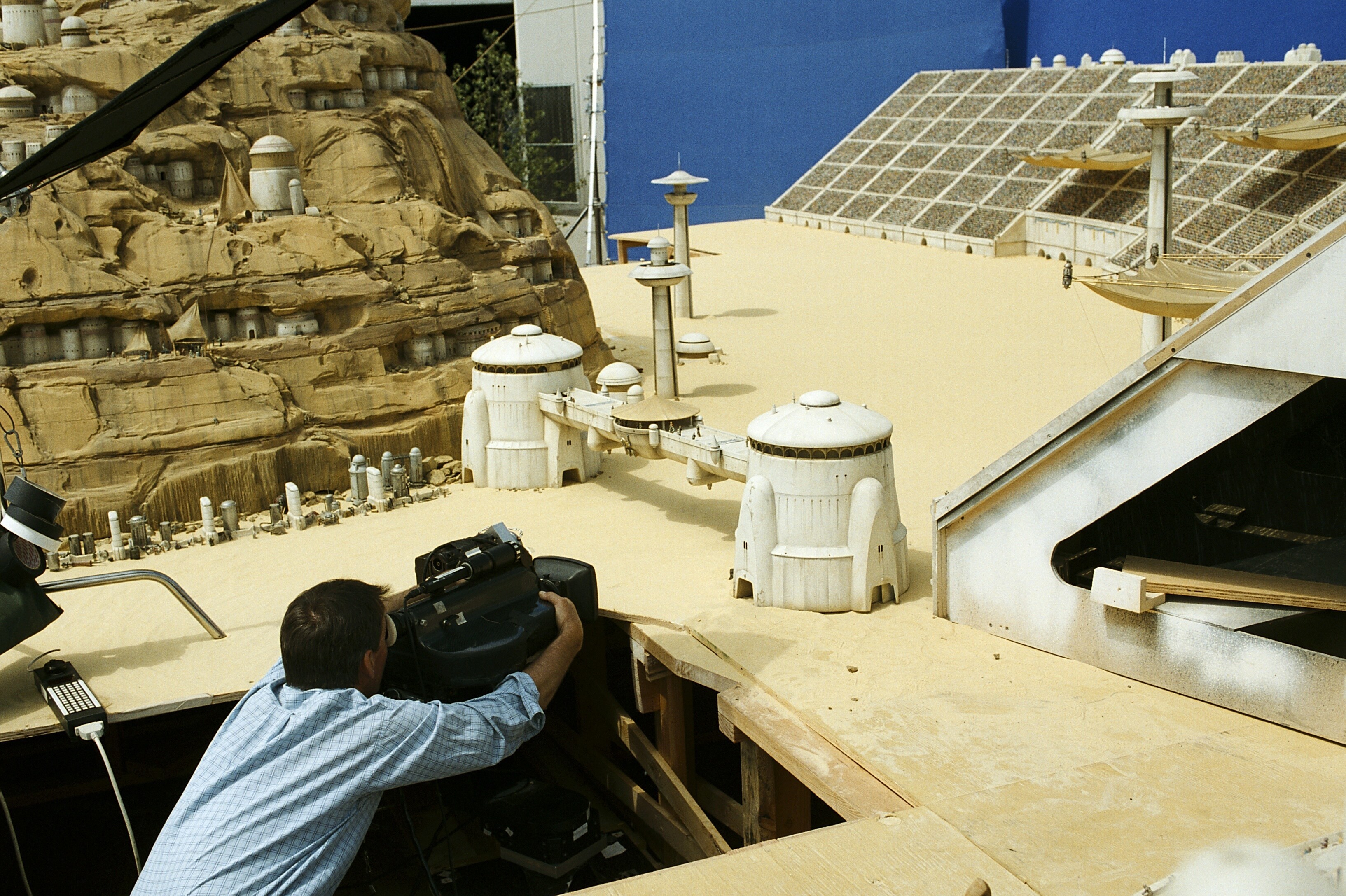
On Episode I, Visual Effects Supervisor Scott Squires and his team were responsible for the lightsaber sequences and everything that had to do with the city of Theed. So part of their work involved dealing with two effects that had been born with the original Star Wars movie: the familiar lightsaber blades, and the holograms, used as visual transmission devices.

"George Lucas liked the way the holograms looked in the previous movies," explains Squires, "so we tried to recreate that look. The basic process involves shooting the holographic persons against either black or blue, and then isolating them. After that, the image is run through special filters to give it some transparency, to create video break-out and make it look like it has been processed." Whereas visual effects artists normally try to make the process of their work invisible to the spectator's eye, cleverly covering their tracks, the hologram effect is an interesting example of work done in the opposite direction. "With today's technology," says Squires, " we could also make things look better, perhaps more realistic, but we need to keep it consistent through the whole series." Seen through the hologram effect, the status of Episode I becomes doubly paradoxical.

First, ILM uses advanced technology to degrade an image projection instead of enhancing it. And second, the visual effects wizards, whose digital tools would allow them to do an even better "demolition job" on the characters appearing as holograms, had to be careful not to degrade the image too much and run the risk of breaking continuity with the way holograms looked in the classic trilogy. "Today, the hologram effect is done digitally," says Squires. "But for the classic movies, the technique was quite different. They would shoot the character, then play the footage on a video screen, and shoot the video screen. This would already create some distortion and noise - but they added to it by having someone loosen the plug or shake the equipment around." This inventive method made the image on the video screen appear degraded. Which it was.

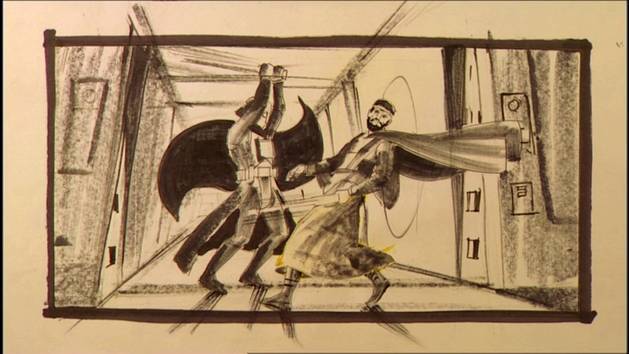
Another classic effect, that of the lightsaber blades, also had to be kept just the way it had been established in the previous Star Wars movies, despite the leaps and bounds enjoyed by digital technology since A New Hope. "We could have done something much more elaborate, much more exotic," Squires says, "but once again we simply had to respect continuity." So even though the blades of the laser swords are no longer painted by hand, one frame after another, the digital artists have done all they could to retain the look and feel associated with the lightsabers of Skywalker father and son and Obi-Wan Kenobi, both at rest and in motion.

1
2 Next


Keywords: ILM, Behind-the-Scenes

Filed under: The Movies, Episode I

Databank: lightsaber
Email Archives
 (
0 ratings
)

Comments: 0 total     See All

Episode I Academy Award Nominations
Star Wars: Episode I The Phantom Menace was honored today with three Oscar nominations by the Academy of Motion Picture Arts and Sciences.
Q&A: What kind of new technologies were developed to realize Episode I?
Many visual effects techniques for The Phantom Menace had never been attempted before. How much new technology and software needed to be developed to carry out what was required. Who does that kind of work and how long does it take?
Snapshot: A Sea of Bluescreen
Qui-Gon Jinn (Liam Neeson) sits amid a sea of bluescreen. Industrial Light & Magic magicians will later digitally add a lumbering eopie and background to complete the scene.
Q&A: What was one of the more difficult Episode I effects shots?
What was one of the more difficult special effects shots inThe Phantom Menace?
The Very Model of a Model Shop
While Episode I has received just plaudits for its incredible computer-generated effects, all of that work didn't come at the expense of traditional model-building.
Snapshot: Sebulba is Watching
Doug Chiang (Design Director) and Jean Bolte (Lead Viewpainter) review design images at the Industrial Light & Magic Art Department in Marin County, California.
Snapshot: Miniature Theed Main Plaza
Marty Rosenberg (Effects Director of Photography) Scott Squires (Effects Supervisor) loom above the miniature Theed Main Plaza set.
Q&A: What parts of Otoh Gunga were live action vs. miniatures vs. CG?
The underwater scenes of Otoh Gunga had a beauty all their own. Were these particularly difficult to create, and what parts were live action vs. miniatures vs. CG?
Snapshot: Ice Cave
A 2-D rendering of the Lagulla ice cave, deep in Naboo's watery planet core.
Digital Media World
Digital Media World, a three-day celebration of achievements in animation and special effects in London, U.K, is dedicating November 18th to the creation of Star Wars.
Newsletter sign up!
Enter your email here and receive exclusive Star Wars updates