[ Welcome ] [ What's New ] [ The Movies ] [ Beyond the Movies ] [ Gaming ] [ Community ] [ Kids ] [ Shop ] [ Hyperspace ] [ Starwars.com ]
[ Starwars.com ]

[ Jedi Order, The ]
Jedi Order, The
A noble order of protectors unified by their observance of the Force...
[ Read More ]
Video: Part 6: Prime of the Jedi
Video: Part 1: All I Need is an Idea
Feature: The New Star Wars Episode I
Video: Part 10: Costume Drama
 
[ Episode I ]


A day in the life of an Assistant Director starts early and ends late. Responsibilities ranging from getting actors to the set on time, to scheduling hair and makeup, and guiding crowds of extras to their places keep the Episode I Assistant Directors on the run. Their focus is to constantly be moving forward, dealing with obstacles and finding solutions to problems that might delay the production. They plan ahead for the next day, the next week and the next month to keep the film on schedule.

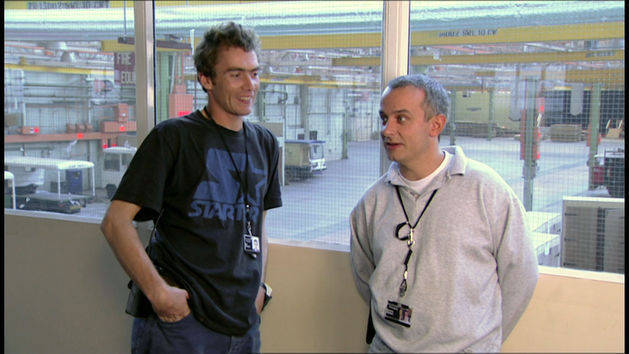
Three Assistant Directors shared these responsibilities for the Star Wars: Episode I Main Unit. "It's a bit of a biological thing really. We've never sat down and decided," says First Assistant Director Chris Newman about the division of labor between himself and the Second and Third Assistant Directors Bernard Bellew and Ben Howarth. Chris says, "By virtue of how you are trained or how you come up through the system you understand your responsibilities." They rarely had scheduled meetings says Bernie, and did most of their planning during brief breaks at lunch or between shoots. "We've worked together a lot," Bernie says, "we know what to expect of one another."
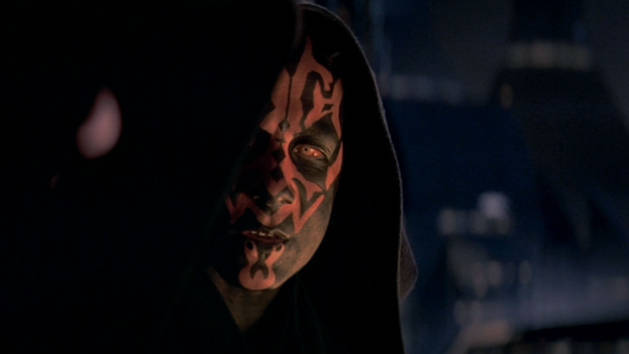
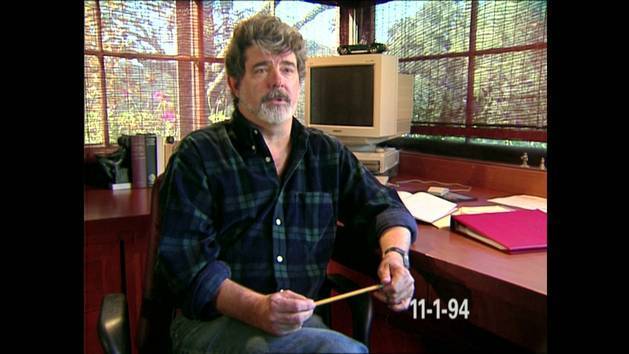
As 1st AD, Chris directly supports Director George Lucas. He gathers information from the other departments and manages the crew so George can concentrate on directing. He says he always tries to stay a day ahead in thinking about what's next. He visualizes what he'll be doing the next day when George says 'action.' "I play every scene as if I was directing it. I think that puts me in a perspective where I will anticipate what the demands are going to be." He says, for example, in one shot George might direct the principal actors, while Chris moves the extras into position and sends droids across the set on cue.

Chris was a little worried about the approximately 3,500 shots they would need to complete in the 65 day shooting schedule. Helping ILM prepare to integrate live and computer generated characters contributed to the complexity. He studied the script carefully to figure out what he really needed to focus on. "When you actually honed it down into the individual bits needed for the main unit to shoot, it was all very simple." He says he tries to get the shots done with the minimum effort required. "You do them as well as you can within the time frame you can allow. Then you stop and move on."

Information management is also a big part of the job - determining what cast and crew need to know and when. 'If you explain A, B and C, by the time you've gotten to C, they've probably forgotten A,' says Chris. So, he shares what information is needed to get the shot done as efficiently as possible.

He acknowledges that his mood definitely rubs off on the rest of the crew and part of his job is to keep up morale and to make sure people are enjoying their work. "Some people would say that the set is not a place to have a good time, but if I'm going to do this all my life, I'd rather have a good place to work," he says. "The idea is to get people through the day, and to make sure that they do the job the best they can."

Chris relies heavily on his 2nd and 3rd AD's, Bernie and Ben. "You're always making decisions based on information you receive from people you can trust. They have to tell me if they are not sure of something," Chris says, "because, I have to make a decision based on this information." The three wear headsets all day to stay in constant communication with each other and the other departments. "From the moment you plug it in in the morning, you've got something happening in your ear every minute, of every hour, of every day," Ben says.

As 2nd AD, Bernie is Chris's planner. It's his job to plan the details for the next day. "It's up to him to anticipate me," Chris says. Bernie is responsible for making sure the principal cast, supporting cast and extras are brought to the set at the correct time so there are no delays. He must carefully watch the schedule and keep in constant communication with Chris.

The ADs arrive about a half hour before the first actor arrives in the morning, usually by 6am, to check that everything is ready for the day's shoot. This first part of the day is the most crucial, says Bernie, because all actors from principals to extras need to be dealt with individually by hair and makeup artists. As 2nd AD, it's Bernie's responsibility to make sure all the actors are dressed and ready to appear on the set so the shoot doesn't start late. Bernie arranges for the actors to get picked up at home by unit cars. With three hairdressers, three makeup artists and about half a dozen people in wardrobe, scheduling prep time for each actor can get complicated. "It's like putting bits of jigsaw puzzle together," Bernie says. He knows how long preparing each actor will take. For example, transforming Liam Neeson into a venerable Jedi Knight requires three quarters of an hour in hair dressing, a half hour in make-up, and fifteen minutes in wardrobe.

Bernie also prepares the call sheet which comes out at the end of each day, and informs the crew of what to expect the next day. It details which scenes will be shot at what time and what elements are needed for the shoot. Bernie doesn't spend as much time on the set as the 1st or 3rd AD. He's in the background making sure the cast and crew have everything they need.

As 3rd AD, Ben Howarth spends much more time on the floor working directly with Chris. He talks to Bernie constantly about what is happening on the set and informs him of anything that is needed. As Chris is running one shot, Ben is making sure the next shot is ready so that there are no delays. "Effectively oiling the works day to day," Ben says, "which is pretty good fun." Ben checks that the cast and crew are where they need to be before, during and after the shoot. Because Leavesden is such a large studio, he helped post signs and maps so cast members wouldn't get lost. He hung up traffic lights to direct people away from sets during actual takes.

The three have a close working relationship by the very nature of their responsibilities and because they share an excitement for working on a Star Wars film. "Everything you do is contributing to something that's going to last, that's going to be fantastic," Bernie says. "You want to do your best when you know that's the case."

[ Lynne ]

Part 12: Movie Music
Part 11: Bad Droid Karma
Part 10a: Naboo Soldier
Part 10: Costume Drama
Part 9: It's Like War Now
Part 8a: Casting Director
Part 8: Three Thousand Anakins
Part 7a: One Day to Go
Part 7: Assistant Directors
Part 6a: The Fall
Part 6: Prime of the Jedi
Part 5: This is a Creature Film
Part 4a: Something Out of Nothing
Part 4: Boys in Paradise
Part 3: Home Sweet Home
Part 2: Thousands of Things
Part 1a: Interview Outtakes
Part 1: All I Need is an Idea
Introduction

[ Archives ] [ Discuss This ] [ Email This ]

© Lucasfilm . All rights reserved. | Terms of Use | Privacy Policy | Business inquiries